Strategies to Avoid Shark Encounters in the Ocean
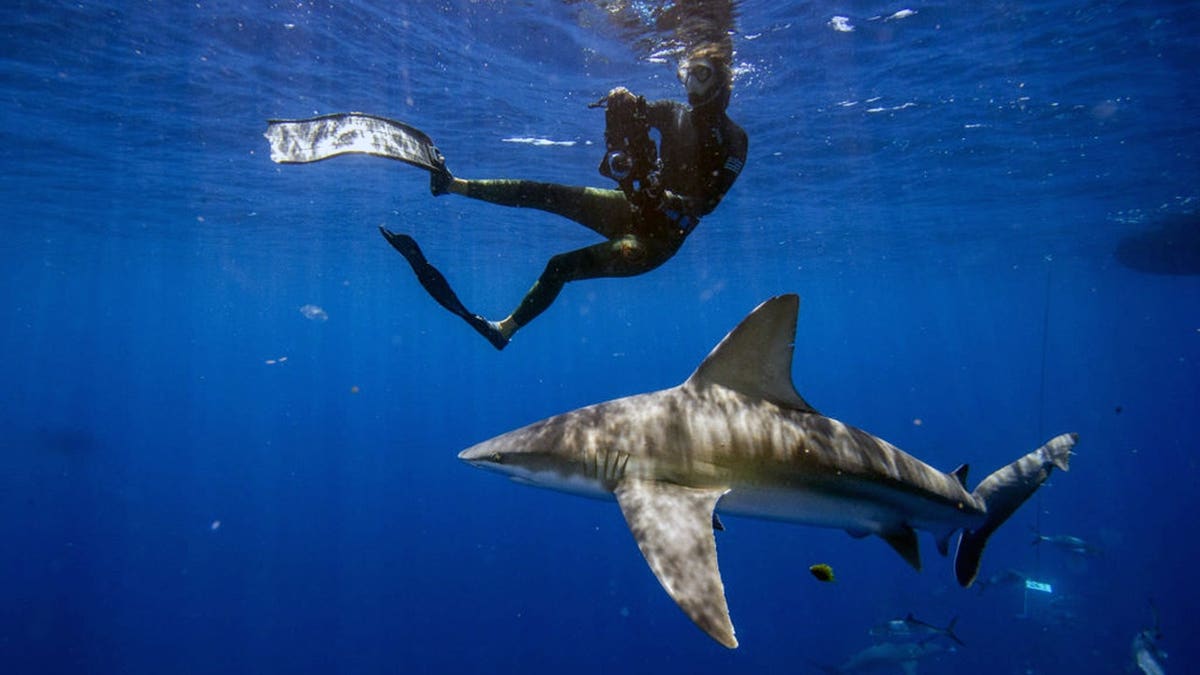
Discussion on Shark Attacks and Population Surge
Shark researcher Jesse Watters recently hosted Chris Fischer, founder of OCEARCH, to discuss the increase in shark attacks this summer. This rise includes a New York beach closure due to bull sharks, a swimmer bitten in Queens, and a child attacked in knee-deep water in Florida. Fischer highlights a rebound in shark populations to levels similar to the 1960s. He advises avoiding swimming where bait fish are present to reduce shark encounter risks.
Avoid swimming in areas active with bait fish.
Close Encounter with Sharks
Florida spearfisherman Matthew Piendak experienced a tense encounter with sharks during a recent dive off the coast of Destin. He was surrounded by three aggressive sharks but managed to escape unharmed. Piendak captured the encounter on camera, showing his efforts to fend off the predators using his speargun.
Piendak was performing a safety stop—a pause that allows excess nitrogen to exit the body—when the sharks approached. His footage reveals the sharks repeatedly swimming toward him, causing him to use his speargun to keep them at bay. Eventually, a boat arrived to pull Piendak from the water, preventing any bites.
Insights from Experienced Diver
Piendak is an experienced diver, accustomed to interactions with marine wildlife. His Instagram features dive footage with dolphins, manta rays, sea turtles, and large schools of fish, alongside various shark encounters. Despite this experience, fending off three sharks simultaneously was unexpected.
Shark Behavior Explained
Wildlife biologist Forrest Galante explains that sharks do not typically view humans as prey. A curious or agitated shark may cause harm with an exploratory bite. Sharks lack hands to feel objects, so they use bites for investigation, which can be damaging or even fatal. However, human encounters with sharks rarely result in bites.
Galante emphasizes that sharks investigate whether something is food, and humans are generally not part of their diet. Fortunately, Piendak remained composed, managing to delay the biting opportunity until help arrived.
For those curious about marine life, observing from dry land remains a safe option.
Humans are generally not part of the shark’s diet.