Supreme Court Allows New Challenges in Mississippi Death Row Case
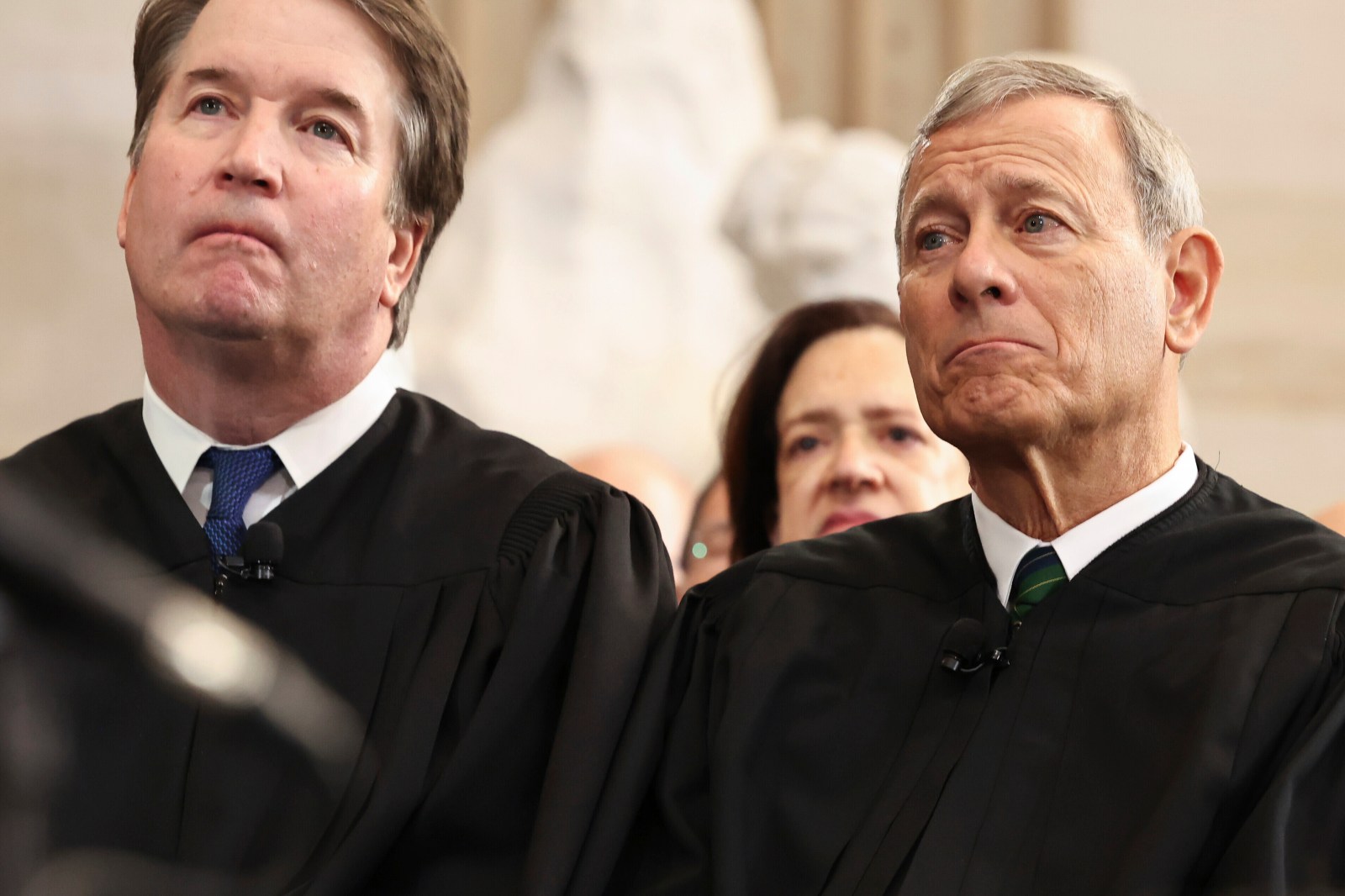
Supreme Court Decision on Mississippi Death Row Case
The Supreme Court ruled on Thursday that Terry Pitchford, a Black Mississippi death row inmate, can pursue renewed challenges to his conviction. In a 5-4 decision, Chief Justice John Roberts and Justice Brett Kavanaugh joined the court’s liberal justices. This decision reveals differences within the conservative-majority court on handling racial bias claims in jury selection. It also reinforces the precedent that bars discrimination against Black jurors. The decision sends Pitchford’s case back to lower courts, where both his conviction and death sentence face potential reconsideration.
Joseph Perkovich, representing Pitchford at the Supreme Court, stated, “Mr. Pitchford is now entitled to a fair trial in the state court.”
Racial Bias and the Conservative Divide
Pitchford’s case focused on whether Black jurors were improperly excluded during his 2006 capital murder trial. He was convicted and sentenced to death for his involvement in the robbery and killing of Reuben Britt, a grocery store owner in northern Mississippi. During jury selection, prosecutors dismissed four out of five Black prospective jurors, leaving only one Black juror. Defense attorneys objected, arguing that these dismissals were racially motivated.
The court’s decision is grounded in the 1986 Batson v. Kentucky ruling, which prohibits dismissing jurors based on race and mandates scrutiny of prosecutors’ reasoning. Pitchford’s lawyers argued they lacked a meaningful chance to contest the prosecution’s explanations. A federal district judge initially overturned his conviction in 2023, a decision later reversed by the 5th U.S. Circuit Court of Appeals, which claimed Pitchford’s attorneys failed to preserve their objections properly.
Justice Kavanaugh, writing for the majority, stated, “The trial court did not afford Pitchford’s counsel a sufficient opportunity to rebut the prosecutor’s proffered race-neutral reasons.” He further noted procedural issues during the trial that prevented a thorough evaluation of these claims.
However, Justice Neil Gorsuch, in his dissent, argued that prosecutors gave legitimate, race-neutral reasons for striking the jurors. He criticized the majority for undervaluing these explanations, highlighting reasons such as a prospective juror’s tardiness and mental health history.
The Influence of Flowers v. Mississippi
This case mirrors the Flowers v. Mississippi decision of 2019. In that case, the Supreme Court overturned a conviction due to jury selection biases involving the same prosecutor, Doug Evans. Justice Kavanaugh described Evans as persistently trying to exclude Black jurors. Evans prosecuted both Pitchford and the Flowers case, and Judge Joseph Loper presided over these trials.
Background of Terry Pitchford
Terry Pitchford, now 40, was 18 when he took part in the 2004 robbery leading to Britt’s death. Although his accomplice fired the fatal shots, the accomplice was ineligible for the death penalty due to age, leaving Pitchford to face these charges. His 2006 conviction and death sentence have spurred ongoing appeals related to racial bias in jury selection.
Pitchford has been on death row at the Mississippi State Penitentiary for nearly 20 years while pursuing these appeals. His legal efforts have emphasized proper evaluation of racial bias claims during jury selection, arguing that the trial judge curtailed their ability to object. The Supreme Court’s decision concurs, indicating that further scrutiny is justified.
This article includes reporting by the Associated Press.