Supreme Court Case Challenges Church-State Separation in Colorado School Program
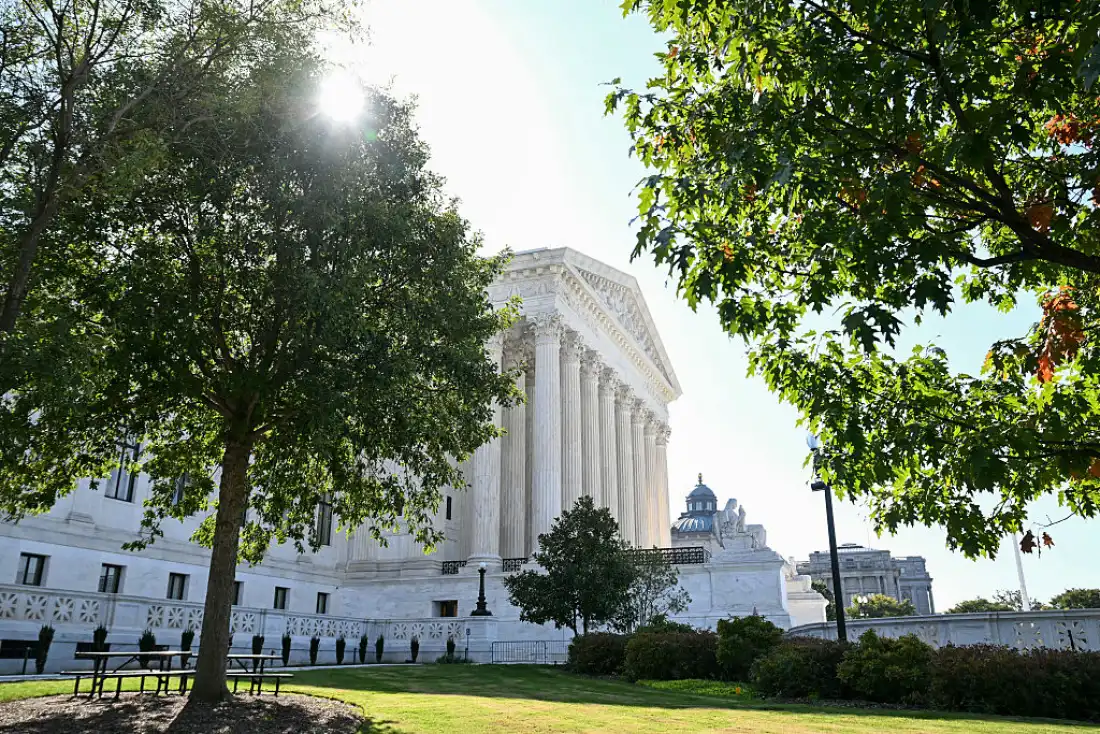
On Oct. 14, the Supreme Court in Washington, D.C., became the focal point of a significant legal debate. The court heard arguments in a case involving the Catholic Church and a taxpayer-funded school program in Colorado. This case questions whether religious schools can refuse admission to children of gay and trans parents, potentially violating state anti-discrimination laws.
The First Amendment of the U.S. Constitution states, “Congress shall make no law respecting an establishment of religion, or prohibiting the free exercise thereof.” This principle of separating church and state was emphasized by Thomas Jefferson and formally adopted by the Supreme Court in the 1940s. However, the court’s focus shifted about ten years ago under a new conservative majority, prioritizing the protection of religious freedoms.
Frank Ravitch, a law professor at Michigan State University, notes, “It’s the opposite of what the law was not long ago.” An example of this shift is the 1983 Supreme Court ruling that Bob Jones University would lose tax exemption for racial discrimination, which was initially supported by religious beliefs.
Douglas Laycock, an emeritus law professor, suggests the unique historical context of race in the U.S., with its long history of slavery and civil rights struggles, affects legal decisions differently than other forms of discrimination. He acknowledges the Denver archdiocese’s discriminatory practices but questions whether this is protected under religious freedom.
Colorado’s program aims to provide universal preschool access for all 4-year-olds. Steve Fenberg, former president of the Colorado state Senate, highlights the program’s $6,300 annual benefit per child, funded by a tobacco tax. The program includes religious schools, provided they comply with anti-discrimination laws.
However, the Denver Archdiocese, supported by the Becket Fund for Religious Liberty, argues for an exemption from this law, claiming it discriminates against Catholic schools by requiring them to admit students whose families contradict Catholic teachings.
Not all Catholic institutions share this stance. Tim Uhl, a Catholic school system leader, supports the Colorado law, emphasizing the educational value of diverse opinions and students.
The Denver Archdiocese sees the program as a threat to Catholic education, with Archbishop James R. Golka citing enrollment declines and school closures. He warns of a broader cultural impact, arguing for schools that teach students moral values.
Catholic schools superintendent Scott Elmer notes few cases where LGBTQ parents sought enrollment. Despite this, the Supreme Court’s conservative majority has suggested significant changes to religious rights are possible.
Last year, a divided court reconsidered religious charter schools’ funding. The Colorado case now before the court includes Justice Amy Coney Barrett, who previously recused herself from related cases.
Berkeley Law School dean Erwin Chemerinsky raises questions about potential government funding for religious schools, noting the court’s upcoming decision could impact charter schools’ religious affiliations. Recently, a federal judge in Oklahoma allowed a Jewish charter school to receive state funding, highlighting the broader implications of the court’s decision.