The Immigrant Journey and the Dilemma of Forgetting Roots
In 1913, Antonino Alati left southern Italy in search of a better life. He entered a land where Italians were seen as poor and unassimilated. The press painted them as violent and unwelcome, and politicians sought to close the door on them. A congressional report, issued two years before Alati’s arrival, unfairly criticized southern Italians, accusing them of lesser intelligence compared to previous immigrants. It suggested they intended to exploit the benefits of the U.S. and then return to their homeland.
Despite this bigotry, Alati persevered. He summoned his wife and children, including his young son, Salvatore, to join him. Over time, their family name, Alati, transformed into Alito. Salvatore became Samuel, later infamous as a Supreme Court justice. Samuel A. Alito Jr. became the second Italian American on the Supreme Court, following Antonin Scalia. During his 2005 confirmation hearings, Alito spoke highly of his father, a man who overcame challenges to give his children a brighter future.
Italian Americans eventually became integral to American culture, evident in music, politics, and cuisine. This is the American story, yet Alito’s dissent in the Supreme Court’s decision against ending birthright citizenship by President Trump was surprising. If anything is constant in the U.S., it’s how quickly immigrants’ descendants forget their ethnic group’s struggles. They forget how policies helped them and become unkind to newer immigrants.
Alito’s opposition to birthright citizenship reflects more than a lapse in memory. His lengthy opinion on undocumented immigrants uses terms reminiscent of the abuse directed at Italians in previous generations. He questions the national loyalty of children born to Mexican, Guatemalan, and Salvadoran immigrants, much like past xenophobes questioned Italian Americans’ patriotism due to their Catholicism. Alito claims, without proof, that President Reagan’s 1986 amnesty led to fraud in citizenship applications, echoing past accusations against Italians seeking naturalization.
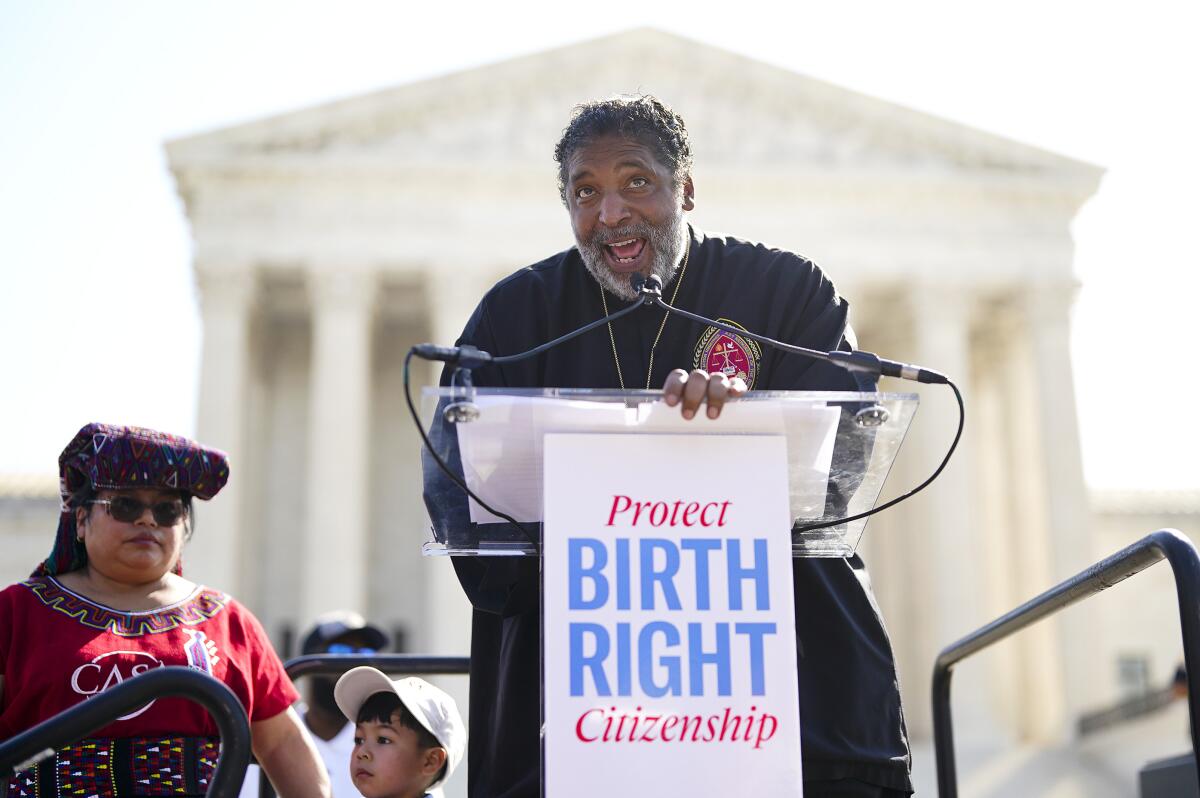
This dissent includes interpretations that his fellow Catholic Supreme Court justices, John Roberts, Amy Coney Barrett, and Brett Kavanaugh, largely opposed. They supported the majority opinion written by Roberts, with Kavanaugh in agreement. Rev. William Barber II held a rally outside the Supreme Court, underscoring the impact of oral arguments regarding birthright citizenship.
The forgetting of one’s immigrant history is often swift. Alito appears to follow this trend. My own family fled Mexico during the Revolution, and my father navigated a far easier path to legal status. Like Alito’s relatives, my close kin also faced demonization for supposedly not being American enough, yet they pursued better prospects for their descendants. However, some of my family members have forgotten. They support policies dismissing new immigrants as undeserving.
In his dissent, Alito acknowledges that those born in the U.S. to undocumented parents have a strong moral claim to remain. He admits Congress should address this. Yet, he criticizes ‘birth tourism,’ where individuals have children in the U.S. to gain citizenship without contributing meaningfully. While I agree that this practice is problematic, Alito’s disregard for birthright citizenship, rooted in prejudice, is misplaced.
President Trump’s executive order seeking to redefine American citizenship was an overstretch driven by bias, not legal reasoning. Alito might cut constitutional ties to oppose something he dislikes, but his side lost. Trump’s attempt to restrict the definition of who can be American got farther than it deserved.
Alito terms the court’s decision to uphold the 14th Amendment as a mistake with severe future implications. Those who worry about new immigrants impacting the U.S. negatively always overlook history. Alito’s family and others, like mine, have proven these fears unfounded. In America, descendants of once-shunned immigrants now stand with those making similar accusations against newer arrivals. Alito’s vote reflects a forsaking of his family’s past promise, inadvertently supporting those who once opposed them.