The Impact and Significance of Midterm Elections in U.S. Politics
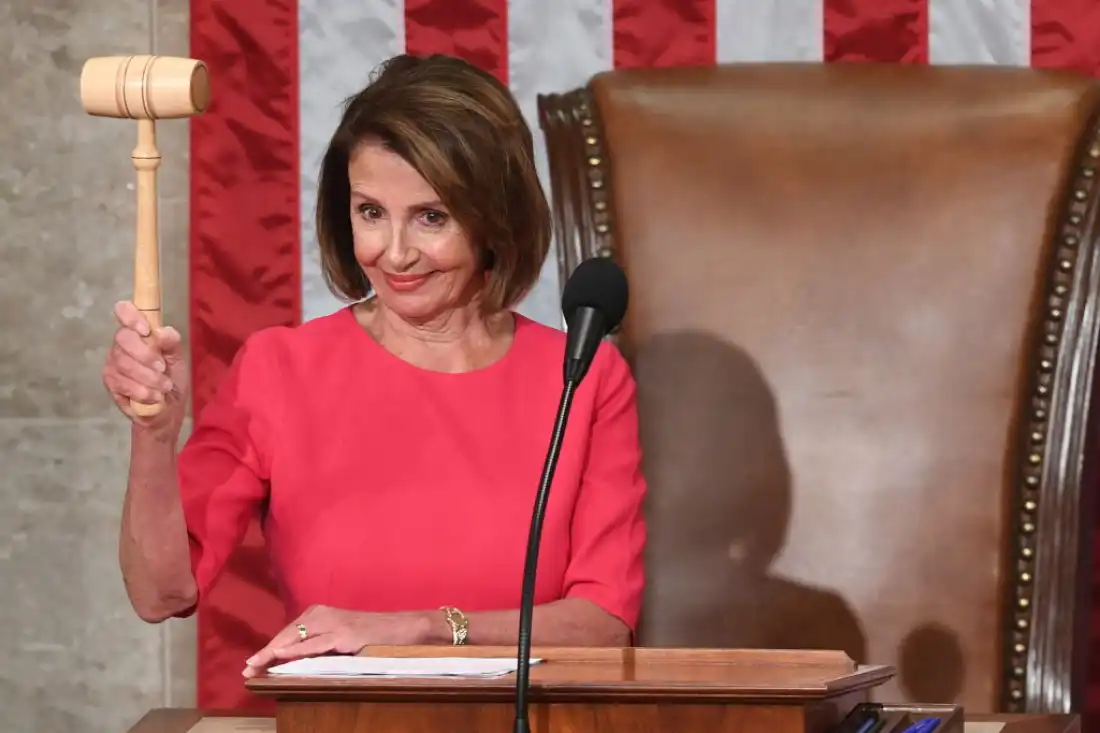
Nancy Pelosi, D-Calif., inaugurated as the Speaker of the U.S. House of Representatives during the 116th Congress session on January 3, 2019, in Washington, D.C., marks a noteworthy event. Yet, the decade of the 2020s lacks a midterm election of significant impact, unlike every other decade over the past century that has seen at least one transformative midterm. These crucial midterms have not only shifted power in Congress but have also influenced the broader political landscape at both state and national levels.
Midterm elections typically witness lower voter turnout compared to presidential elections. Without the lure of electing a president, ‘low propensity voters’ often disengage, leading to a reduction in votes by about one-third. Despite this, the outcome of midterms is crucial. They decide the composition of Congress and state legislatures, as well as about two-thirds of the governorships nationwide.
Historically, significant midterm shifts often occur during a president’s second term when popularity may wane. Even with the president absent from the ballot, midterms provide an opportunity for detractors to voice disapproval, while supporters may lack motivation.
Significant Midterms in History
The impactful midterms that followed the Wall Street Crash of 1929 ushered in shifts that ended the Republican dominance of that era. The 1930 election saw the GOP lose considerable ground, leading to a Democratic-controlled Congress by 1932, which persisted through World War II.
After WWII, the midterms of 1946 signaled an end to Democratic dominance with Republicans seizing a majority in both the House and Senate, defying expectations.
Other Notable Midterms
The 1954 loss of the House by Republican Dwight Eisenhower after two terms was significant. By 1958, the Democrats’ Senate wins were crucial for advancing the Civil Rights Act of 1964 and Voting Rights Act of 1965. They also supported Lyndon Johnson’s Great Society initiatives, which included social programs like Medicare and Medicaid.
The midterm of 1966 marked a GOP resurgence, capturing significant House seats and positioning Richard Nixon as a presidential contender. Ronald Reagan’s gubernatorial win in California that year was also a notable shift.
Midterm Audience Dynamics
By 1974, with the Watergate scandal and Nixon’s resignation, the GOP faced severe losses in the midterms. The economic backdrop of inflation and oil crises further compounded vulnerabilities.
In the 1980s, Reagan’s initial success was followed by setbacks in the 1986 midterm elections, which saw Democrats regain Senate control, limiting Reagan’s influence. Meanwhile, Bill Clinton’s presidency faced strong opposition in the 1994 midterms, with Republicans securing a decisive majority in Congress.
Recent Patterns and Predictions
In newer cycles, George W. Bush defied trends post-9/11 but faced losses in the 2006 midterms. Barack Obama experienced the impact of midterms in 2010 and 2014, with Republicans gaining substantial ground, foreshadowing Donald Trump’s rise.
The upcoming November 3 election presents a potential for significant change. Pollsters anticipate possible Democratic gains in both the House and the Senate. Economic issues and incumbent controversies make the current climate ripe for a pivotal midterm shift, reminiscent of historic patterns.