The Story Behind Abraham Lincoln’s Pocket Watch
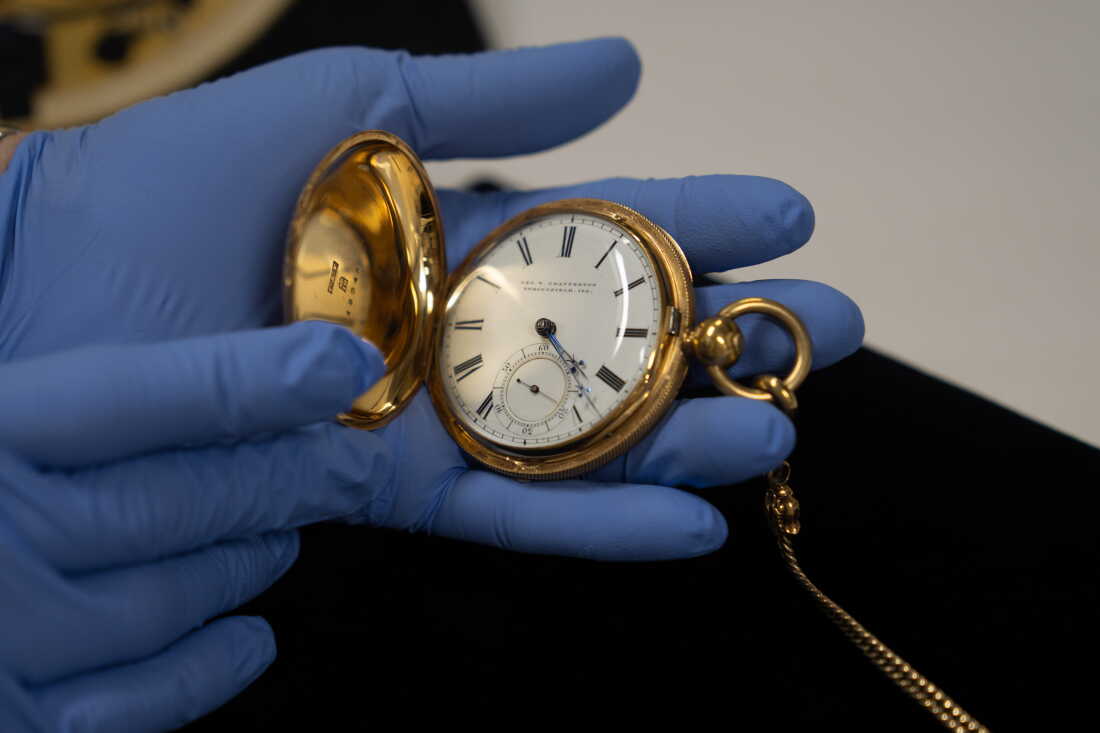
Watches do more than just tell time; they tell stories. At the Smithsonian National Museum of American History, an English-made pocket watch over 150 years old holds a unique narrative. This pocket watch, previously owned by Abraham Lincoln, remains out of public view within the museum’s extensive collection.
Lincoln purchased the watch for himself in the 1850s. Lisa Kathleen Graddy, a curator in American political history at the museum, explains its significance. She describes the watch as a personal symbol for Lincoln, signifying his successful transition from a day laborer to a notable lawyer, and eventually to the President of the United States.
On April 13, 1861, the watch was with Jonathan Dillon, a watchmaker, for repairs. At the same time, news broke out about the Confederate attack on Fort Sumter, marking the onset of the Civil War. A story passed down through Dillon’s family claimed he inscribed a secret message in the watch to commemorate the event.
Doug Stiles, Dillon’s great-great-grandson, contacted the Smithsonian regarding these alleged inscriptions. In 2009, NPR documented the museum’s decision to open the watch and verify the story. Dillon’s inscription indeed recorded the attack, the date he heard the news, his own name, and the phrase ‘thank God we have a government.’
Besides Dillon’s inscription, two others were found inside the watch. One was the name of another watchmaker, L.E. Gross. The second included the words ‘Jeff Davis,’ interpreted as a reference to Jefferson Davis, Confederate States’ president. Graddy suggests it may have been a joke or a statement supporting the Confederacy.
Graddy notes that the inscriptions reflect timeless aspects of American life, emphasizing people’s engagement with their government and the expression of opinions. These conflicting passions, she believes, define American democracy.
She remarks that Dillon’s message written over 150 years ago remains profoundly moving for her. ‘It makes me tear up every time I think about it,’ Graddy said. ‘It is one of the most moving statements of faith in America that I have ever seen. And it gets me through bad days.’