The Trials of Jimmie Duncan: A Life Reclaimed
A Safe Haven Amidst Turmoil
Jimmie “Chris” Duncan stood outside a motel in central Louisiana, reflecting on his current surroundings. Despite the drug dealings and suspicion of meth production below his room, he expressed a sense of security, a stark contrast to his previous life. Having been on death row, Duncan shared, “I feel safe anywhere.” For three decades, he has fought to prove his innocence following his conviction for the murder of a toddler.
The Path to Overturning Conviction
Investigations by Verite News and ProPublica uncovered that key evidence used against Duncan was fabricated by discredited forensics experts employing unreliable bite mark analysis. Despite the questionable evidence, prosecutors pushed for Duncan’s execution. The threat intensified as Louisiana Governor Jeff Landry expedited executions, ignoring the fact that the state has wrongfully convicted individuals in the past.
In June, relief arrived when the Louisiana Supreme Court overturned Duncan’s conviction. The court ruled that the bite marks, the sole physical evidence connecting him to the crime, couldn’t have been human-made. Chief Justice John Weimer criticized the prosecution, equating it to 17th-century witch trials, describing the evidence as specious.
The Impact of Wrongful Conviction
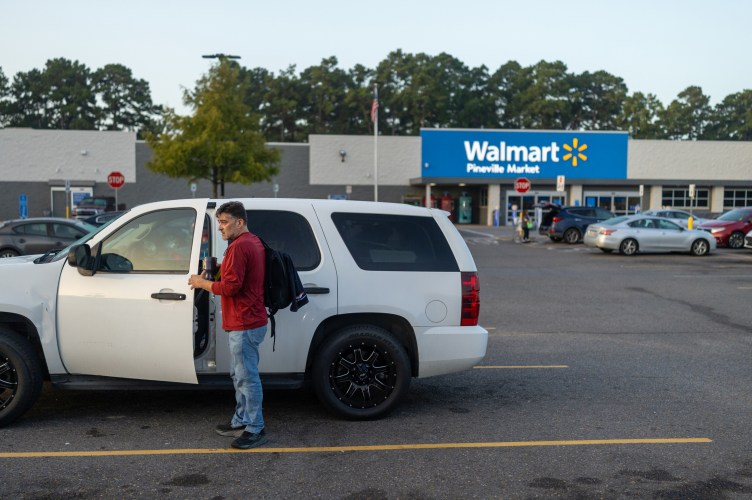
Despite the Supreme Court’s decision, Duncan remains in a precarious position. Ouachita Parish District Attorney Steve Tew vowed to retry Duncan if the conviction was vacated, asserting that Duncan deserved execution. Tew, whose term ends soon, has until June to pursue a retrial. Until then, Duncan exists in uncertainty, both mentally and financially. Post-release, he earns $17 an hour at Walmart, barely making ends meet without savings.
Louisiana’s restitution program offers exonerees up to $480,000 over a decade, but Duncan isn’t eligible until the possibility of a retrial is cleared. The process could take years, with no assurance of compensation. Attorney General Liz Murrill has contested most compensation claims, deeming the defense against such claims a burden and suggested abolishing the restitution fund.
Facing a Painful Past
Duncan recounted his harrowing experience since being arrested in 1993. He described the emotional agony of believing his loved ones thought he committed an unimaginable crime. “It felt as if everything you were was violently ripped away,” said Duncan.
The tragedy began when Duncan babysat Haley Oliveaux in West Monroe. After placing her in the bath and stepping away to wash dishes, he discovered her drowned. Initially charged with negligent homicide, prosecutors escalated the charge to first-degree murder based on dubious forensic evidence, including the purported bite marks. Although convicted in 1998, Duncan has continually sought to prove his innocence.
Survival and Resilience in Angola
Duncan’s first years in Louisiana State Penitentiary at Angola were exceptionally challenging. After losing his appeal in 2002, he watched his family suffer. His mother, devoted to visiting weekly, stopped suddenly in 2004 due to alcoholism-induced complications, exacerbated by grief over Duncan’s situation. Duncan missed both her funeral and his brother’s, who died from an overdose.
Life on death row nearly cost Duncan his sanity. In solitary confinement for 23 hours a day, he found the erratic schedules for the remaining hour difficult. The passage of time became distorted, and Duncan adopted a strict routine to maintain his mental health, focusing on exercise and learning. Despite efforts, years of isolation led to severe heart pain and heat-induced seizures.
Strides Towards Exoneration
Duncan gained hope from others exonerated due to faulty bite mark evidence presented by pathologist Steven Hayne and dentist Michael West. In 2009, journalist Radley Balko highlighted Duncan’s plight, but legal efforts stalled due to resource limitations.
In 2016, new attorneys and support from the Innocence Project uncovered evidence supporting Duncan’s innocence. Critical to his case was a video showing West fabricating bite marks during examination. The shocking footage catalyzed renewed legal battles.
Support and Redemption
Despite obstacles, Duncan found allies in filmmaker Catherine Legge and Allison Statham, Haley’s mother, who came to advocate his innocence. Statham’s testimony in Duncan’s bail hearing highlighted the prosecution’s deceit. Her support moved Duncan deeply, resonating with his enduring pursuit of truth.
Reconstructing Life After Freedom
Since being freed, Duncan has worked to rebuild his life. Initially residing with his aunt, logistical challenges moved him to temporary accommodation before securing his own apartment. Having the autonomy and comfort of personal space has been vital for Duncan.
At Walmart, he focuses diligently on his work, using it as a respite from past struggles. Duncan aims for advancement through management training. His vision includes advocating against the flawed systems that subjected him to injustice, particularly the conditions at Angola.
Reconnecting with figures from his past, Duncan reminisces fondly about relationships forged in simpler times. Although such memories seem distant, they offer a glimmer of hope. “I try to find ways to be happy, but nothing is simple anymore,” Duncan shared, reflecting on the complexities he faces.