Train Collision in Urda, Spain Sparks Concerns About Rail Safety
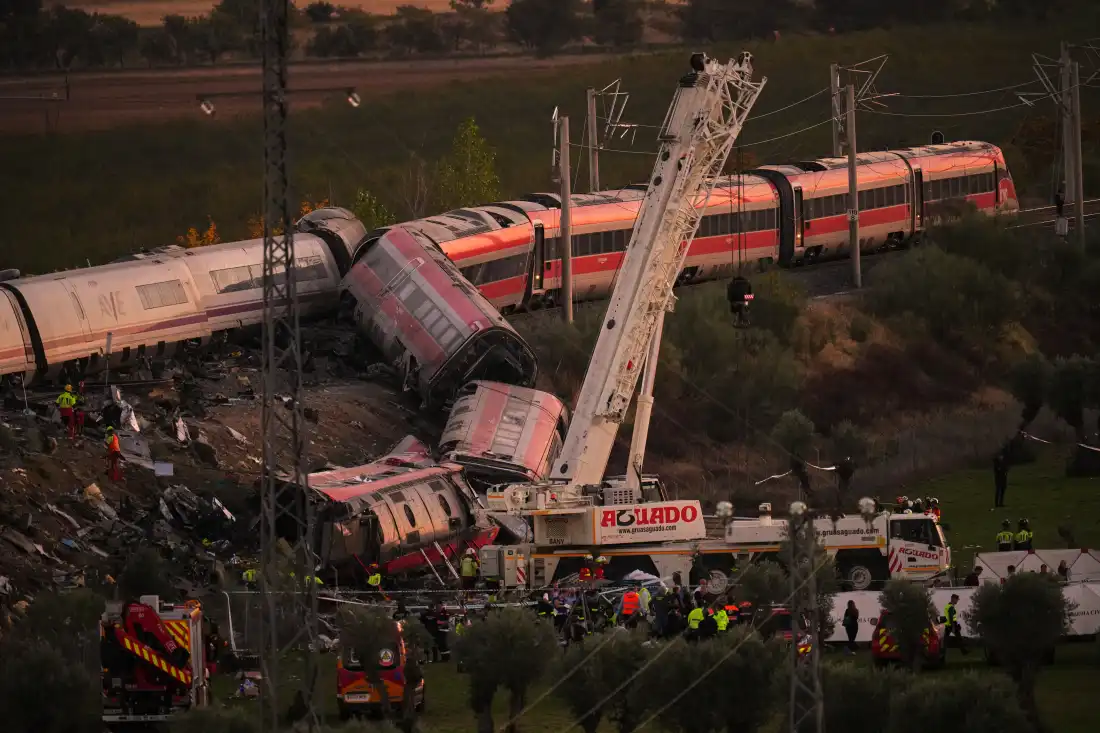
Emergency services responded to a train collision in Urda, Spain, on Wednesday, Oct. 28, 2026. This incident marks Spain’s second high-speed rail disaster in 2026, involving a rear-end impact between two trains. The disaster claimed 68 lives, raising concerns regarding the safety of Spain’s rail network.
Spain’s high-speed rail system, second only to China’s in track mileage, has been a significant achievement for the country. Before 2026, it had operated without a deadly accident for over three decades. The collision occurred in a typically quiet rail area, turning it into a scene of devastation. The crash happened just a month before Spain’s national election.
Government Response
Prime Minister Pedro Sánchez visited the crash site in Toledo after regional authorities confirmed the death toll and reported that dozens were hospitalized. In January, 46 people died when a train derailed and collided with another in southern Spain. Sánchez promised an investigation into the latest collision and safety improvements to restore trust in the rail system, which served 45 million travelers last year, including millions of tourists.
Sánchez stated, “We need to reinforce the safety of our train service to rebuild trust in our high-speed rail. It is not acceptable for Spain to have two high-speed train accidents in the same year.”
The government declared a three-day mourning period starting Thursday. Both fatal incidents this year involved trains from the state-owned RENFE and privately owned IRYO companies. Spain’s high-speed rail was liberalized in 2021, with IRYO starting operations in the subsequent year.
Political Implications
This rail disaster poses additional challenges for Sánchez leading up to the election. Having faced numerous crises since 2018, Sánchez secured reelection amidst the COVID-19 pandemic and rising global inflation. However, polls indicate he confronts another challenging election. The new rail disaster adds to his concerns over rail network safety, while opposing parties critique his liberal policies and corruption accusations.
Sánchez’s transport minister, Óscar Puente, addressed media inquiries on whether he would resign following the second major train accident. Puente focused on managing the collision rather than discussing his future. Opposition leader Alberto Núñez Feijóo of the Popular Party advocated for a comprehensive investigation and suspended his party’s campaign events for the day, emphasizing respect for the victims.
Feijóo stated, “This is the moment to respect the dead, the injured, and their families.”
Vox leader Santiago Abascal, aiming for coalition with conservatives, was less restrained, expressing anger over the state of affairs and vowing legal action against the current government.
Cause of the Collision
Transport Minister Puente attributed the crash to human error due to an “inexplicable” order from the central command after a security system failure. The engineers were not found at fault. Initially, a 39-mile stretch experienced a security system failure, causing trains to stop. The stationary IRYO train awaited near Urda, while RENFE trailed 15.5 miles behind. The central command subsequently authorized the RENFE train to proceed without speed restrictions, leading to a collision at 8:53 a.m.
Puente criticized the command, asserting the RENFE train shouldn’t have resumed movement with the active stop signal. If it had moved, it should have been at a reduced speed. Following the crash, emergency workers spent the day using cranes to remove damaged train parts, focusing on rescuing survivors and recovering bodies.