Trinity Christian College and the Closure of Faith-Based Institutions
About a decade ago, Andrew and Casey Kowitz met on their first day in a biology class at Trinity Christian College. She asked to sit next to him, and they became lab partners. A year and a half later, Andrew orchestrated a scavenger hunt with notes leading Casey to significant locations on campus, each holding memories of their relationship. The final spot was where they first took their class together, where Andrew proposed. Casey agreed immediately. Now married with two children, the Kowitz couple recently marked their sixth wedding anniversary.
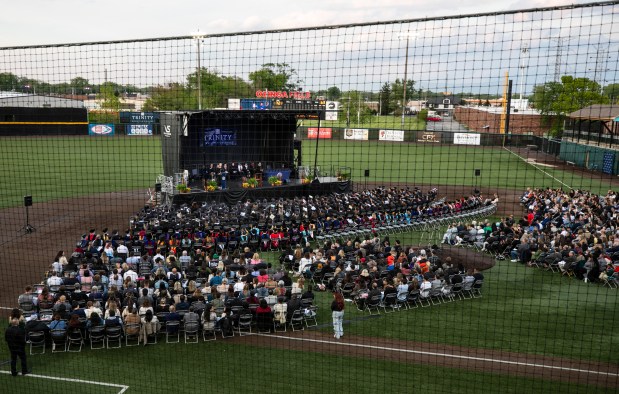
Trinity Christian College, the institution that played a pivotal role in their story, is closing due to financial difficulties and declining enrollment, as announced by the board of trustees. The school celebrated its last commencement on May 8. For many alumni and current students, the closure is a significant loss. The Kowitz family sees Trinity as foundational to their lives and their family’s existence, given the relationships and milestones it fostered for them.
Trinity’s closure is not isolated. Across the United States, other Christian colleges have faced closures or mergers due to financial pressures, similar to broader challenges faced by many higher education institutions. In 2024, Lincoln Christian University ended its academic programs, and Trinity International University announced its campus sale with plans to shift operations. Chicago Theological Seminary has also ceased admitting new students, citing the need for financial restructuring to sustain its mission.
According to The Hechinger Report, around 40 faith-based colleges have closed or merged since 2020, a trend reflecting broader challenges in the education sector, including enrollment declines, financial strain, and demographics projecting fewer high school graduates. The COVID-19 pandemic further compounded these issues by forcing many to adapt rapidly to virtual learning environments.
Losing religiously affiliated institutions has a distinctive emotional impact. Institutions like Trinity Christian connect deeply with students’ spiritual lives and community. Perry Glanzer from Baylor University describes the situation as one faced by all educational institutions, needing to adapt to fewer recruitable students. Christian colleges might be particularly affected due to their often smaller size, but having a distinct religious mission can also provide resilience. Some Christian colleges, particularly those affiliated with Catholic and Protestant denominations, continue to see enrollment growth and expand via online offerings.
Julia Leidecker, a sophomore, was shocked when she learned of Trinity’s impending closure. The atmosphere changed on campus, with students and faculty facing abrupt transitions. Leidecker plans to transfer to St. Xavier University but feels apprehensive about leaving the close-knit community.
Despite closures at other Christian colleges like Providence Christian College and Siena Heights University, many faith-based institutions maintain strong enrollment. A report by the Council for Christian Colleges and Universities shows growth in many member institutions, attributed to expanding online programs and some benefiting from local population growth.
For alumna Kylla Hutcherson, Trinity’s closure meant a personal loss of a place she hoped her children could experience. Reflecting on her experience, she appreciated the inclusive spiritual environment at Trinity. The closure highlights the impact of such institutions, where memories and community connections remain even as physical campuses change or disappear.
Olivia Stevens from Daily Southtown contributed reporting.