Trump Administration and the Role of DOGE
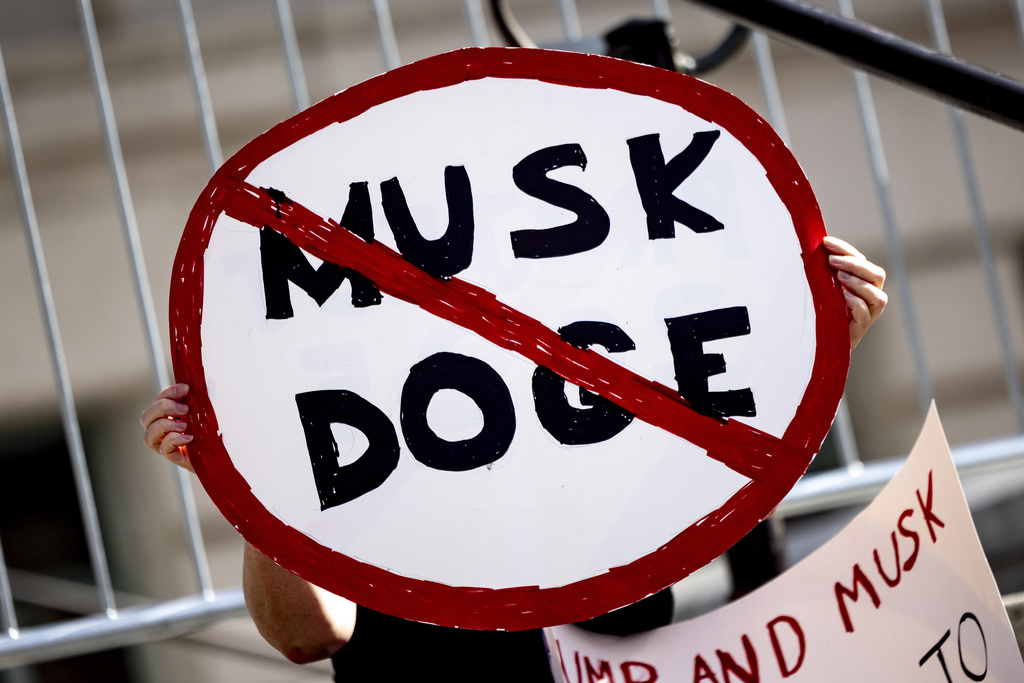
During a protest on February 17, 2025, in Los Angeles, a demonstrator held a sign expressing disapproval of the policies of President Donald Trump and Elon Musk. The Trump administration consistently captured headlines, adopting tactics that disrupted American political traditions. This strategy made it difficult to hold the government accountable. A key aspect of this approach involved the Department of Government Efficiency (DOGE), which had a significant impact on the federal government during President Trump’s second term.
DOGE aggressively targeted federal agencies, aiming to eliminate perceived fraud, waste, and abuse. Experts described the agency’s cuts to various departments as haphazard and extensive. The DOGE was unrestrained by legal considerations, operating under a president who claimed the authority to enforce his agenda on executive branch agencies, even without congressional consent.
One notable example of DOGE’s actions was its treatment of the National Endowment for the Humanities (NEH). The agency rescinded many grants made during the Biden administration, laying off two-thirds of its staff. On May 7, Judge Colleen McMahon of the Federal District Court in Manhattan condemned DOGE’s erratic actions against the NEH. Her decision urged Americans to take action against the administration’s continued reliance on DOGE’s methods.
President Trump redirected federal funds to support projects he deemed patriotic, withdrawing backing from those critical of the country or supporting diversity. Judge McMahon declared that such discrimination violated the First Amendment. She found that DOGE targeted and eliminated grants based on their connection to disfavored ideas and noted the government’s breach of the First Amendment when terminating grants linked to the Biden administration.
Judge McMahon criticized the two inexperienced DOGE employees appointed to represent the endowment. Lacking government or grant administration experience, they used ChatGPT to evaluate and reject grants related to diversity, equity, and inclusion (DEI). Ignoring the endowment’s authorizing statute, these DOGE representatives pressured the acting chair to prioritize the administration’s agenda.
McMahon’s decision serves as a reminder that courts will not tolerate legal overreach or disregard for the law in pursuit of presidential power. The DOGE’s activities were merely the inception of the Trump administration’s use of authority to penalize ideological adversaries. The administration wants the public to forget such actions and its ongoing defiance of established norms and rules. Remembering DOGE’s activities and McMahon’s findings remains vital for accountability.
Austin Sarat is the William Nelson Cromwell Professor of Jurisprudence and Political Science at Amherst College.