Trump Administration Partners with NABEP to Access Venezuelan Oil Reserves
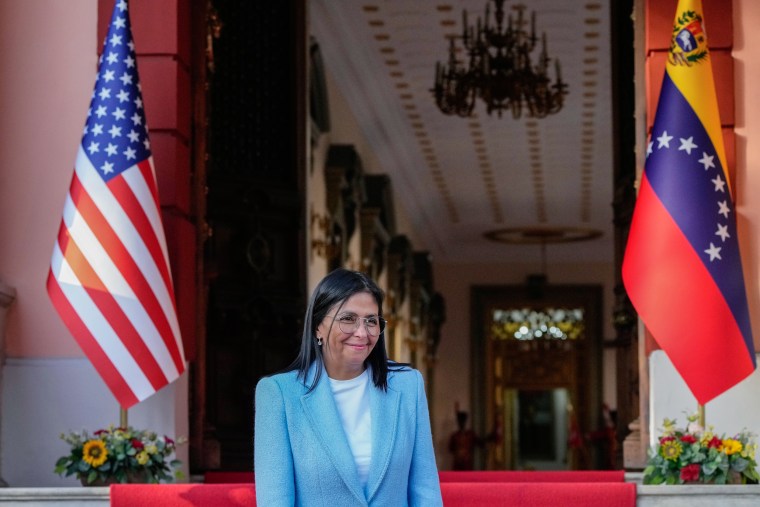
The White House announced on Monday a partnership with North American Blue Energy Partners (NABEP) as part of President Donald Trump’s initiative to access Venezuela’s oil reserves. This move aligns with Trump’s strategy to boost oil production in the region, granting the Pentagon a significant stake in Venezuela’s oil industry.
Details of the Agreement
Details of the agreement, described by Trump as the largest oil deal to date, were released Monday night. The Trump administration aims to revitalize Venezuela’s oil production, despite analysts’ doubts about the timeframe. They see this as an opportunity to establish a new oil powerhouse in the Western Hemisphere.
The deal involves creating a private company as part of a joint venture with NABEP. This Venezuelan company, owned by businessman Alejandro Betancourt, ranks as the second largest operator in the country, following Chevron. The White House withheld this information for several days.
Venezuela’s acting President Delcy Rodríguez has granted the company a 100-year lease on 17 oil fields with 65 billion barrels of proven reserves. These fields were formerly owned by Russian or Chinese entities.
U.S. Investment and Oversight
The agreement provides the Pentagon with a 35% ownership stake, while the State Department obtains a purchase guarantee for 20% of the output at cost. The Venezuelan company has agreed to invest $100 billion in new oil infrastructure.
In a statement, Betancourt highlighted Venezuela’s abundant natural resources and emphasized the deal’s potential benefits for both Venezuelans and Americans. He noted his 15-year involvement in the Venezuelan oil industry, where his company employs over 5,000 people and works with more than 10,000 contractors.
The White House claims the deal imposes no cost on the U.S. and includes veto power over board member selections, most of whom will be U.S. citizens. The agreement with NABEP is governed by U.S. law and subject to U.S. court jurisdiction.
Reactions and Potential Risks
Despite political risks associated with future challenges in both Venezuelan and U.S. administrations, the deal is seen as a potential solution to Venezuela’s energy sector issues. Trump has acknowledged that Americans might not experience immediate relief in fuel prices.
Rodríguez has supported the deal, viewing it as a modernization opportunity for Venezuela’s oil industry. She reassures that Venezuelan sovereignty remains intact despite the agreement.
U.S. lawmakers expressed interest in more details about the agreement. Rep. Rick Crawford seeks further information from the Trump administration, while Sen. Jack Reed criticizes the involvement of the U.S. military in a private oil venture and demands legal clarity.
Upcoming Discussions
Trump intends to meet with oil refiners to discuss increasing America’s gasoline refining capacity. This meeting comes in response to rising fuel prices, influenced by the Iran war, which has led to a national average price of $4.08 per gallon, a 28% increase from the previous year.
The White House believes expanding refinery capacity will gradually lower consumer prices. The discussion will include Interior Secretary Doug Burgum, Energy Secretary Chris Wright, and Jarrod Agen, director of the White House National Energy Dominance Council.