Trump Delays Tariffs, Suggests Keystone XL Pipeline Revival
President Donald Trump announced on Tuesday a temporary pause on 50% tariffs for Canadian imports, citing a preliminary agreement between the U.S. and Canada. This delay, covering three days, awaits final documentation. Initially, the tariffs were set to commence on Wednesday, impacting approximately $20 billion worth of Canadian goods, according to the Associated Press.
Trump hinted that this agreement might facilitate the revival of the Keystone XL Pipeline, previously halted under President Joe Biden in 2021. Trump expressed optimism in a post, indicating the pipeline “may be awoken from the grave.” Reviving the pipeline represents another effort from Trump to revert policies from Biden’s administration. However, the pipeline’s future remains likely dependent on regulatory and development conditions.
Canadian Prime Minister Mark Carney also addressed the situation on social media, acknowledging progress in negotiations between the two countries. Nonetheless, he refrained from declaring a finalized deal, emphasizing that work on finalizing details is ongoing. Newsweek contacted the White House for further comments Tuesday evening.
What Is the Keystone XL Pipeline?
The Keystone XL Pipeline is recognized as one of the most controversial energy infrastructure projects in North American history. It has been central in debates regarding climate change, energy security, job creation, Indigenous rights, and U.S.-Canada relations.
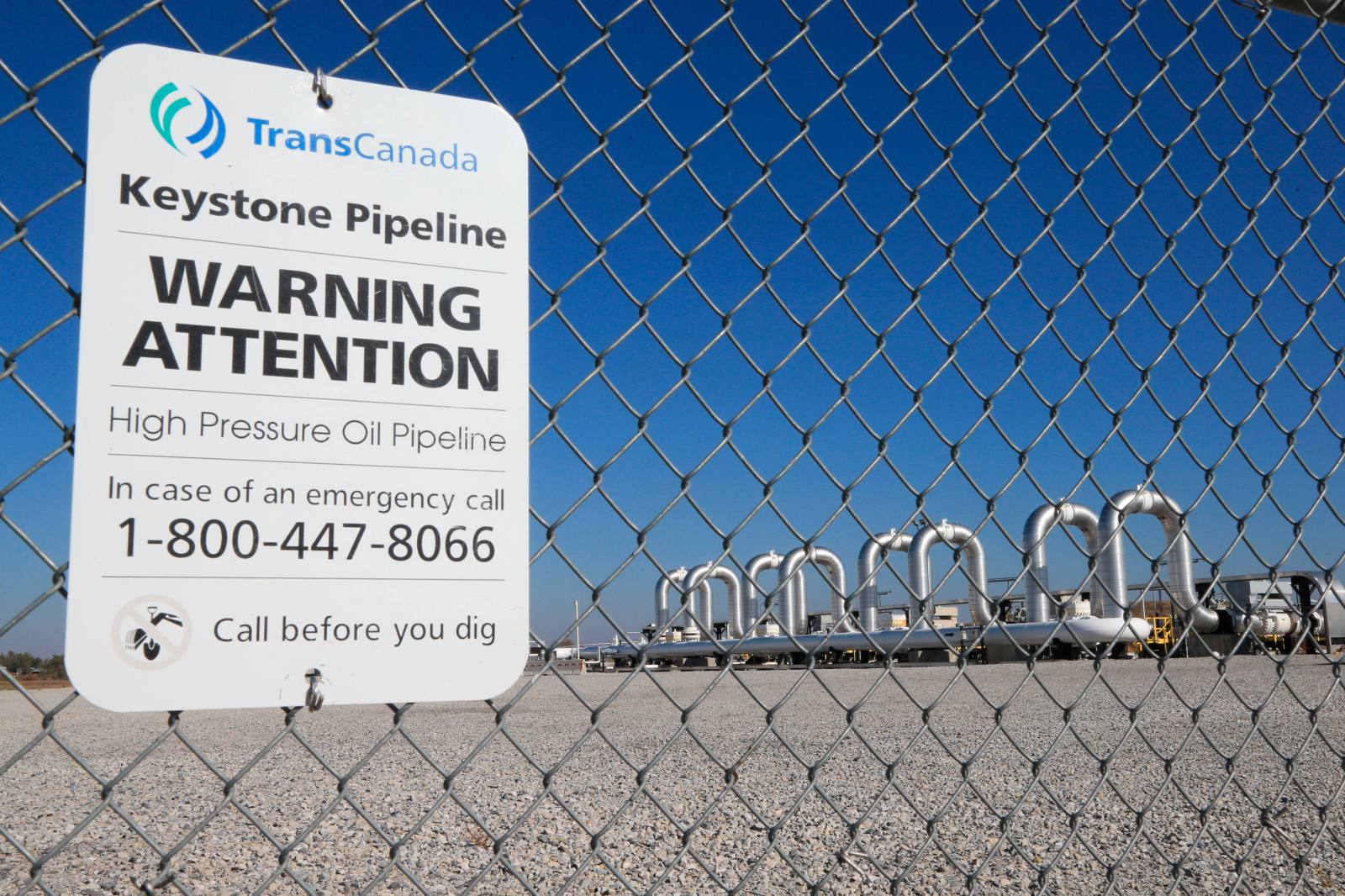
Originally proposed in 2008 by TransCanada Corporation, now known as TC Energy, the project aimed to expand the existing Keystone Pipeline System. This system already transported crude oil from Alberta, Canada, to the United States. Keystone XL was planned as an additional pipeline from Hardisty, Alberta, to Steele City, Nebraska, connecting with existing pipelines to Gulf Coast refineries, Canadian officials reported.
Proponents argued it would bolster North American energy independence and generate jobs. Critics, however, saw it as a symbol of ongoing fossil fuel reliance. Designed to carry up to 830,000 barrels of oil daily, it raised concerns over potential spills, especially in ecologically delicate areas like Nebraska’s Sandhills and the Ogallala Aquifer, a significant underground freshwater source in the U.S.
The pipeline needed a presidential permit, as it crossed an international border. This requirement elevated a typical infrastructure proposal into a significant political issue. After extensive review, President Barack Obama rejected it in November 2015. Trump revived the project upon assuming office in 2017, but Biden rescinded the cross-border permit on his first day in office in 2021.
Insights About the Deal
The United States Trade Representative responded to Trump’s announcement via social media, stating, “Congratulations Mr. President. The deal will include comprehensive market access for all American goods, economic security commitments, digital trade alignment, and many important provisions that will continue to protect our market and American workers, along with our Canadian partners.” Further updates on this developing story are anticipated.
For more details, Newsweek editors can be contacted regarding this story, specifically Edward T. Cummins.