Trump Faces Declining Approval Amid Economic Concerns
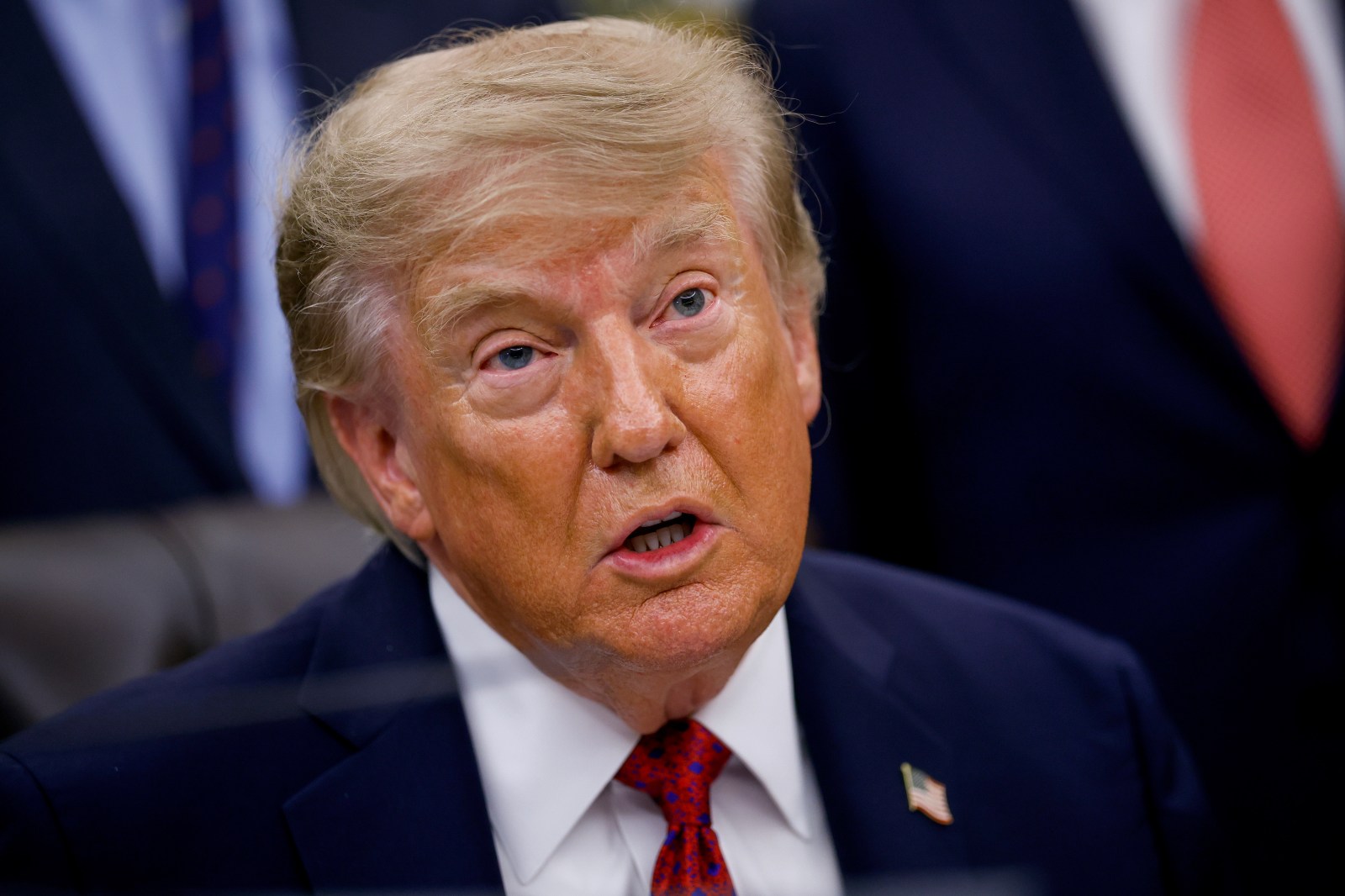
Some supporters of President Donald Trump are distancing themselves, as indicated by a University of Massachusetts Amherst poll showing his approval rating hitting a record low.
Implications for Midterms
This drop in approval impacts the Republican Party during the midterms, where key races for House and Senate control are in play. Trump’s popularity has declined since he returned to office last year. Voter dissatisfaction centers around the economy, inflation, and the ongoing unpopular war in Iran.
Low presidential approval ratings historically lead to losses for the president’s party in midterms. In 2018, Republicans faced such losses during Trump’s first midterm. Democrats aim to take advantage of this decline to contest traditionally conservative states like Texas.
Dissatisfied Voter Base
The UMass poll reported that 84% of Trump’s 2024 voters would back him again if given the chance, while 94% of voters for Democratic former Vice President Kamala Harris said the same. However, many of those dissatisfied with Trump aren’t shifting to Harris. Only 2% would switch to her, 7% would opt for a third party, and another 7% wouldn’t vote at all.
Among non-voters from 2024, only 20% would choose Trump if the election were repeated, compared to 27% for Harris and 14% for a third party. Forty percent would abstain from voting.
Approval Ratings Across Polls
Trump’s net approval rating decreased to -32 points, with 32% approving and 64% disapproving in the UMass poll. This reflects a downward trend from earlier UMass polls, which showed -29 points in March 2026 and -20 points in July 2025. UMass Amherst’s Tatishe Nteta warned that failure to address key issues risks further declines and potential loss of Republican House and Senate control.
The UMass poll sampled 1,000 respondents from August 21-26, 2026, with a margin of error of ±3.5 points.
Other Polls Reflect Similar Trends
Numerous polls indicate a decline in Trump’s approval rating as midterms approach. A Morning Consult poll showed a net approval of -14 points, with 41% approval and 55% disapproval. It surveyed 2,203 registered voters from August 28-30, 2026.
A Quantus Insights poll reported a net approval of -15 points, surveying 1,200 likely voters from August 26-28, 2026, with a margin of error of ±3.2 points.
The YouGov and The Economist poll placed Trump’s net approval at -21 points, while a Reuters/Ipsos poll showed him at -32 points.
Trump’s Response to Polls
Trump criticized polls indicating his sinking approval rating. On August 30, he dismissed these polls as misleading on Truth Social, urging action.
“THE FAKE POLLS USED BY OUR CROOKED MEDIA ARE OUT OF CONTROL, AND SOMETHING MUST BE DONE ABOUT IT.”
The White House referenced this post when contacted for comment by Newsweek. Trump also labeled recent polls as part of “Demoralization Operations” against Republicans.
Economy and Approval Slump
Trump’s approval deterioration ties to public discontent with the economy. CNN analyst Harry Enten highlighted inflation as a major factor influencing Trump’s election, noting a drop in the president’s inflation approval among independents to -64 points in recent polls, from being trusted over Harris on inflation by 12 points in August 2024.
The UMass poll revealed only 22% believe Trump managed inflation well, while 75% didn’t. On employment, 31% thought he performed adequately, versus 63% dissenting.
The YouGov and The Economist poll reflected eroding economic confidence, with 39% trusting Democrats and 32% trusting Republicans more regarding the economy.
Only 3% called the economy “excellent,” 21% “good,” 33% “fair,” and 40% “poor.” Most believed economic conditions were worsening.
Gas prices, influenced by the war in Iran and disruptions in the Strait of Hormuz, have further strained public sentiment toward Trump’s leadership.