Trump’s Strategies Struggle to Shift Iran’s Nuclear Program Stance
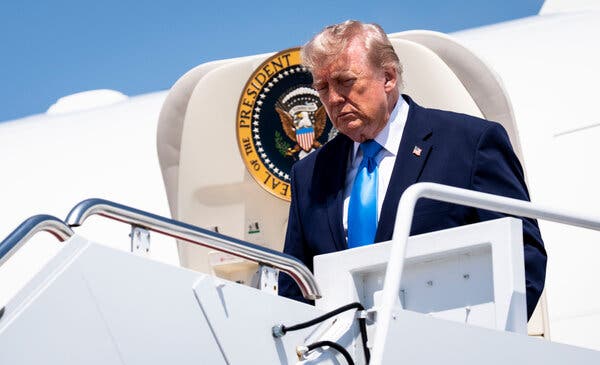
President Trump attempted to pressure Tehran into accepting American demands for a peace agreement through threats and military action. Since announcing a cease-fire with Iran in April, he has continued efforts to enforce his terms.
Although over a month has passed, emerging deal outlines reveal that Trump’s pressure strategy has not significantly altered Iran’s position on its nuclear program. The potential agreement could lead to reopening the Strait of Hormuz, a crucial route for oil and gas, which Iran blocked following U.S.-Israeli attacks that initiated the war in late February. However, significant decisions on other complex issues might be postponed.
The Strait of Hormuz was expected to reopen by now. Free passage was a condition Trump set for halting the conflict in April. U.S. officials anticipated that resuming ship flow would lower surging gas prices, ease domestic opposition to the war, and reduce Iran’s leverage in negotiations.
Nonetheless, Iranian forces have sustained control over the strait, and U.S. efforts have not weakened their hold. On April 13, the U.S. military implemented a naval blockade of Iranian ports, which remains active. This blockade has redirected at least 100 ships around Iran’s cities, according to military reports.
In May, Trump introduced “Project Freedom,” aiming to protect vessels trapped by the prolonged Iranian blockade, permitting their safe departure from the strait. Although two ships successfully escaped, Trump suspended the program shortly after. Attempts to gain European allies’ support for policing the strait were unsuccessful.
Despite repeated threats of further attacks on Iran, Trump abstained from further military actions. The war with Iran has been unpopular in the U.S., even among Republicans. It inflated oil and gas prices and strained Washington’s Arab partners, who faced the brunt of Iran’s retaliatory measures.
In late April, as another deadline for Iran’s compliance appeared impending, Trump extended the cease-fire to allow negotiations to conclude. He maintained threats through social media, signaling expiration threats for Iran.
Recent delays in announcing another offensive occurred at Arab Gulf leaders’ requests as “serious negotiations” seemed underway. Experts in Iranian affairs suggest that the country’s leadership feels strengthened post-war. They believe Iran withstood an attempted overthrow of the Islamic Republic, viewing time as an ally due to their impact on global energy prices.