Trump’s Use of Taxpayer Dollars Sparks Controversy
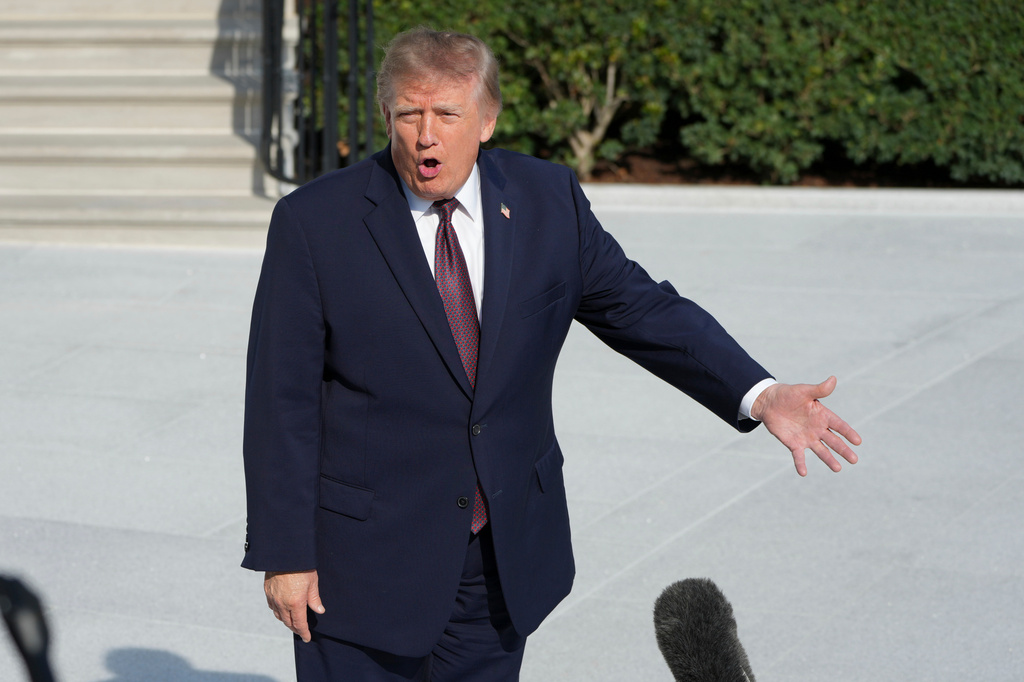
President Donald Trump addressed reporters on the South Lawn of the White House before boarding Marine One. He has raised significant funds through Political Action Committees (PACs). However, concerns arise as he utilizes taxpayer money for political advertisements, seemingly to aid Republicans affected by his low approval ratings.
An insider from the Bush administration labeled these ads “sheer propaganda.” One of these ads mirrors a campaign ad from 2024, but with taxpayer funding. Reports from the Washington Post suggest that $20 million, allocated by Congress for specific purposes like border security and honoring fallen officers, is being redirected to fund these ads. This action raises legal questions, but it aligns with previous behavior from this administration.
The administration’s handling of these funds involves spokespersons defending the ads as reminders for Americans to love their country, though many view these as attempts to bolster Trump’s image and mobilize his base, despite a disapproval rating exceeding 60%.
In a repetitive tactic, an ad revisiting a 2024 message displays Trump vowing to “expel warmongers.” This is perceived as contradictory, given his hire of a “lethality”-focused warmonger at the Pentagon. High gas prices and the financial burden of Trump’s actions in Iran are pressing concerns for Americans, alongside the significant expenditure on military supplies.
The controversy extends beyond ads. September marked the inception of Trump TV, a government-funded channel featuring Trump-heavy content. Shortly afterward, Trump’s business sought to trademark its name.
The Trump administration’s actions also include media restrictions. Days before Trump TV’s launch, reporters from CNN, MS NOW, and Politico were temporarily barred from White House access, while Chinese state media covered a visit from President Xi Jinping. Legal orders have partially restored some media access, but restrictions remain, including those on the Associated Press, imposed due to their non-compliance with Trump’s renaming of the Gulf of Mexico.
Congressional Republicans exhibit limited willingness to challenge these issues, but Trump’s actions concerning media and taxpayer-funded ads have prompted slight critiques, although brief. Republican strategy reflects hesitation to distance from Trump due to potential financial and political repercussions.
Voters face choices to counteract financial influences and demonstrate that collective action can surpass monetary efforts in elections. A critical time window remains to affect these outcomes.
Svante Myrick, President of People For the American Way, emphasizes the importance of voter engagement in overcoming the influence of money in politics.