U.S. Army Delays Detonation of Lead Azide in Iowa Amid Public Concerns
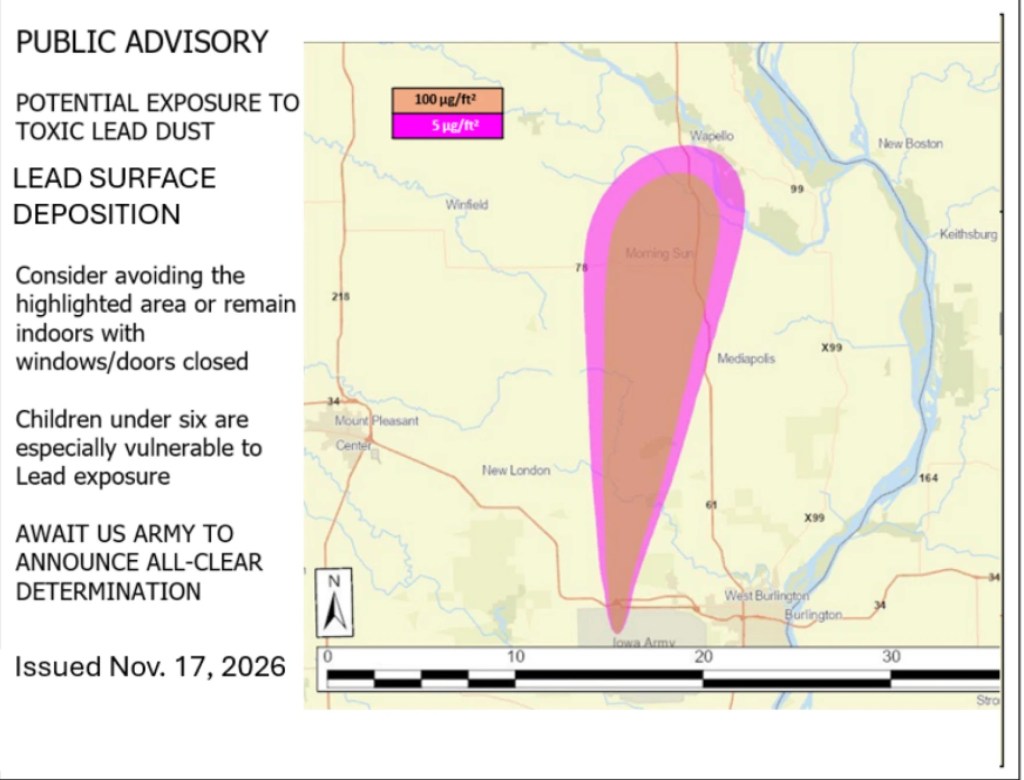
The U.S. Army has postponed the planned detonation of explosive chemicals in southeast Iowa to Monday. Concerns arose about potential environmental contamination and health risks from lead dust. This decision followed calls for a delay, including one from Iowa Governor Kim Reynolds, who communicated directly with Acting Secretary of the Army Adam Telle.
Environmental groups filed a lawsuit seeking to stop the detonation. The Army delayed the blast of unstable lead azide at the Iowa Army Ammunition Plant, citing public concerns about toxic lead dust. The need for detonation emerged after discovering degraded lead azide, creating an unstable situation.
Moving the material posed a high risk due to potential accidental detonation, especially in cold weather. Telle explained that the postponement aims to prevent further destabilization before temperatures drop. Nearby residents, especially in Middletown, were advised to vacate the area.
Although detailed information had been shared in an October meeting, many communities, some as far as 100 miles away, received their first advisory recently. The EPA’s permit required the Army to model potential dispersion of the detonation’s effects.
Public communication is essential to public trust.— Adam Telle
Schools and businesses across the region planned closures on the original detonation date. Pat Wallace, Superintendent of Danville schools, decided on closure due to uncertainties, despite initially considering remaining open. Concerns also arose in Mediapolis, leading to school and library closures and plans to clean possible lead particle contaminations.
Vibrations from the blasts are expected to be brief but may damage old windows nearby. Any resulting dust is not expected to linger long. The Army’s models suggest lead particle levels, though elevated, should remain within safe limits according to the EPA. Residents are advised to clean cars, windowsills, and outdoor surfaces.
Middletown residents learned in March about the need to dispose of barrels containing lead azide. The plant had paused operations, and the Army identified degraded materials. Lt. Col. Daniel Nosse emphasized the importance of safety for both personnel and the community.
The Army collaborated with experts to develop the detonation plan, given the handling risks. Cold weather increases the likelihood of accidental detonation, according to Army officials.
Experts recommend precautions to residents. Patrick O’Shaughnessy from the University of Iowa stressed the unknowns about environmental contamination levels. Lead exposure poses serious health risks, including neurological harm and potential lead poisoning. Purdue University’s Andrew Whelton cautioned about the effects of acute and long-term lead exposure.
The Des Moines County Extension field office received numerous queries from concerned residents about potential impacts on animals and gardens. Morgan Hoenig reported a shortage of soil test kits due to high demand.
Meanwhile, environmental groups argued in court that the EPA and the Army did not fully explore safer alternatives. Documents revealed that alternatives such as chemical neutralization were considered but deemed too dangerous due to the increased risk of accidental detonation.