U.S. Defense Secretary Addresses Taiwan Relations at Defense Summit
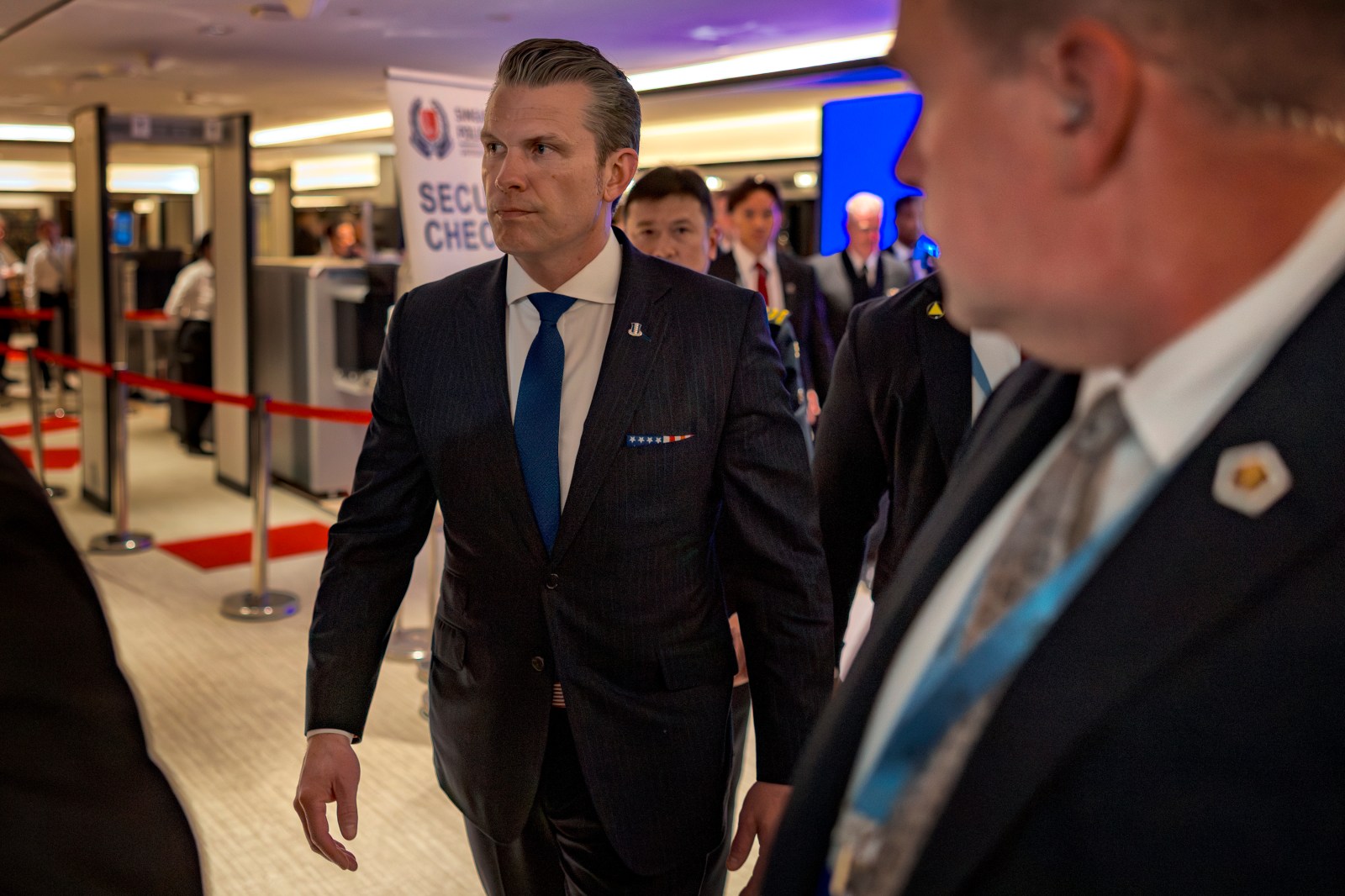
U.S. Secretary of Defense Pete Hegseth spoke at a significant defense summit in Singapore, addressing Taiwan’s situation. His remarks seemed carefully crafted to maintain President Donald Trump’s strategy of reducing tensions with China, according to a Chinese think tank analyst quoted by Newsweek. The speech took place shortly after Hegseth accompanied Trump on a state visit to China, marking the first such visit by a U.S. president in nine years. Both nations aimed to reset relations which had been strained by issues like trade and technology supply chains, and the Taiwan question.
President Xi Jinping’s Cautionary Note
China considers Taiwan a rogue province that must return under its control and has left open the possibility of using force for reunification. President Trump mentioned discussing Taiwan extensively with President Xi Jinping. Xi warned that mishandling the issue might lead to a ‘very dangerous situation.’ Following their discussions, Trump placed a potential $14 billion arms deal with Taiwan on hold, describing it as a ‘negotiating chip.’
Newsweek reached out to Taiwan’s foreign ministry for comments on the situation.
Hegseth Approach to Taiwan Issue
While Hegseth aimed to reassure regional allies, his speech was noticeably more restrained compared to his previous year’s address. Though he noted regional concerns, he praised the improved U.S.-China relation under Trump. He cautioned against a potential Chinese attack on Taiwan but did not specifically mention Taiwan this year. His focus was on the U.S. strategy of deterrence along the ‘First Island Chain’ to make conflict less appealing. This chain of islands from Japan to Borneo is seen as crucial by the Pentagon for containing China’s military actions if conflict arises.
Arms Sales to Taiwan: A Sensitive Topic
Hegseth’s presence in Beijing with Trump gave him insight into the delicate nature of Taiwan’s arms sales, especially during recent cross-strait détente developments, Da Wei, a director and professor at Tsinghua University, noted. Trump’s decision on Taiwan’s arms package remains pending. Da suggests that approving the deal would complicate Xi’s potential September visit to the United States due to the political stakes involved.
Hegseth, fielding questions post his speech, dismissed concerns about the U.S. defense industry’s ability to replenish depleted munitions, a concern mentioned by acting Navy Secretary Hung Cao. Hegseth emphasized the U.S. capability to maintain munitions supply without issue.
U.S. Role as Taiwan’s Main Arms Provider
The United States has historically been Taiwan’s primary arms supplier, as outlined in the 1979 Taiwan Relations Act. The promise to reduce arms sales to Taiwan lacked a specific timeline and depended on threats to the island. Critics warn that this conditional policy emboldens Beijing to pressure Taiwan and extract U.S. concessions. Historically, U.S. administrations have adjusted arms-sale announcements to avoid straining sensitive periods in U.S.-China relations.