U.S. Deploys Sea Drones in Iranian Conflict
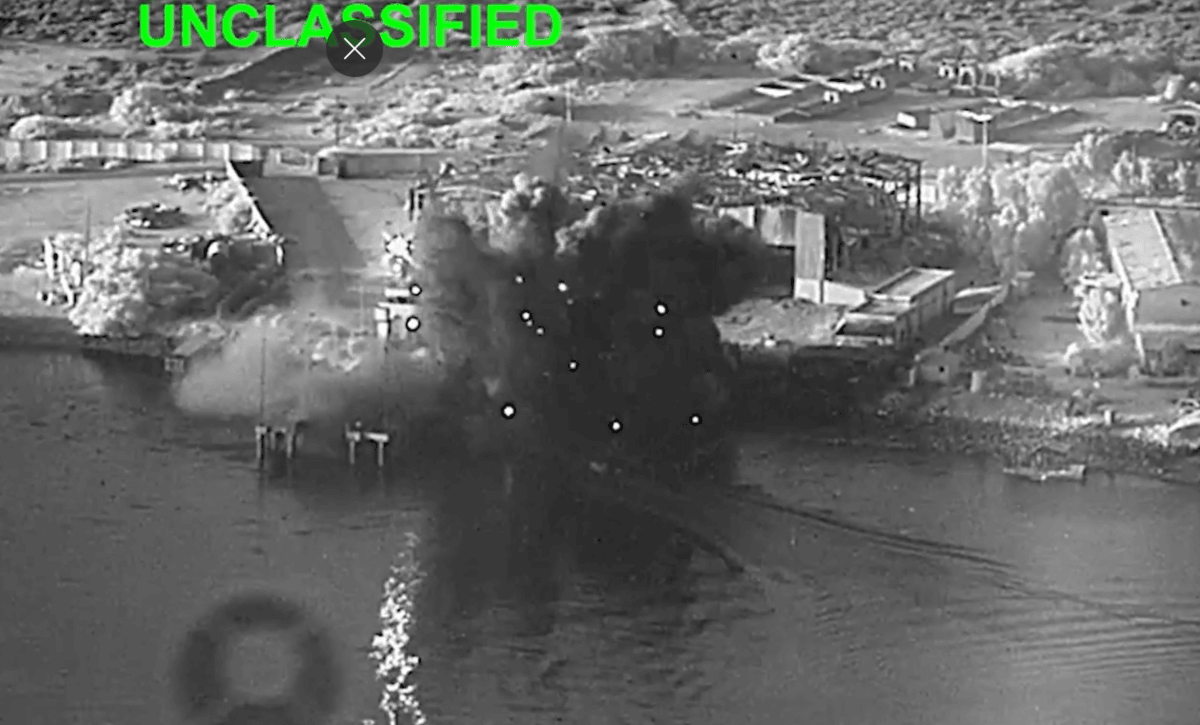
The United States military announced a historic deployment of sea drones in combat, targeting a southern Iranian hub essential for submarine repairs. These drones, equipped with explosives, represent the first-time usage by a major Western military in active warfare. The U.S. utilized three Corsair naval drones aimed at Bandar Abbas, a crucial port home to Iran’s naval forces, positioned north of the strategic Strait of Hormuz.
In stark contrast, Ukraine has used similar drone technology against Russian ports in the Black Sea since 2022. Meanwhile, Iran has deployed small, fast-attack boats to disrupt commercial shipping in the vital Strait of Hormuz, escalating tensions with the U.S.
Saronic, the Texas-based manufacturer behind the Corsair drones, expressed pride in supporting the mission. The 24-foot long drones can achieve speeds of 40 miles per hour and cover distances up to 1,150 miles. They are the smallest of Saronic’s three types of autonomous surface vessels.
The U.S. Navy secured a $392 million agreement with Saronic for Corsair drones back in December 2025. Notably, one Corsair drone recently rescued two U.S. soldiers from a helicopter crash near the Strait of Hormuz.
On Monday, the U.S. Central Command released footage purportedly showing the drones’ impact in Bandar Abbas. The video depicts drones heading toward the port, culminating in a large explosion as one crashes into a pier. Newsweek indicated they could not independently verify the clip.
In southern Iran, state media reported three casualties following the strikes. The U.S. military claimed that the drone attacks have diminished Iran’s capabilities to target commercial shipping.
Hostilities intensified with three nights of U.S. strikes on Iran, prompting Tehran to retaliate. Iran reportedly targeted tankers belonging to the United Arab Emirates in the Strait of Hormuz, worsening diplomatic tensions. One fatality and several injuries resulted from Iranian missile attacks in Oman’s waters. Additionally, Iran asserted attacks on U.S. military operations in Jordan and Bahrain.
This ongoing conflict originated with a joint U.S.-Israeli campaign in late February. In return, Iran launched drone and missile attacks against U.S. allies. The confrontations further impeded efforts to reopen the Strait of Hormuz, crucial for global oil and gas transit. President Donald Trump announced plans to reinstate the blockade on Iranian ports and impose a 20 percent levy on goods transiting the strait.
Despite past negotiations for access to Iranian ports, U.S. naval blockades resumed in April. Iran’s parliament is currently considering legislation to strengthen control over the Strait of Hormuz, following drone confrontations.