U.S. Indicts Former Cuban President Raúl Castro for 1996 Plane Shootings
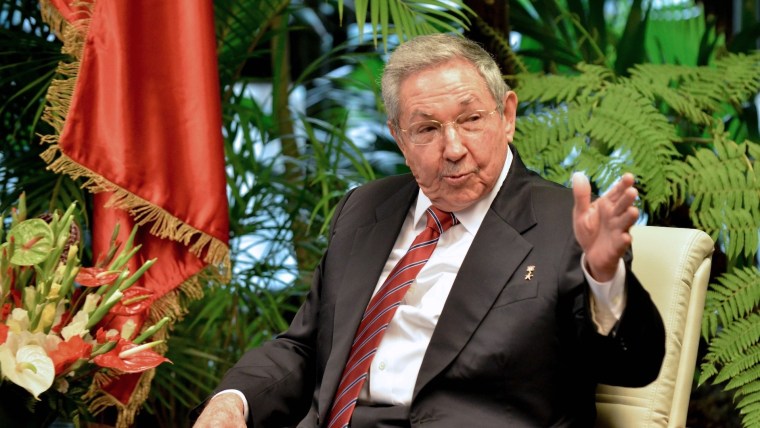
The U.S. Department of Justice has officially indicted former Cuban President Raúl Castro for his alleged involvement in the 1996 shooting of two civilian planes. This incident resulted in the death of four Cuban exiles. Raúl Castro, aged 94 and the brother of Fidel Castro, faces charges of conspiracy to kill U.S. nationals, murder, and aircraft destruction. Acting U.S. Attorney General Todd Blanche announced the indictment of Castro along with five other Cuban fighter pilots.
The indictment announcement took place in front of Miami’s Freedom Tower, which holds symbolic significance for Cuban Americans. May 20, recognized as Cuban Independence Day, added to the historic backdrop. Blanche emphasized the indictment’s seriousness during the news conference: “Raúl Castro and his co-defendants were part of a conspiracy that led to military aircraft firing on civilian planes, resulting in the death of four Americans.” According to the indictment, orders to shoot down the planes passed through the Cuban military command, with Raúl and Fidel Castro as key decision-makers.
The crowd in downtown Miami welcomed the announcement with loud applause. Officials also paid tribute to the four Cuban American men—three U.S. citizens and a legal resident—tragically killed on February 24, 1996. During that time, Raúl Castro held the position of Cuba’s defense minister. The planes belonged to Brothers to the Rescue, a group founded in 1991 by Cuban American pilot José Basulto and other exiles. The organization aimed to rescue Cubans fleeing the island via makeshift rafts, frequently flying over the waters between Cuba and Florida.
According to declassified U.S. records, Brothers to the Rescue sometimes entered Cuban airspace. An official warning from the Federal Aviation Administration labeled the group’s activities as “taunting” the Cuban government. During one operation, two of their planes were shot down by Cuban MiG-29s in international airspace. Cuba insisted the planes violated its airspace. Reports from the United Nations’ International Civil Aviation Organization and the Inter-American Commission on Human Rights, however, attributed the deaths to direct actions by Cuban State agents in international airspace, without proper interception procedures.
The Clinton administration and U.S. Congress quickly condemned Cuba’s actions after the incident, resulting in sanctions and the conviction of a man accused of providing Cuba with mission information. Decades later, the incident remains a politically charged U.S.-Cuba relations episode. Cuban American lawmakers, as well as families of the victims, have long pushed for Raúl Castro’s criminal charges in the U.S. Blanche explained that law enforcement faced ongoing challenges with the incident, stating, “We have focused on this for a long time and have gathered the necessary evidence for indictment.” Specific grand jury evidence details remain undisclosed.
Family members of those killed expressed relief at the indictment news. Miriam de la Peña, mother of victim Mario Manuel de la Peña, voiced her gratitude: “We are hopeful and thankful that our children are recognized as murder victims of a dictatorship who extended their reach into international waters to kill American citizens, which is unacceptable.” While Cuba is unlikely to extradite Castro, Blanche suggested the possibility of U.S. action within Cuba. A warrant for Castro’s arrest has been issued, with hopes he would present himself to face charges in Miami.
Cuba’s government responded sternly to the indictment, with President Miguel Díaz-Canel accusing the U.S. of “lying and manipulating” the 1996 incident. Cuban American lawmakers, including Reps. Mario Díaz-Balart and others of Cuban descent, had written to the Justice Department advocating for the indictment, viewing it as a crucial step in achieving justice.
Despite stepping down as president in 2018 and as Communist Party secretary in 2021, Raúl Castro still wields influence in Cuba. As Cuba plans June 3 celebrations for Castro’s 95th birthday, the indictment adds to U.S. pressure on Cuban political and economic systems. Cuban officials have accused recent U.S. actions of attempting to force a transition unfavorable to Cuban sovereignty. Fuel shortages and long power outages have plagued Cuba, exacerbated by U.S. sanctions and the reduction of Venezuelan oil shipments following Nicolás Maduro’s fall from power. Cuban citizens face hardships, with rolling blackouts impairing access to essentials.
Havana residents report dire circumstances, calling for immediate solutions to problems affecting daily life. Complaints highlight issues with electricity, water, and food supplies. Cuban government’s condemnations reflect resistance against perceived U.S. “attacks” and accusations of economic strangulation. Tensions between the U.S. and Cuba remain high amidst these developments.