U.S. Struggles with Dependence on Chinese Mineral Supplies
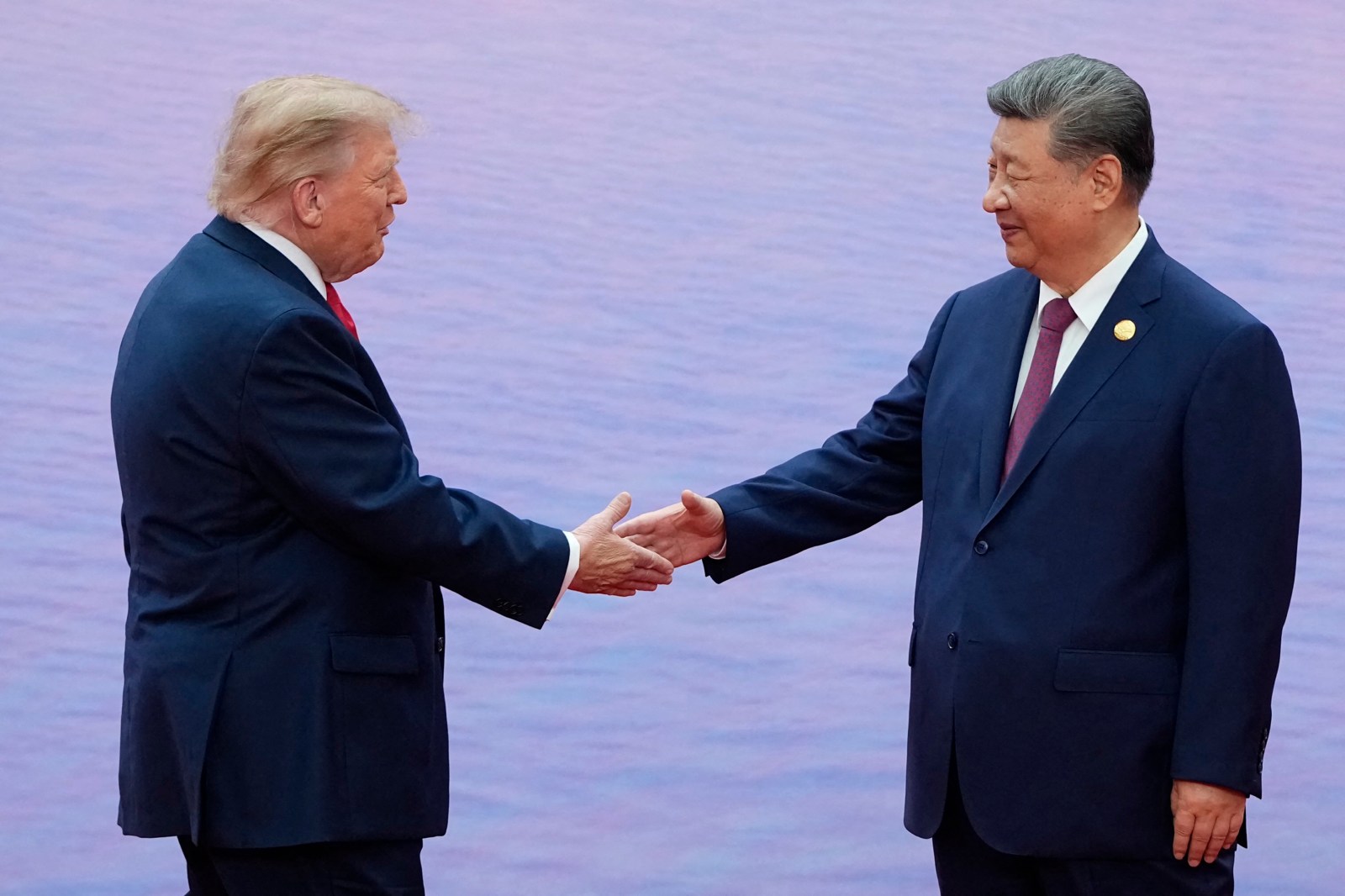
President Donald Trump arrived in China on Wednesday to engage in summit talks with Chinese President Xi Jinping. His primary focus is on regional trade agreements in Asia. A significant challenge for his administration is decreasing reliance on Chinese mineral supplies. They aim to develop a domestic supply of essential minerals to counter Beijing’s control.
A recent U.S. Geological Survey (USGS) report revealed that Beijing continues to dominate the production of critical minerals. These minerals are essential for national defense systems, semiconductor manufacturing, artificial intelligence infrastructure, and advanced batteries.
USGS Report Findings
The latest World Minerals Outlook (WMO) from USGS examines homegrown production capacity of eight critical minerals by 2030. These minerals include antimony, copper, graphite, niobium, potash, silicon, silver, and tungsten. The report projects growth for U.S. capacity in minerals such as antimony, graphite, and tungsten. Nevertheless, China remains the world’s leading supplier of many strategically important minerals.
Critical Minerals and Economic Impact
The USGS identified eight materials critical to both economic and national security. The U.S. currently imports over 50% of its annual use of each of these commodities. Most of these minerals serve in defense production and advanced technologies, including semiconductors and energy storage systems.
According to the report, China accounts for a major portion of global production capacity for key minerals. They produce about 70% of both natural graphite and tungsten capacity, and 80% of silicon metal capacity. China is also a leading exporter of antimony, graphite, and tungsten.
“In the 21st century, mineral security is national security,” stated Andrea Travnicek, Assistant Secretary of the Interior.
Supply Chain Vulnerabilities
Braden Harker, director of the USGS National Minerals Information Center, highlighted the risks of concentrated supply chains. He noted that supply disruptions from one country, due to strikes or policy changes, can affect the global market.
The WMO outlines modern life’s reliance on these strategic materials. The demand for copper, due to its use in electronics and infrastructure, is set to rise. Similarly, silver is used extensively in electronic devices.
U.S. and China: Ongoing Tensions
The USGS report is timely as Trump plans to meet with Xi amid ongoing competition over trade, technology, and supply chains. China has imposed export licensing requirements on antimony and graphite and plans to add controls on tungsten in 2025.
Harker confirmed these minerals were included in the USGS’s 2025 critical minerals supply-chain risk analysis. During the meeting, Trump and Xi might discuss extending a trade truce, which affects critical-mineral exports.
Future of U.S. Mineral Production
The report predicts increased U.S. production capacity for antimony, graphite, and tungsten by 2030. U.S. domestic production has been limited for these minerals recently.
Harker suggests supply expansion relies heavily on economic factors, not policy. Colin Williams of the USGS Mineral Resources Program mentions that the U.S. has domestic resources for all eight critical commodities. Mapping efforts are underway to identify new deposits to support domestic production.
National Mining Association CEO Rich Nolan emphasized the lengthy process to bring a mine online in the U.S., stating it takes an average of 29 years. He noted China’s stronghold on mineral supply chains and the need for strategic efforts to tackle this challenge.
Global Production Outlook
The World Minerals Outlook predicts a 20% global increase in natural graphite production capacity by 2030. Other minerals, such as potash, antimony, and silicon, are also expected to see smaller gains.
“If there’s one lesson in this report, it’s time,” Harker remarked. Mines require years to develop, and most capacities projected for 2030 were planned before 2025.
Andrew Stewart, lead author of the WMO report, explained that the analysis provides insight into future global critical mineral production. It aids policymakers and industry in understanding potential supply risks and making informed investment decisions.
Editors Ben Kelly and Cristina Diciu contributed to this Newsweek story.