US and China Face AI Tensions Amid High-Level Meetings
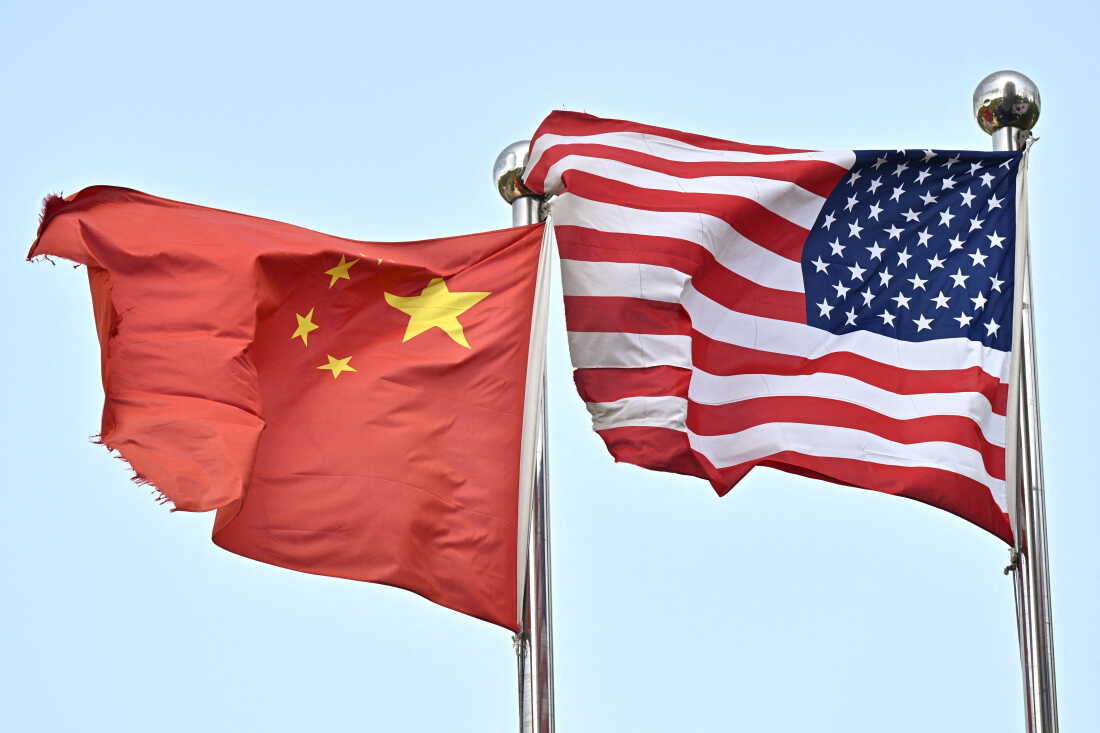

The United States and China are entrenched in a cycle of intense competition and mistrust over artificial intelligence (AI). With President Trump and Chinese leader Xi Jinping scheduled to meet in Washington next Thursday, experts express skepticism about any significant changes to the current dynamic.
Recently, the Trump administration accused Chinese AI firms of intellectual property theft and threatened sanctions. Beijing retaliated by criticizing U.S. restrictions on chip exports and accusing Washington of using a “Cold War playbook” to suppress Chinese AI advancements.
Although fierce competition dominates at the government level, a lively dialogue occurs at the sub-national level through “Track Two” diplomacy. These informal private meetings and conferences, often led by think tanks or universities, connect experts from both nations to discuss various topics like nuclear disarmament and climate change. AI has become a critical topic due to its significant implications.
Sarah Beran, a former U.S. diplomat and the incoming president of the National Committee on U.S.-China Relations, highlighted the importance of addressing AI. The committee actively engages in Track Two discussions, having participated in policy exchanges since 1972.
“AI is a tough topic because there’s so little trust in the relationship at the moment,” Beran noted. “The fear of chokepoints and AI being used as a cudgel on both sides means that this is also one of the most difficult areas to talk about.”
Through Track Two diplomacy, experts aim to build understanding and develop policy recommendations that can lead to agreements. These dialogues serve as unofficial channels for governments to explore ideas, such as military-to-military communication following disruptions during high-profile visits.
Jack Shanahan, a retired Air Force general, stressed that informal discussions facilitated an agreement between both countries to ensure human control over nuclear weapon decisions, highlighting the critical role of Track Two diplomacy.
Samm Sacks, involved in several AI-related discussions, stated that these dialogues enable candid discussions on sensitive issues. She emphasizes the shared concern and vulnerability both nations face due to AI, despite government-level friction. Sacks observed that the perception of China’s role in AI is shifting as technological risks become apparent.
“This is the time where we need some leadership, and what we’re seeing is a vacuum,” Scott Kennedy, a China specialist, remarked. “Track Twos don’t fill that vacuum. They can help redirect things and buy time, but they’re not going to solve the giant problems on their own.”
Experts argue that current tensions require leadership from both governments, with Track Two diplomacy potentially mitigating risks and fostering cooperation. However, recent disagreements, such as the U.S. proposal to slow AI development, complicate these efforts.
The upcoming Trump-Xi meeting presents a chance for reassurance that substantive dialogues on AI remain crucial. Beran notes the importance of creating a safe environment for conversations that can leverage mutual understanding on AI safety, cyber risk, and bio risk.