US Restrictions on AI Chips Impact Asian Tech Stocks
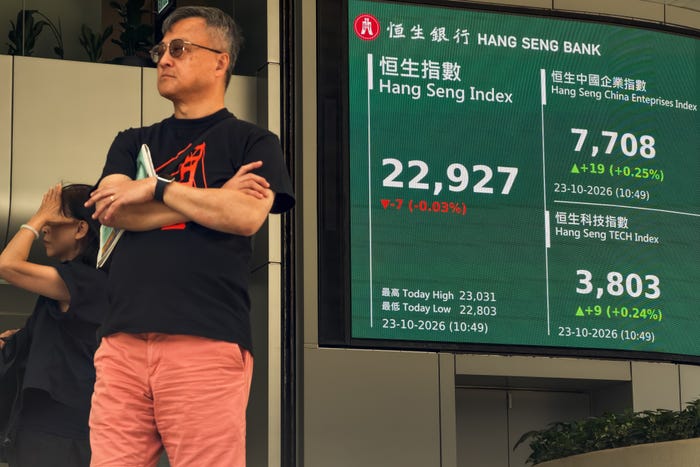
Asian technology stocks faced setbacks on Tuesday following new US regulations that tightened China’s access to advanced AI chips. This move further strained the AI industry in the region. Hong Kong’s tech stocks were particularly affected, with companies like Z.ai, known for the Ox Alpha model, seeing a 6% decline. Major firms Alibaba and Tencent also experienced drops of 6% and 3%, respectively.
Conversely, China’s domestic semiconductor companies saw a surge. SMIC’s shares increased by 9%, and Hua Hong enjoyed a rise of 16%. Investors believe stricter US rules might push China to advance its own semiconductor industry. This situation illustrates the unequal effects of Washington’s new restrictions within China’s AI sector.
What benefits China’s domestic chipmakers may simultaneously hurt its AI developers,
wrote Charu Chanana, chief investment strategist at Saxo.
Other Asian regions also felt the impact. South Korea’s Samsung Electronics and SK Hynix both saw declines, initially dropping 3% and 2% before recovering some losses. In Japan, Kioxia and Advantest decreased by 7% and 6%, respectively. These declines followed a challenging day on Wall Street, where the Philadelphia Semiconductor Index fell over 5% as concerns mounted before Nvidia’s earnings announcement.
Widening Risks
Recent US restrictions aim to close gaps allowing Chinese firms access to advanced chips through rented computing power from foreign data centers. New rules now demand licensing for AI chip shipments to more countries, including Singapore, Malaysia, and Brazil.
For Chinese AI developers, this could mean higher computing costs and slower innovation, potentially reducing future needs for advanced processors and AI data center memory. Nvidia, which suffered a 4% stock drop on Monday due to leadership changes, faces concerns about demand rather than immediate earnings impacts. Nvidia’s upcoming earnings report will be crucial, especially in Asia where TSMC and South Korean firms contribute to its production and supply chain.
This market turbulence occurs amid broader questions regarding the profitability of extensive AI infrastructure investments. Within China, the unequal consequences of US-imposed restrictions appear clearer. Domestic companies like SMIC and Hua Hong might gain from increased demand and government support as Beijing aims to reduce dependency on international technology. Chanana noted that while the AI trade continues, the belief that all sectors within the industry will benefit equally is increasingly difficult to uphold.