Voter Sentiment in the 2026 Midterms
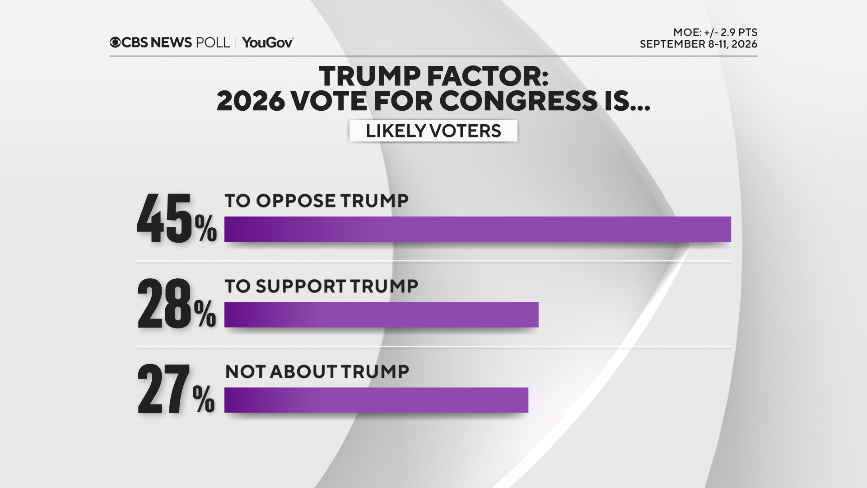
In the 2026 U.S. midterms, President Trump remains a central figure for both Republicans and Democrats. Each party engages with the theme differently; however, it impacts voter priorities significantly. If the trend continues, Trump’s influence could surpass his own 2018 record.
The election backdrop includes various challenges such as economic uncertainty, inflation pressures, international conflicts, and the effects of AI technology. Prices and inflation continue to influence voter sentiment negatively, particularly against the incumbents. Many voters express skepticism about either party’s ability to improve their financial situation, motivated more by opposition than expectation.
A significant number of voters prefer candidates opposing new tariffs and the Iran conflict, given its perceived connection to rising prices. The CBS News House model translates general Congressional preferences into seats, projecting Democrats with a potential majority. They are estimated at 228 seats, slightly above the needed 218 seats out of 435.
The model outlines a range where Democrats might extend into the high 230s if they gain further support. The lower boundary drops to 215 seats, suggesting Republicans could retain their narrow majority. MAGA and 2024 Trump voter loyalty contribute to keeping Republicans competitive. Voter resistance to Trump’s policies drives Democratic votes, particularly from those affected by high prices.
Despite these challenges, Democrats exhibit marked enthusiasm for voting, compared to Republicans. Trump’s influence also motivates MAGA Republicans to participate actively, although non-MAGA Republican interest appears lower. Trump’s endorsement continues to sway Republican support, especially concerning immigration policies.
The ultimate control of Congressional seats depends greatly on key voter groups and dynamics. Neither party has convinced voters they can materially improve their lives, giving Democrats a slight advantage. However, the Democrats face mixed reactions from the democratic socialist endorsements among their base.
Democrats show growth among Hispanic voters who oppose the administration’s stance on ICE. In contrast, Trump’s perceived economic prowess prior to 2024 keeps GOP voters loyal, despite price grievances. Republicans view Democratic control as threatening their cultural values. Internal differences among Republicans arise concerning gas prices related to the Iran conflict.
Discussions on AI’s impact finds Democrats and Republicans alike concerned about job reductions rather than enhancements. Voter preference tilts towards candidates against constructing new data centers locally.
The CBS News/YouGov survey results from September 8-11, 2026, involves 2,460 U.S. adults. Weighted for representation based on key demographics, the poll holds a margin of error of ±2.3 points. The election seat estimates rely on a comprehensive statistical model incorporating historical data, district specifics, and demographic patterns. The estimates, presenting who leads currently, are subject to change with evolving data.