Wall Street Experiences Significant Sell-Off Due to AI Data Center Concerns
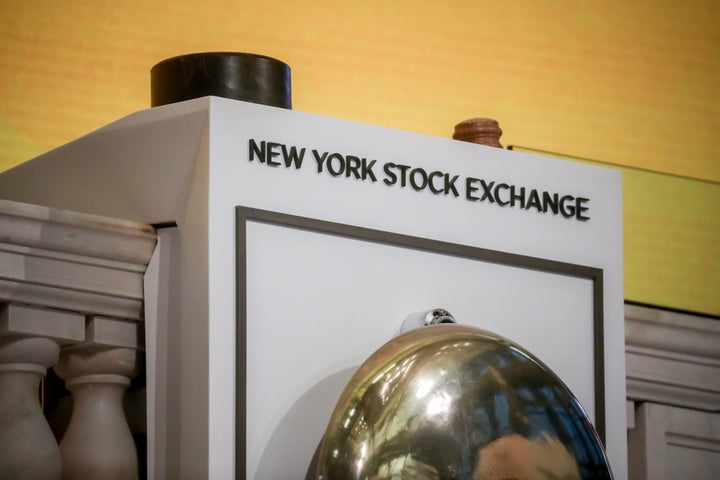
A major sell-off hit Wall Street on Thursday, heavily impacting stocks associated with AI data centers. This downturn wiped out the previous day’s gains, which had been the best for the U.S. stock market in three months.
The S&P 500 dropped 4.4%, marking its worst day since April 2025. During that period, markets were disrupted by President Donald Trump’s tariffs. The Dow Jones Industrial Average fell by 1,833 points, or 3.4%, while the Nasdaq composite decreased by 5.5%.
This decline in the Nasdaq, rich in technology and AI-focused stocks, put it 11.9% below its record high set last month. A loss exceeding 10% is classified as a correction by market analysts.
Stock markets globally faced downward pressures due to falling shares of companies that had previously thrived amid AI technological advancements. South Korea’s Kospi index, for example, plummeted by 5.3%. Investors are concerned about potential slowdowns in AI data center construction due to rising borrowing costs, with critics labeling the AI stock prices as a bubble.
This week’s U.S. midterm elections added complexity. The Democratic victories raised concerns that governments might halt the construction of additional data centers. Across party lines, voters express caution towards AI and dissatisfaction with increased power bills attributed to data centers.
A slowdown in AI data center development could reduce demand for AI chips and related products and services, which have been crucial in driving economic growth in the U.S.
Among the hardest hit were Nvidia, which saw a 9.3% decline, affecting the S&P 500 substantially. Nvidia’s value for the year decreased by 2.6% after substantial growth in previous years. Advanced Micro Devices plunged 17.3%, while CoreWeave, known for providing AI chip rentals, fell 9.8%. GE Vernova, a power supplier for data centers, saw a 7.5% decline.
The sell-off impact is significant as AI chip stocks are among the most influential on Wall Street. For instance, a 1% change in Nvidia’s stock has a notable effect on the S&P 500 compared to other U.S. stocks.
Despite the widespread losses, a few stocks experienced gains. AppLovin surged 31% following strong revenue and profit reports exceeding analysts’ expectations. The company also announced a stock buyback program valued at up to $3.6 billion. Tapestry, associated with the Coach and Kate Spade brands, climbed 7.1% due to better-than-expected profits and an optimistic revenue forecast.
The S&P 500 closed down 334.89 points, ending at 7,353.73. The Dow Jones Industrial Average fell 1,833.06 points to 51,523.06, and the Nasdaq composite declined 1,421.52 points to 24,315.00.
In related markets, reactions to the U.S. midterm election results eased. Brent crude oil prices rose 3.9% to $98.29, recovering some of their previous losses. Uncertainty about the Iran conflict and its impact on global energy persists.
The bond market saw Treasury yields fall, with the 10-year Treasury yield decreasing to 4.84% from 4.90%. This indicates a shift of investors toward safer assets amid stock market instability.
Despite positive reports on the U.S. economy, including fewer unemployment claims and increased worker productivity, stock markets faced challenges. Internationally, European and Asian stock indexes varied. Japan’s Nikkei 225 fell by 1.8%, similar to South Korea’s technology-related stock struggles. London’s FTSE 100 declined by 0.4% following the Bank of England’s interest rate hike aimed at combating high inflation.
The Bank of England indicated future interest rate decisions would depend on developments in the Iran conflict, which has driven global inflation.
“We’ve seen encouraging news in the past 48 hours,” remarked Bank Governor Andrew Bailey. “Resolving the Middle East conflict is crucial.”
Elaine Kurtenbach of AP Business contributed to this report.