Washington and Colorado Voters Consider Sports Initiatives
Redmond, WA — Emotions ran high as Tumwater High student Frances Staudt celebrated a significant triumph in her campaign to separate boys and girls in sports. On Tuesday night, Washington state’s Initiative 638, which mandates K-12 athletes to join teams consistent with their biological sex, showed a strong lead in the unofficial election results.
At a watch party organized by Let’s Go Washington, the driving force behind the initiative, Staudt expressed her joy and relief after years of personal struggles advocating for this cause. She endured harassment since refusing to play against a biological male in March 2025.
“We did it!” said Staudt. “It’s not been an easy fight, and I’m so proud of us. And I’m so happy to be here with a victory. Washington people have had enough.”
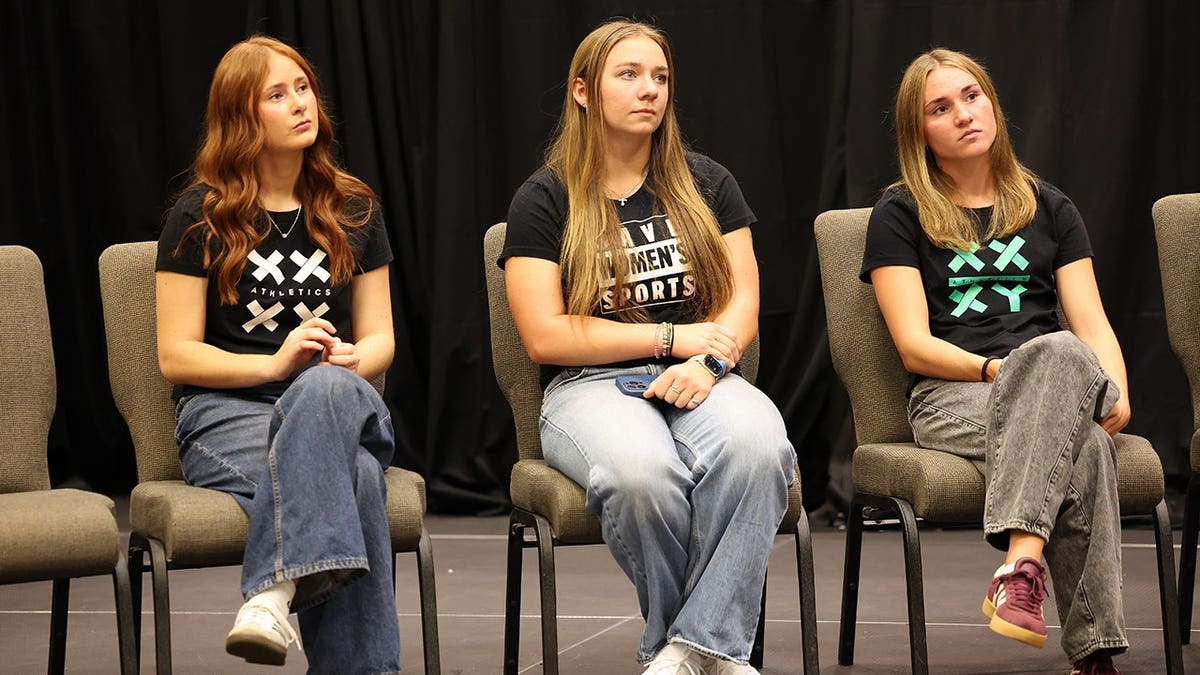
Amid the excitement, female athletes Frances Staudt, Bailey Andersen, and Sadie Sullivan shared their experiences of competing against biological males and sharing locker rooms at a Fairness in Girls’ Sports rally in Vancouver, Washington. As initial counts came in, the “yes” vote on I-638 led by 13.6 percent with 60 percent of ballots tallied. Prediction market Kalshi assigned a 91 percent chance of passage, potentially making I-638 a historic first as a voter-approved separation of boys’ and girls’ sports in a blue state. Twenty-seven states, won by Donald Trump in 2024, have passed similar laws legislatively.
Supporters of I-638 believe it will inspire similar laws across the nation. Let’s Go Washington founder Brian Heywood praised the initiative’s bipartisan support.
“This was citizens who are voting very blue still in a lot of ways saying, hey, it’s not a Republican/Democrat issue, it’s a parental issue, it’s a fairness in girls sports issue. And I think that carries a huge amount of weight.”
The campaign received notable backing, collecting more than 445,000 signatures with assistance from athletes like Staudt and Ahnaleigh Wilson, surpassing the required 309,000 signatures to qualify for the ballot.
Cambridge High School Controversy
The issue gained heightened attention with a controversy involving a transgender runner at Camas High School, who switched from the boys’ team to the girls’ mid-season, winning a varsity event and placing second in others. Critics argued that this impacted the advancement opportunities for female athletes, culminating in roughly a dozen teammates protesting by walking off the starting line in October.
Women’s sports advocate Amy Sousa, who documented this protest, has spent nearly a decade advocating for female sports. She expressed satisfaction with the measure’s early lead in the vote count.
“I’m so happy, I’m so pleased, I’m so proud, and I just feel like this is right. It feels right. It is right,” she said. “This is protecting Title IX, the promise of what our foremothers fought for — on the basis of sex.”
Colorado’s Parallel Measure
In Colorado, a similar ballot measure, Proposition 134, seeks to establish sex-based eligibility for K-12 and college athletics. At last count, the “yes” vote led by 4.4 percentage points with 75% of ballots counted, though the final result awaits more complete counts.
“Without knowing the outcome yet (and heading to go to sleep), I am cautiously optimistic that in a deep blue state, with a deep blue election wave, the voters will have said ‘protect girls’ sports’ when all votes are counted,” said Jennifer Sey of the Proposition 134 campaign and XX-XY Athletics founder.
Other States
Arizona and Nebraska also have sports-related measures. Nebraska’s Initiative 442 could add existing restrictions to the state constitution, while Arizona’s Proposition 318 aims to expand restrictions to private schools and athletic associations.
The ongoing debate shines a spotlight on the broader implications for girls’ and women’s sports, with many involved hoping for a precedent that shapes future legislative actions.