WHO Declares Ebola Outbreak in Congo and Uganda as Health Emergency
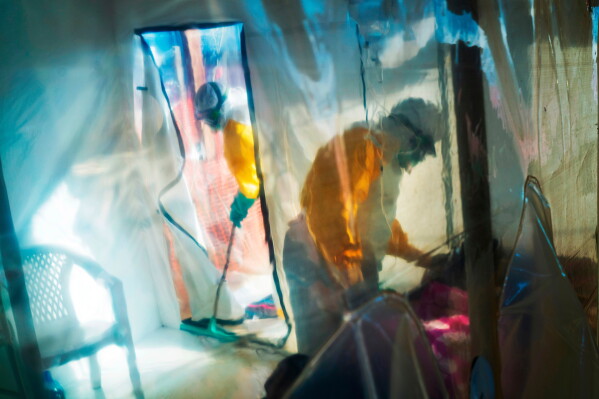
The World Health Organization (WHO) announced on Sunday that the Ebola outbreak in the Democratic Republic of the Congo and neighboring Uganda is a public health emergency of international concern. This follows over 300 suspected cases and 88 deaths. While the outbreak does not meet the criteria for a pandemic like COVID-19, WHO advises against closing international borders.
In a social media update, WHO reported a lab-confirmed case in Congo’s capital, Kinshasa, located about 1,000 kilometers from the epicenter in the eastern Ituri province. This suggests a potential wider spread. The infected individual had visited Ituri, and there are also suspected cases in North Kivu province, Congo’s most populous and adjacent to Ituri.
The government of Goma, the largest city in eastern Congo, confirmed on Sunday the detection of the first confirmed Ebola case. The infected person traveled from Ituri and is currently in isolation. Goma experienced a rapid rebel offensive in early 2025, and ongoing conflict between Congolese forces and the Rwanda-backed M23 paramilitary group has displaced hundreds of thousands.
Ebola’s Contagious Nature
Ebola is highly contagious and spreads through bodily fluids such as vomit, blood, or semen. It causes severe illness that is often fatal. WHO’s emergency declaration aims to prompt donor agencies and countries to take action. According to WHO standards, the declaration highlights a serious event with the risk of international spread, requiring a coordinated global response.
In a separate social media statement, WHO’s Africa Regional Office noted that a 35-expert team from WHO and Congo’s Health Ministry arrived in Bunia, Ituri’s capital, with seven tons of emergency medical supplies. Nonetheless, past global responses have been uneven. In 2024, when WHO declared monkeypox outbreaks in Congo and other parts of Africa a global emergency, some experts noted slow delivery of diagnostics, medication, and vaccines to affected regions.
Challenges in Treating the Outbreak
Health authorities state the current outbreak, first confirmed on Friday, is caused by the Bundibugyo virus, a rare Ebola variant with no approved treatments or vaccines. Despite over 20 Ebola outbreaks in Congo and Uganda, this is only the third recorded instance of the Bundibugyo virus.
All but two cases were reported in Congo, the exceptions being in neighboring Uganda. The Bundibugyo virus was initially detected in Uganda during a 2007-2008 outbreak, infecting 149 people with 37 deaths. The second instance occurred in 2012 in Isiro, Congo, with 57 cases and 29 deaths reported.
Dr. Richard Kitenge, Public Health Emergency Operations Director at Congo’s National Institute of Public Health, believes that while risks are significant, Congo has managed previous outbreaks effectively. “We’ve handled enough epidemics without treatment. The Zaire virus, which we managed, also had no treatment during several outbreaks, yet not all died,” he stated to The Associated Press.
Conflict and Migration Complicate Efforts
Dr. Jean Kaseya, Director General of Africa’s Centers for Disease Control and Prevention, noted a high number of active cases in the community, especially in Mongwalu, complicating containment and contact-tracing efforts. Violent conflicts with militia groups, some backed by the Islamic State, and constant population movements for mining activities within Congo and across the Uganda border pose significant challenges for response efforts.
Authorities first reported the disease’s spread in Congo’s eastern Ituri province, near Uganda and South Sudan, on Friday. On Saturday, Africa’s CDC reported 336 suspected cases and 87 deaths in Congo. “There is significant uncertainty about the real number of infected persons and related geographic spread at this time. Additionally, there is limited understanding of the epidemiological links with known or suspected cases,” stated Dr. Tedros Adhanom Ghebreyesus, WHO Director General.
The two cases in Uganda involved a person who traveled from Congo and died in Kampala, the Ugandan capital, and another who also traveled from Congo. WHO indicated the high percentage of positive cases among tested samples, the spread to Kampala and Uganda, and clusters of deaths in Ituri suggest a potentially larger outbreak with significant regional spread risk.
Risk to Americans and Response Measures
U.S. health officials describe the risk to Americans as low but did not directly address whether any Americans may have been exposed. The U.S. Centers for Disease Control and Prevention (CDC) is working with other health authorities to manage the outbreak and prevent further Ebola spread. Dr. Satish Pillai, CDC’s response director, mentioned that CDC has an office and 30 employees in Congo and is deploying additional workers to address the outbreak.
On Friday, the CDC issued a travel advisory urging Americans traveling to Congo to avoid people showing symptoms like fever, muscle pain, and rash. The agency is also implementing measures to identify individuals with any symptoms at entry points, stated Pillai.
Delayed Detection and Initial Spread
The outbreak in Congo led to 50 deaths before detection. Dr. Kaseya explained that slow detection delayed the response and allowed the virus to spread further. “This outbreak began in April. We do not yet know the index case, meaning we don’t know the magnitude of this outbreak,” he clarified. The earliest known suspected victim, a 59-year-old man, developed symptoms on April 24 and died in an Ituri hospital by April 27.
By the time health authorities learned of the outbreak through social media on May 5, 50 deaths had already occurred, according to Africa’s CDC. WHO reported at least four health worker deaths showing Ebola symptoms.