Winter Weather Predictions from Two Almanacs Highlight Regional Variances
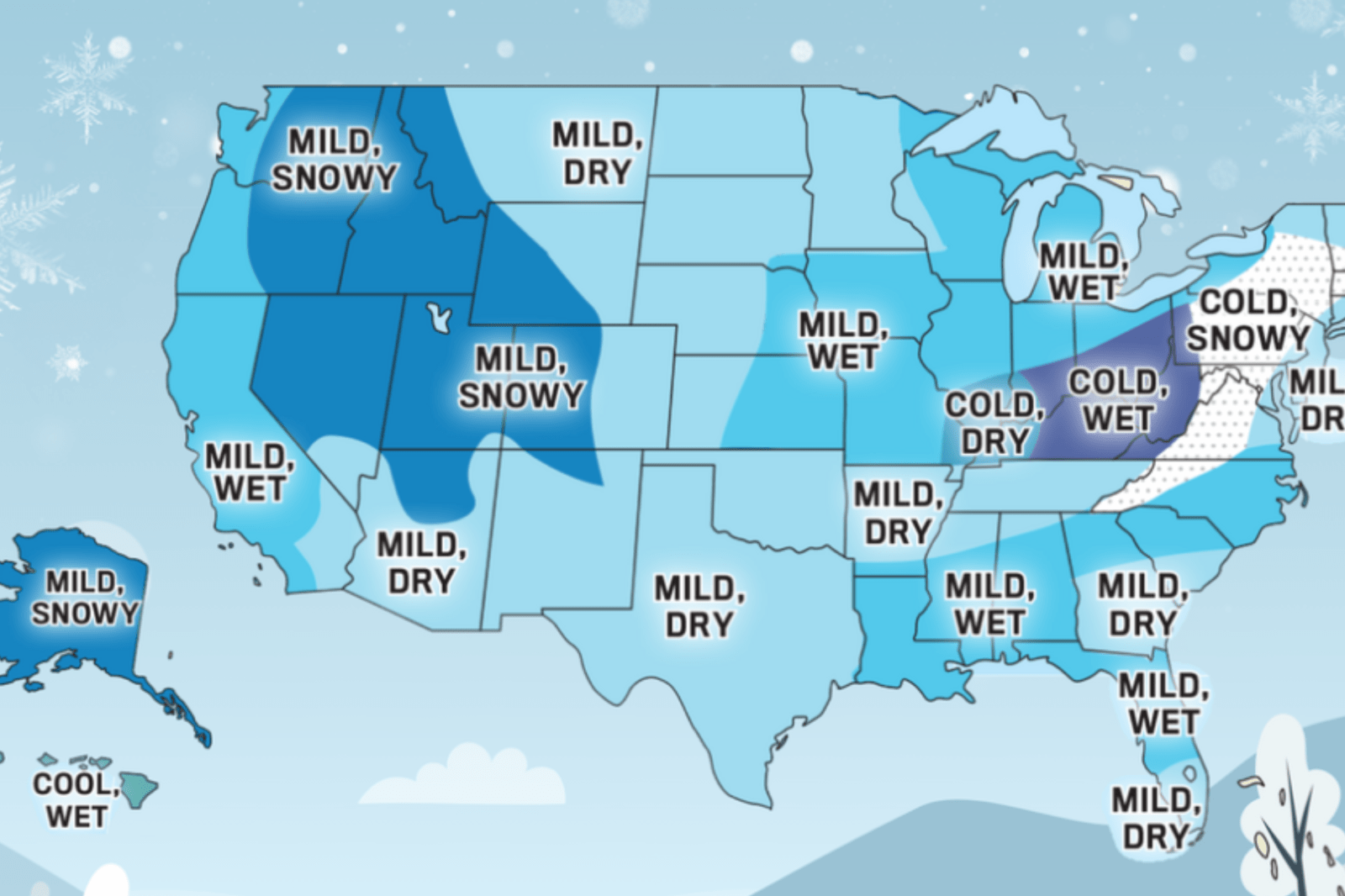
As winter approaches, forecasts vary across regions. The Old Farmer’s Almanac and the Farmers’ Almanac offer differing perspectives on which areas may experience severe weather conditions.
Winter Conditions: Regional Variations
The Old Farmer’s Almanac predicts a generally mild winter for the 2026-27 season, with intervals of intense cold and above-average snowfall. The Farmers’ Almanac highlights a southern storm track with sporadic snow and cold across northern areas.
While both forecasts agree on mild conditions interrupted by severe weather, they diverge on specific regions. The Old Farmer’s Almanac notes potential for heavy snowfall in central New England, the Appalachians, and parts of the West. The Farmers’ Almanac anticipates the North will see snow, strong winds, and bitter cold, particularly in the northern Plains, Upper Midwest, and Great Lakes.
Northeast Agreement
Both almanacs agree on colder, snowier conditions from central New England through the Appalachians. Heavy, wet snow is likely inland, especially in January and February, while coastal regions might see rain or mixed precipitation.
West and South Divide
The West might witness substantial mountain snow, with the Old Farmer’s Almanac emphasizing the Intermountain West and Pacific Northwest, while the Farmers’ Almanac focuses on the southern Rockies.
The southern U.S. forecasts show the greatest disparity. The Farmers’ Almanac predicts a “wet and stormy southern tier” from Southern California through Texas and the Gulf Coast, with potential for sleet and freezing rain. The Old Farmer’s Almanac forecasts warmer, drier conditions across Texas, Oklahoma, and the Deep South, with variable precipitation in Florida.
Northwest and Midwest
In the Pacific Northwest, the Old Farmer’s Almanac anticipates above-normal snowfall, particularly in late December and mid-January and February. The Farmers’ Almanac sees a more unpredictable season.
For the Upper Midwest and Great Lakes, the Old Farmer’s Almanac foresees above-normal temperatures but occasional sharp freezes, while the Farmers’ Almanac predicts temperatures near normal, interspersed with snow squalls.
Almanac Backgrounds
Although similar in name, The Old Farmer’s Almanac and Farmers’ Almanac are distinct. The Old Farmer’s Almanac, established in 1792, relies on a proprietary formula based on solar activity and meteorology. Farmers’ Almanac, founded in 1818, uses a secret forecasting formula. While their long-range outlooks differ, they each provide detailed seasonal predictions.
For further information, contact Newsweek editors John Fitzpatrick and Gray R. Thomas.