Yayoi Kusama: Iconic Artist of Vibrant Polka Dots Passes Away
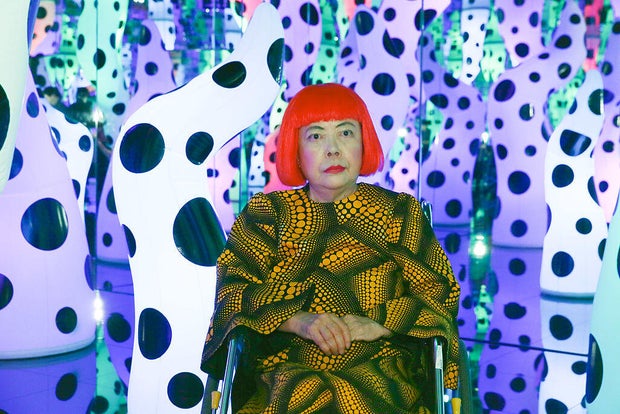
Japanese artist Yayoi Kusama, renowned for her polka dot motifs in paintings, sculptures, and installations, has died at 97. According to a statement from her studio, she continued painting until her last days.
She remained committed to her artistic vision, painting with passion and dedication, expressing love and the eternal soul through her work. Her studio aims to carry on her legacy by sharing hope and strength through art.
Kusama’s influence spanned globally, with exhibitions at prestigious venues like the Museum of Modern Art and the Whitney Museum of American Art in New York. Her works showcased repetitive motifs resembling netting, swirls, or worms, often expressed through vibrant dots. These elements brought a psychedelic allure to her art.
In a 2012 interview, Kusama stated, “Polka dots are fabulous.” Wearing her orange bob-cut wig and polka dot attire, she frequently expressed her desire to create thousands of paintings in her distinctive style.
Kusama’s unique vision, shaped by hallucinations she experienced since childhood, led her to see the world as covered in spots. This perspective didn’t deter her success, despite time spent in psychiatric institutions. In 1957, she moved to New York, one of the first Japanese women to do so to pursue art.
Despite her shy demeanor, she assertively shared her dot-filled vision with the world, leading to collaborations with brands like Louis Vuitton, and selling licensed products featuring her illustrations.
Even during times when her art style was not trendy, Kusama remained dedicated. By 2008, her works reached auction prices of $5.8 million, and in 2016, she received Japan’s highest cultural honor, the Order of Culture.
Upon receiving this award, Kusama told reporters that she felt life’s sands were running low but vowed to continue fighting for her art’s future recognition.
Born into a middle-class family, Kusama faced familial expectations to marry, but she chose a path that led her to America. She endured initial poverty but remained unfazed, building friendships with artists like Andy Warhol and Georgia O’Keeffe, who admired her inventive approach.
Kusama produced whimsical pieces like ‘Macaroni Girl,’ ‘The Visionary Flowers,’ and ‘Mirrored Corridor.’ She ventured into filmmaking and writing, describing her creative process as mysterious.
When speaking of her work, Kusama balanced confidence with vulnerability, calling herself “an artistic revolutionary” while admitting, “I am so afraid, all the time, of everything.” Her boldness and authenticity left an indelible mark on the art world.