Rise of Rooftop Solar Panels in Southeast Asia
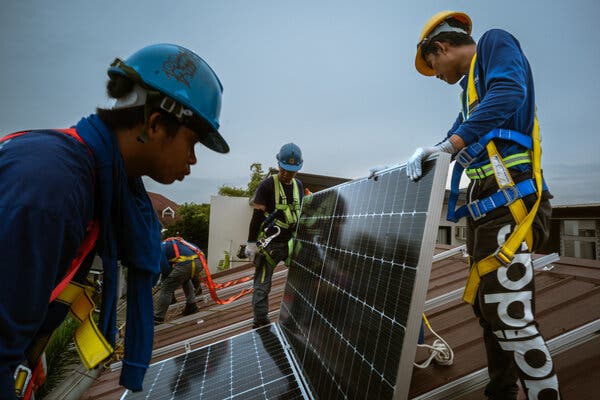
In recent months, homeowners and businesses in Southeast Asia are increasingly turning to rooftop solar panels as a solution to mitigate rising energy costs. This shift comes amid geopolitical tensions affecting oil imports.
Impact of the Iran Conflict on Energy Markets
In March, following the outbreak of war in Iran, energy markets experienced significant disruptions. A noticeable shift towards solar power began as oil price spikes hit Southeast Asia, a region heavily reliant on imported oil through the Strait of Hormuz.
“I got scared that we might lose electricity,” said Heidi Mendoza, a resident of Marikina, Philippines, who installed solar panels on her house after the conflict affected energy supplies.
The war prompted governments to announce national emergencies due to potential power shortages. This scenario pushed individuals like Mendoza, who teaches online financial literacy classes, to invest $6,500 in solar power to ensure a stable electricity supply.
Increasing Adoption of Solar Power
Ming Kuang Chai, an architect from Kuala Lumpur, installed solar panels to cope with living costs, particularly since he drives an electric car. Similarly, Adiana Julia plans to add solar panels to her parents’ house in Yogyakarta, Indonesia, aiming to reduce reliance on the existing power grid.
This trend is spreading across Southeast Asia as the fear of grid dependency grows. Although the United States and Iran have announced plans to end the conflict, the lasting economic impact is likely to shape consumer behavior substantially.
Benefits for Solar Manufacturers
As demand for solar panels increases, manufacturers like China are benefitting. In March, China exported 5.5 gigawatts of solar capacity to Southeast Asia, more than double from the previous year according to Wood Mackenzie. Wan Afiq Naqiuddin, an analyst from the firm, noted this capacity can provide power to approximately 1.45 million homes annually.
The rapid adoption of solar technology reflects a broader shift in energy consumption patterns, influenced by global events and market readiness.