Growing Friction Between Trump and Senate Republicans
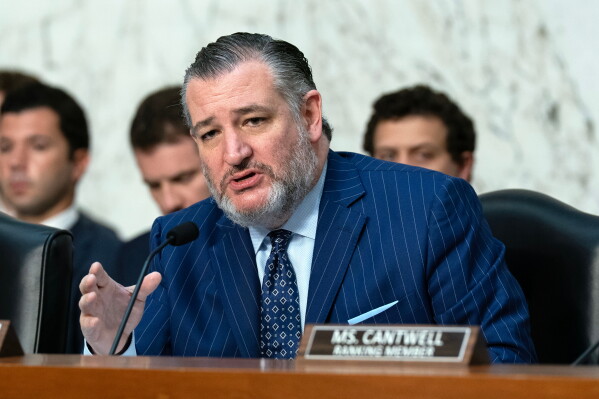
The relationship between President Donald Trump and Senate Republicans faced increasing tension recently. Trump’s sudden decision to delay the nomination of Jay Clayton for national intelligence director heightened these issues further. The postponement was announced just before Clayton’s confirmation hearing, leaving Senate Republicans frustrated.
Adding to the discord, Trump stated he would not approve the renewal of a significant surveillance law unless new terms were agreed upon. This created an additional strain between the Senate and White House, exacerbating an already tense atmosphere.
Several Republican senators, who had previously avoided direct criticism of Trump, began to express their concerns openly. Senator Bill Cassidy from Louisiana voiced strong disapproval of Trump’s recent foreign policy decisions regarding Iran, labeling them as significant blunders.
A noticeable shift has occurred compared to a year ago when Senate Republicans collaborated closely with Trump on tax and spending cuts. During that period, they worked in tandem and refrained from criticizing the President.
As upcoming elections approach, Republicans are confronted with defending their majorities amidst growing internal discord. Trump has been pressuring Congress with demands and unexpected policy reversals, leading to public discontent among several Republican senators.
Policy Divergences
The previously unified priorities of the executive and legislative branches under Republican leadership are unraveling. Trump’s focus has shifted away from the GOP agenda, concentrating instead on his voting legislation requiring proof of citizenship, which holds minimal prospects of success.
In parallel, Trump has urged Congress to allocate funds for his White House ballroom project and to support some of his nominations, despite opposition. These new focuses have hindered Senate operations and placed incumbent Republican senators under additional pressure as the election period draws near.
Thune’s Role
Senate Majority Leader John Thune finds himself navigating this complex relationship. Trump has persistently pressured Thune to eliminate the filibuster and pass the SAVE America Act, which mandates voter identification.
Thune has consistently communicated to Trump that sufficient votes are lacking to pass the legislation, both in public and in private discussions. Nevertheless, Trump continues to advocate for the bill vigorously.
Despite the friction, Trump appears to maintain a positive working relationship with Thune, avoiding personal attacks. Trump’s predecessor, Mitch McConnell, faced frequent criticism from the President.
Senate Republicans’ Response
No significant revolt has emerged within the Senate GOP against Trump’s pressure, as leadership has managed the situation adeptly.
Even among Trump’s traditional allies, there has been criticism of his policies, such as the controversial $1.776 billion settlement fund and his choice of Bill Pulte as the acting intelligence director.
Further internal tensions surfaced as some Republican senators criticized Mike Lee for his persistent campaign to abolish the filibuster and pass the voting bill, which has heightened intra-party disagreement.
Trump’s influence among Senate Republicans has diminished compared to previous years, following several contentious primary endorsements. However, some like Senator Bernie Moreno continue to support Trump’s initiatives vocally.
Trump has fewer steadfast Senate allies than the period during the passage of substantial tax and spending cut legislation. Some senators, including Cassidy and Cornyn, have faced political setbacks after opposing Trump publicly. Others, such as Tillis, have refrained from seeking reelection following disagreements with the President.