Brexit: Reflections and Realities 10 Years On
Simon Boyd’s company constructs prefabricated steel buildings on the English south coast, delivering them to places as distant as Ghana and Barbados. Mike Hawes leads the Society of Motor Manufacturers and Traders, representing Britain’s car industry. Though they held differing opinions on the Brexit vote in 2016, both find themselves frustrated by its outcomes a decade later.
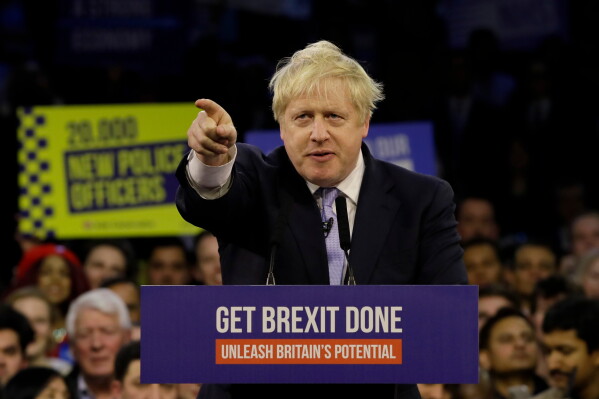
A decade ago, Brexit promised a bright future where Britain would regain control over its laws and borders, fostering an economic boom. Reality has been less promising, with Britain struggling without easy access to the EU’s 450 million-strong market.
Economic growth remains sluggish, taxes high, and public services under pressure. Issues such as a steady flow of migrants arriving via the English Channel have compounded frustrations. “No, it’s not delivered everything that was said it would deliver on the tin, but it is delivering,” Boyd remarked to The Associated Press. He also pointed to politicians’ lack of commitment as a major factor in Brexit’s underwhelming results.
“You only need to look at the statistics to see that,” Boyd added.
Boyd, the managing director of REIDSteel, employs about 130 people in Christchurch, England. Despite standing by his Brexit support, he attributes Brexit’s weak results to uncommitted politicians. Additional global challenges, such as the COVID-19 pandemic and conflicts in Ukraine and the Middle East, contributed to difficulties.
Economic Impact of Brexit
Brexit itself increased business costs during negotiations to redefine the UK-EU relationship. New trade rules introduced on January 31, 2020, further complicated trade, raising costs and increasing time burdens.
Creon Butler, from London’s think tank Chatham House, expresses the significant economic impacts: “Whatever was promised, whatever one hoped for, you have to accept that it has been a major loss of wealth and prosperity for us through the choice we made to leave.” According to a National Bureau of Economic Research report, the UK’s GDP has reduced by 6% to 8%, investment by 12% to 13%, and productivity by 3% to 4% due to Brexit.
Challenges in the Automotive Sector
British carmakers were early critics of Brexit, fearing increased regulations on parts and vehicle shipments. These concerns deterred investment as the UK became less attractive for international carmakers aiming for the European market.
Industry figures hope international trade agreements will boost demand. “We have been able to move with the times, so to speak, but undoubtedly it’s putting us at more cost into the industry, more pressure,” Hawes said.
Export and Labor Challenges
EU members still account for 41% of UK exports and half of its imports. Brexit also disrupted labor flows, impacting industries reliant on affordable European workers, like Britain’s curry houses. These businesses are struggling to replace Eastern European workers who returned home.
Oli Khan, president of the Bangladesh Caterers Association UK, stated, “We feel betrayed,” referring to promises of increased South Asian visas that never materialized.
Political Response and Public Opinion
Prime Minister Keir Starmer initiated talks to mend EU-UK relations. However, Starmer recently announced plans to step down.
A recent survey indicates growing dissatisfaction with Brexit among Britons. Carried out by Ipsos, King’s College London, and UK in a Changing Europe, it highlights an increase in those who feel Brexit is worse than expected, rising from 28% in March 2021 to 48% in May.
“Imagine if we were to rejoin … today. The conditions upon which we would be allowed back in would be akin to us re-boarding the Titanic on the condition that we surrender our life vests first,” Boyd said.
Boyd believes Britain’s future remains brighter outside the EU, blaming large corporations and politicians for diluting Brexit’s potential benefits. For him, the original 2016 vote remains the most significant survey: 51.9% voted for Brexit, representing 17.4 million people, indicating a persistent aspiration for an independent Britain.