Schisto & Ladders: Educating Nigerian Children on Schistosomiasis Prevention
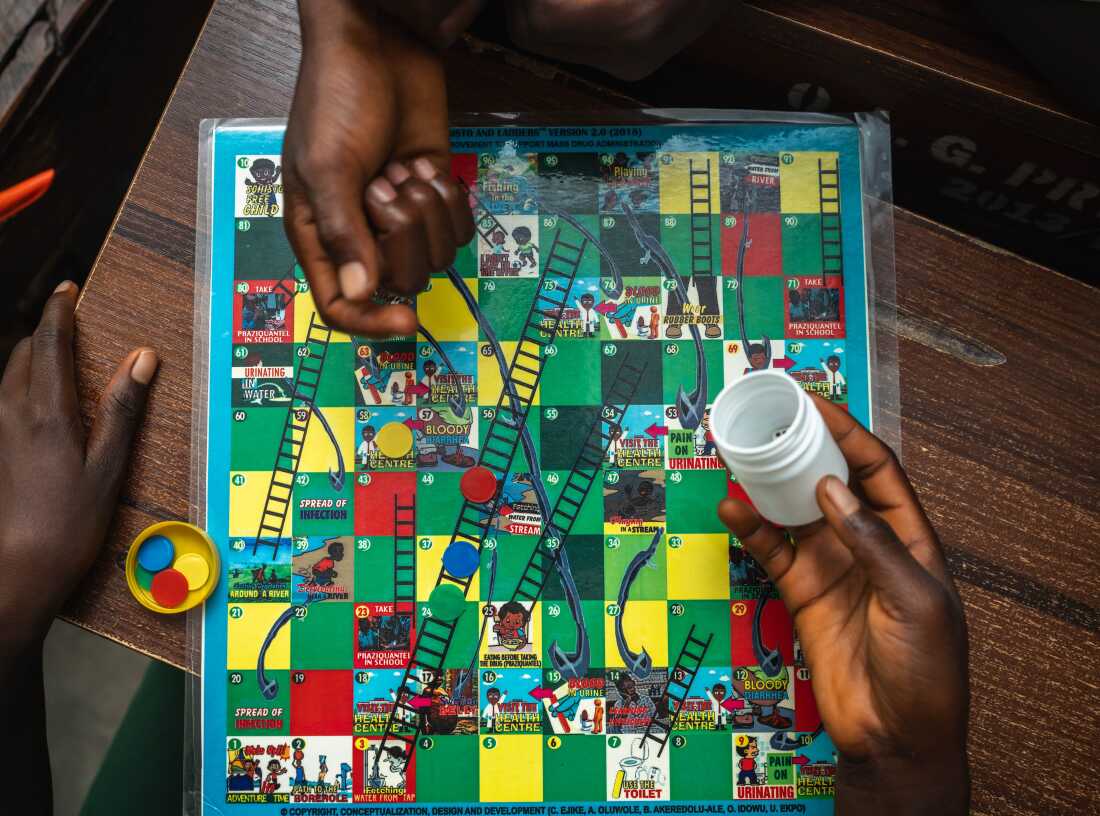
An elementary school in Nigeria has introduced a new educational tool to help combat schistosomiasis, a prevalent neglected tropical disease. The game, “Schisto & Ladders,” inspired by the classic “Chutes & Ladders,” is designed to teach children how to prevent infection and understand treatment options.
Understanding Schistosomiasis
Schistosomiasis is a parasitic infection transmitted through skin contact with contaminated water. Common in sub-Saharan Africa, it affects over 200 million people. In Nigeria, this illness is known locally as “Atosi Aja” or “Bloody Urine.” Symptoms include blood in urine, fever, and rash. Left untreated, it can lead to severe health problems such as organ damage and bladder cancer.
The Creation of Schisto & Ladders
Developed by Cynthia Umunnakwe and Professor Uwem Ekpo, the game follows a familiar board game pattern. Players roll dice to move across the board, encountering various scenarios. Positive actions, like taking medicine with food, move players up ladders. Negative actions, such as playing in infested water, send them down a “Schisto worm.” This replaces the traditional chute and teaches about risky behaviors.
Educating Through Play
In July 2025, Cynthia Umunnakwe visited a school in Apojola village to teach children the game. The Ministry of Health supported this initiative by providing testing and treatment for schistosomiasis. In this region, dependence on freshwater sources like the Oyan River increases the risk of infection.
During the visit, Umunnakwe introduced live snails, carriers of the schistosome parasite, so students could identify them. Dr. Olubukola Adelakun assisted by collecting snails from the river. The day included medical interventions, offering praziquantel to children with guidance on dosage based on height.
Impact and Outcomes
Cynthia Umunnakwe had previously conducted a study involving 275 students across six schools in Ogun State. Her research, published in International Health, demonstrated the game’s positive impact. Initially, none of the children were aware of praziquantel, the medication for schistosomiasis. By the end of the study, over two-thirds understood the drug’s safety and effectiveness, with 65% of students opting for treatment.
“We hope that by playing this game, schoolchildren will change their behaviors based on the knowledge acquired,” Umunnakwe stated. The game not only educates but also entertains, with children enthusiastically reaching the “Schisto-free child” square.