Los Angeles Council’s Decision on Noncitizen Voting Rights
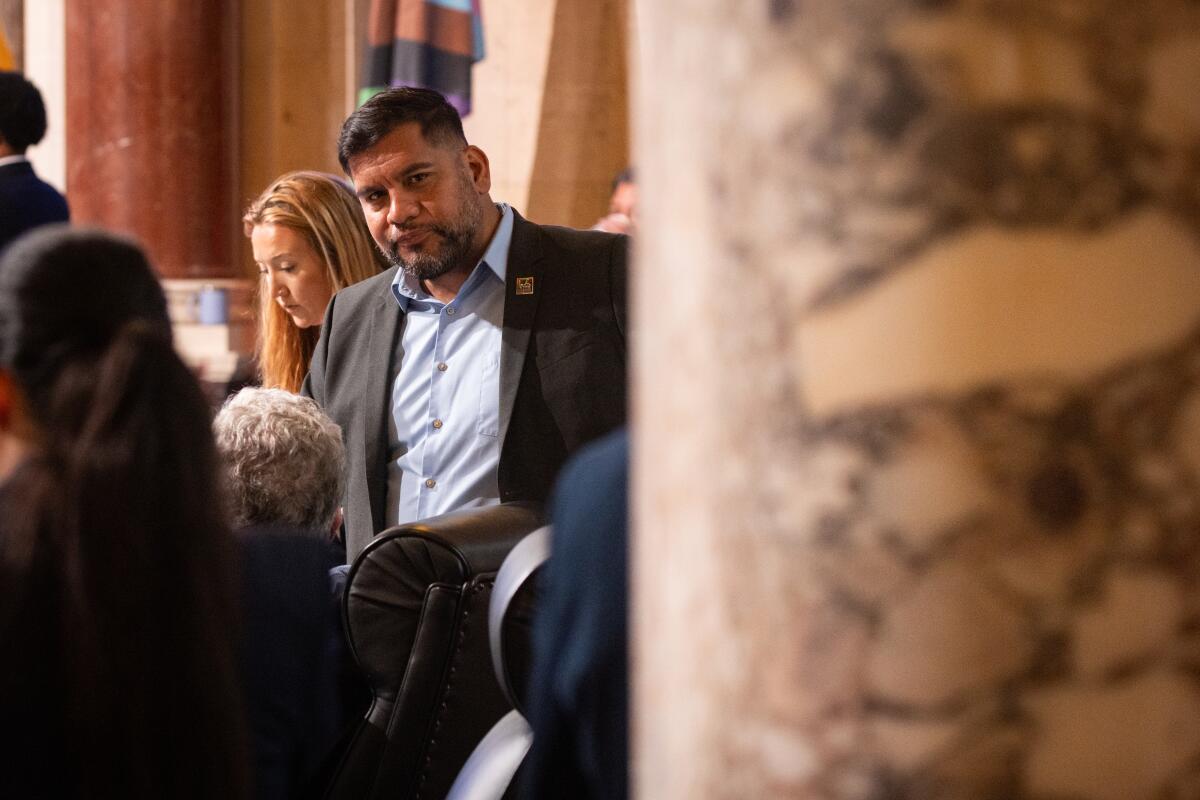
The recent efforts by the Los Angeles City Council to introduce noncitizen voting in city and school district elections highlight a complex and contentious issue. Federal immigration agents had previously detained undocumented workers across Southern California, prompting discussions on immigrant political power. Angelica Salas, director of the Coalition for Humane Immigrant Rights, emphasized that noncitizens lack voting rights, sparking council member Hugo Soto-Martínez to propose noncitizen voting rights.
Soto-Martínez aimed to allow noncitizens to vote, believing historical expansion of voting rights naturally included this step. Yet, on Tuesday, momentum halted as the council decided to study the proposal further, citing a lack of outreach, especially among Black community leaders. Critics argued the council failed to address how the proposal would affect undocumented immigrants or safeguard them from political retaliation.
Mobilizing Preachers and Communities supported delaying the proposal, concerned about potential risks under the Trump administration. Rev. K.W. Tulloss highlighted concerns about Black voting strength, noting that adding noncitizen voters could dilute Black representation. They feared this might reduce Black elected officials in Los Angeles.
Although Soto-Martínez considered the matter a part of his campaign platform, and similar ideas circulated before, the pandemic earlier derailed the conversations. The city’s citizen commission previously voted against the proposal, fearing consequences the Trump administration might exploit.
Soto-Martínez suggested a two-step approach for granting voting rights. Voters would first permit the City Council to enable noncitizen voting, followed by examining details around such a change. Supporters claimed residents paying taxes and living locally deserve a say in governance. However, opponents feared compiling a noncitizen voter list susceptible to immigration authorities.
Former Los Angeles Mayor Antonio Villaraigosa expressed concern, noting the proposal might endanger noncitizens by exposing them to deportation risks. Despite criticisms being labeled as fearmongering, worries of creating new targets for immigration policies persist.
Moreover, technical questions, such as issuing city elections ballots separate from state and national contests, remain unresolved. Councilmember Monica Rodriguez stressed that specifics needed clarification before moving forward. Across the U.S., 22 jurisdictions have approved noncitizen voting, but experts emphasize building broad support and detailed planning beforehand.
Council President Marqueece Harris-Dawson believes the proposal requires further review before a potential 2028 ballot. He noted the need for comprehensive information, like cost details and operational procedures, to garner voter support. The council hopes to address these gaps, ensuring future measures protect all voting districts.