Indigenous Youth Inspired by SkoBots to Learn Native Language
Exploring the Ojibwe Language with Technology
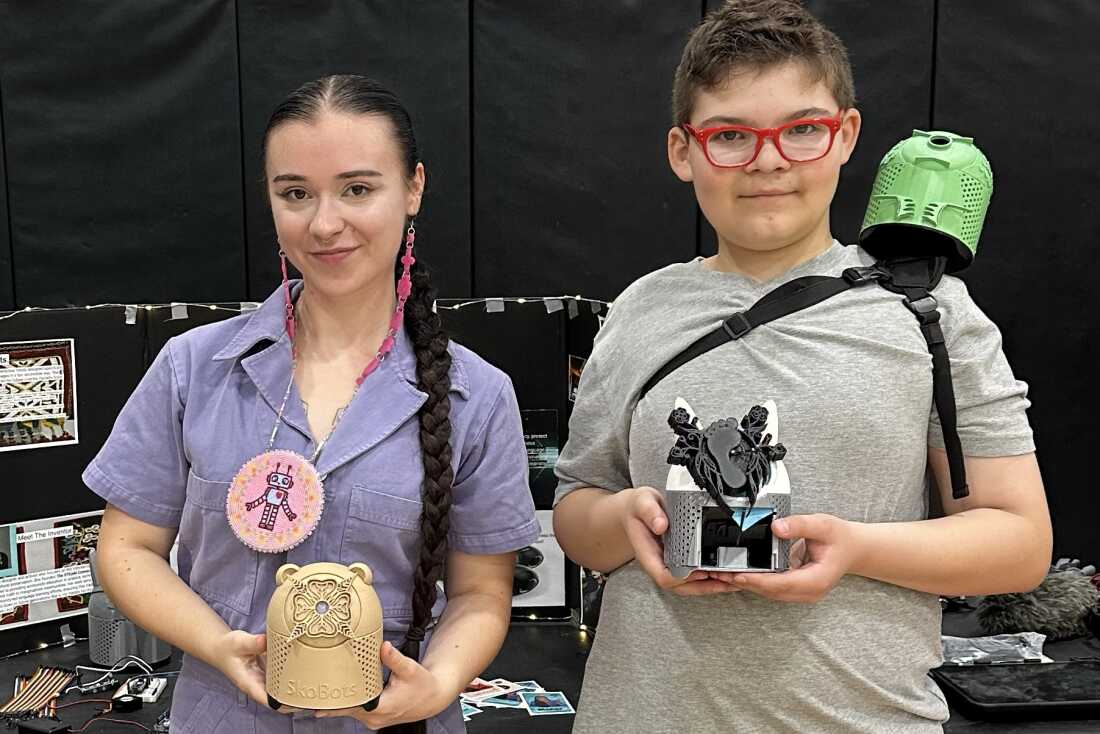
Holden Hoy, a young student from Michigan, is working on an innovative project to learn the Ojibwe language, Anishinaabemowin. With the guidance of his mentor, Danielle Boyer, he is acquiring essential skills like coding and electrical circuitry to build a robot, known as SkoBot.
The Origin of SkoBot
Danielle Boyer conceptualized SkoBot after being inspired by toys like ‘Tickle Me Elmo’. She realized there are numerous educational toys in English but lacking those that teach Native languages like Anishinaabemowin. This language comprises Potawatomi, Odawa, and Ojibwe dialects, spoken by fewer than 10,000 people in the U.S. and about 25,000 in Canada.
Many Native languages face a sharp decline, often with merely a handful of fluent speakers. Boyer’s grandmother is among the last fluent speakers of their dialect. The significance of preserving this linguistic heritage drives Boyer, who is part of the Sault Ste. Marie Tribe of Chippewa Indians.
“It is devastating to feel like your language could be lost,” Boyer laments, adding, “You lose your culture, you lose a way to describe who you are.”
The Impact of U.S. Indian Boarding Schools
Historically, U.S. Indian boarding schools contributed heavily to the loss of Indigenous languages. Children taught in these institutions were discouraged from speaking their native languages, affecting the transmission to future generations.
Despite efforts to incorporate language learning in schools, Boyer believes many students aren’t deeply engaged, seeing language classes as mere assignments. This led her to design SkoBot, a customizable toy robot aimed at exciting children about language learning.
SkoBot: Bringing Language to Life
SkoBots operate using artificial intelligence to communicate in Indigenous languages. Resembling mini R2-D2 droids, they are decorated with Native American floral patterns and represent woodland creatures. SkoBots respond to inquiries like, “What is bear?” by providing answers in Anishinaabemowin.
Boyer’s nonprofit initiative has enabled hundreds of Native children to build their own SkoBots, connecting them with their cultural roots. Holden Hoy is one of these children. At the JKL Bahweting Anishinaabe School’s science fair, Hoy showcased his unique SkoBot creation named Sabe, which means Bigfoot, a symbol of honesty in Ojibwe culture.
Technology in Education
Hoy’s Sabe has features like a sensor to detect sound and respond accordingly. Boyer highlights that SkoBots rely on prerecorded audio files, not generative AI, ensuring accuracy in language learning.
Hoy emphasizes the importance of factual sources and the dangers of AI fabricating information. Boyer’s objective is to spark interest in science, math, and ethical AI use while preserving language accuracy.
“Artificial intelligence, especially when not created by Indigenous people, can harm our communities,” Boyer warns. This reflects the stakes of integrating Native languages with AI responsibly.
A Family’s Cultural Journey
Holden’s mother, Jocelyn Hoy, expresses pride and excitement as her son embraces their heritage through SkoBots. Jocelyn, once reluctant to identify as Native American, now eagerly learns alongside him.
Holden sees language as intertwined with culture, crucial for preserving generational traditions. “The language is the culture!” he asserts.
Boyer’s and Hoy’s collaborative efforts highlight the critical role of innovative tools like SkoBot in rejuvenating interest in Indigenous languages and fostering cultural pride among youth.