Life Amid Destruction in Southern Lebanon
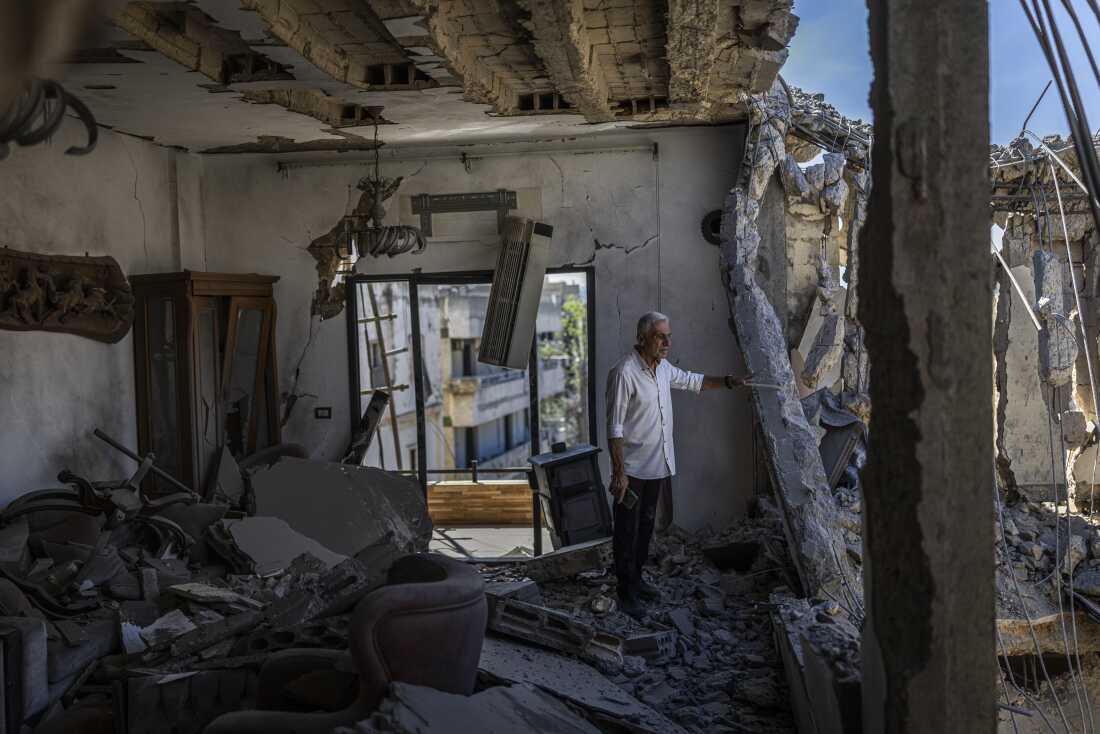
Nabatiyeh, Lebanon—In the midst of concrete debris and shattered glass, Najib Ayyad surveys the damage to his apartment in southern Lebanon. He gazes out at Beaufort Castle, a historic emblem now under Israeli control. Ayyad remarks on the visibility of the castle and expresses that even if his apartment were intact, residing there is no longer an option.
As Israeli drone sounds permeate the air, tentative efforts to reconstruct lives are evident amid the ruins. Najib Ayyad, employed in a parliamentary office, retrieves belongings but faces financial constraints that force him to stay with his daughter in Beirut. The city’s infrastructure, ravaged by airstrikes, reflects a grim resistance as electricity is unavailable and rubble obstructs pathways.
“You see the castle?”
A look down the street reveals widespread destruction. Buildings are either toppled or severely damaged. Among the ruins, Nabatiyeh’s historic old market stands demolished, uprooting the lives of nearly 80,000 residents amid Israeli bombardments targeting Hezbollah, a prominent political party and militant group.
Lebanese health reports have identified over 4,200 casualties since the war’s onset, with civilians bearing significant losses. Israel’s operations have resulted in the death of soldiers and civilians alike.
For generations, Nabatiyeh thrived as a commercial hub, hosting a vibrant market adjacent to routes connecting Jerusalem, Damascus, and Mecca. Remnants from Israel’s previous invasions remain in memory as rebuilding hopes now confront physical devastation.
Mayor Abbas Fakhreddin urges residents to delay return due to security risks and resource shortages, highlighting extensive damage that seemingly aims to disrupt the city’s economic heartbeat.
Hanan Hamadi’s convenience store faces challenges similar to its surroundings. Returning from refuge in Beirut, she discards damaged goods, rebuilds, and opens for business under a temporary plastic covering. Despite adversity, she exhibits determination, evident in her willingness to accommodate local children affected by the conflict.
Hamadi recounts the tragedy faced by the Basma family, killed in an airstrike with unanswered questions of military proximity. The empty streets resonate with her memories of the once lively neighborhood youth.
Amnesty International’s investigations flag potential war crimes amid failed Israeli mitigations to protect civilians, notably sparking inquiries into the Basma family’s losses.
Resilience persists, albeit tested. Hamadi and her mother, residents throughout past wars, now face indiscriminate strikes challenging their endurance. The humanitarian crisis leaves a void where lives once flourished.
On Nabatiyeh’s outskirts, an improvised first responders center vibrates with camaraderie and duty. Volunteers—many such as software expert Ali Rida—continue their services amidst the chaos and danger.
Despite the deadly consequences—including those from follow-up strikes endangering the paramedic efforts—Mohammad Sleiman and his team persist, recalling happier times in the city.
Life and dreams splinter against the backdrop of ongoing airstrikes, leaving residents grappling with rebuilding amid destruction.