The Compassionate Response to the Joplin Tornado
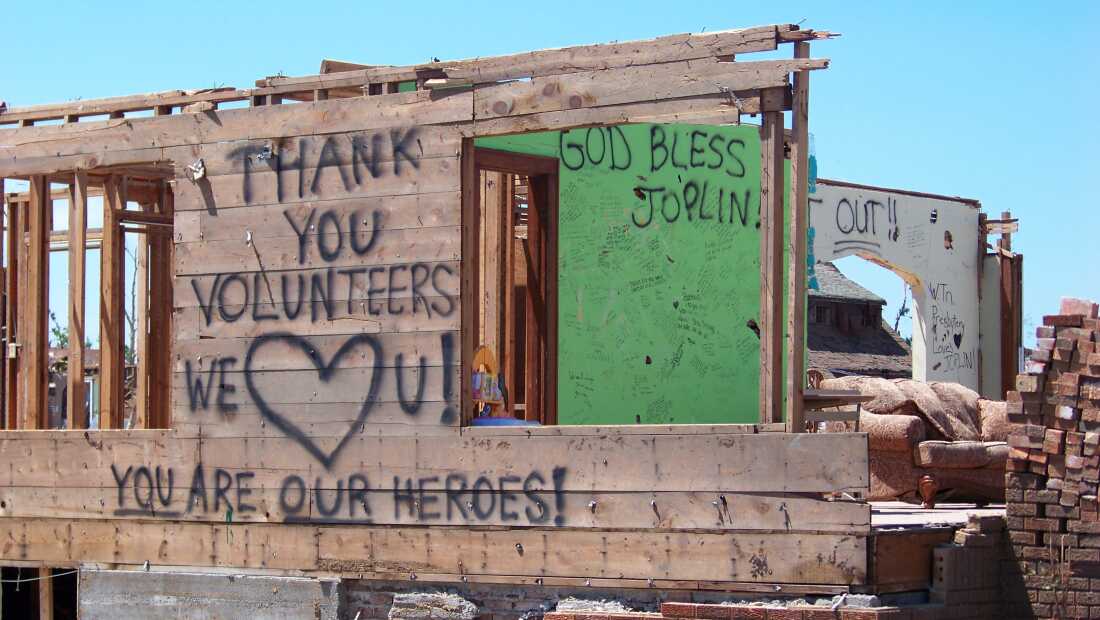
After a devastating tornado struck Joplin, Missouri, countless volunteers nationwide came to assist the affected community. Messages of hope were written on damaged homes, and later, Joplin residents expressed gratitude to these volunteers. Nanda Nunnelly was one of the many residents who experienced the disaster firsthand. She had just returned home when the tornado hit on May 22, 2011, leading to a harrowing ordeal.
The tornado was one of the deadliest in U.S. history, responsible for nearly 160 deaths and leaving a third of Joplin’s population displaced. In the months following, the city became known not for tragedy, but for the community spirit that arose in its aftermath. Nearly 100,000 volunteers from across the country arrived to help clean up and rebuild.
Darren Fullerton, who managed an emergency shelter after the tornado, recalls remarkable acts of kindness. Volunteers cooked for first responders, shelters were set up quickly, and efforts to support each other blossomed.
One of the primary tasks was the removal of vast amounts of debris. Government, private sector, voluntary agencies, and citizens cooperated. Melodee Colbert-Kean, Joplin’s vice-mayor at the time, remarked that the recovery united people regardless of their backgrounds or political beliefs.
Jamil Zaki, a social psychologist, explains this phenomenon as ‘catastrophe compassion.’ In times of disaster, people unite, overcoming previous social barriers. This shared experience turns them into a community of survivors.
Nanda Nunnelly’s account of the tornado, where she was reminded of a past regret, drove her to make amends after surviving the ordeal. This experience inspired her to contribute to community efforts, joining local initiatives to help those in need.
The concept of ‘altruism born of suffering’ suggests that those who endure hardships often become motivated to assist others. Zaki explains that shared suffering enhances empathy and drives compassionate actions.
Even years later, Joplin’s sense of community remains strong. Jane Cage, a volunteer leader, highlights how the tornado survivors still share an invisible bond. Researchers note that altruistic communities post-disaster usually fade, yet continuing community initiatives like One Joplin sustain the solidarity.
Jay St. Clair, a local minister, emphasizes the ongoing focus on community service, supporting working people and addressing emerging needs. Zaki’s research during the COVID-19 pandemic supports the notion that disaster often brings out people’s best qualities, countering negative perceptions.
According to data, kindness increased globally during the pandemic, challenging assumptions about human nature. Disasters, indeed, highlight resilience and the ability to come together in compassion.