Mass Casualties in Beit Lahia After Israeli Strikes
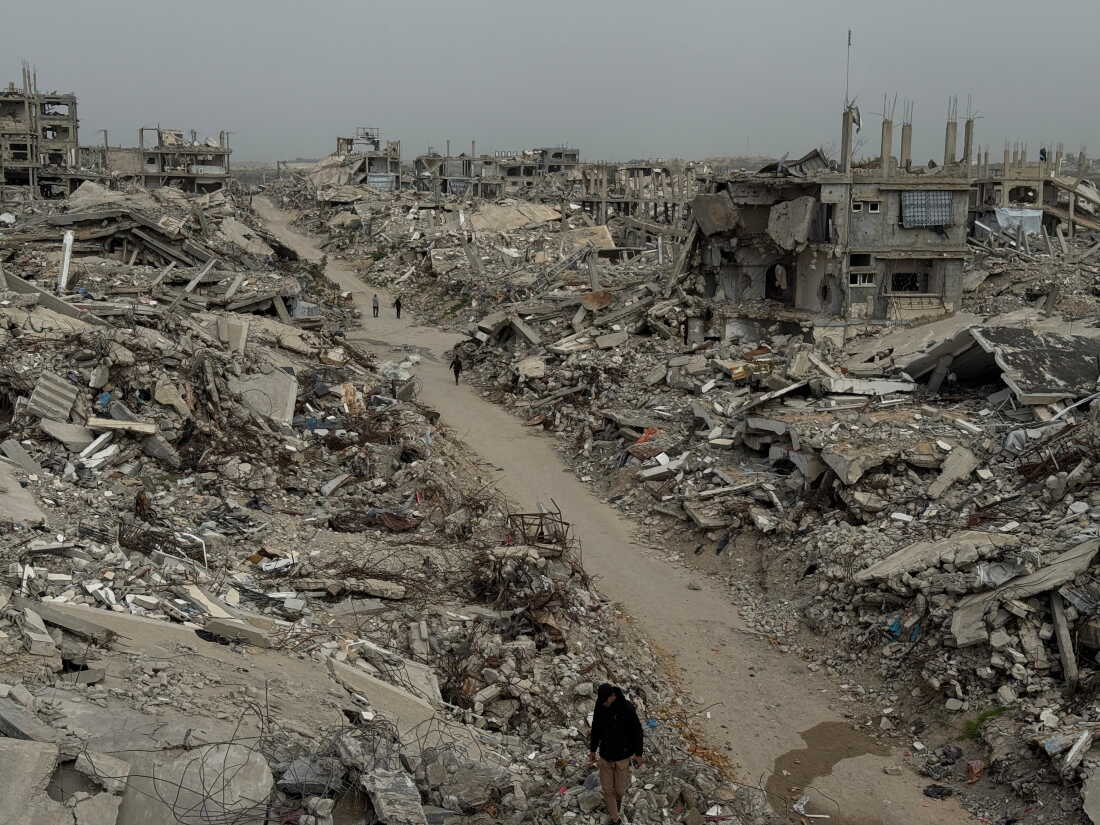
A neighborhood in Beit Lahia was decimated by Israeli strikes in October 2024. Among the sites targeted was an apartment building housing the Abu Naser family, where 132 members perished according to an NPR investigation.
Anas Baba, an NPR correspondent, reported from the scene and highlighted the extent of destruction in northern Gaza. The region saw one of the deadliest strikes of the conflict. The massacre resulted in multiple generations of the family being buried beneath their own home.
Ola Abu Naser, a survivor who lost most of her family, expressed the continuous distress they faced daily. ‘We’ve been dreaming every day of the moment we could recover the martyrs, honor them, and bury them,’ she said.
The rubble-strewn site is where rescue missions have repeatedly ventured in an attempt to retrieve bodies. These missions have been hampered by the effects of war and scarcity of proper equipment. Only one excavator is available for use, as explained by Pat Griffiths from the International Committee of the Red Cross. While another machine was recently repaired, the existing resources fall short of the need, considering Gaza’s civil defense receives several calls daily from families in distress.
During search operations, rescue workers use a combination of machinery and their senses to locate victims. The worn machinery lifts concrete and rebar as workers strive to recover anyone trapped. In the recovery process, the emotional toll is palpable. Families gather calmly, sad but stoic, as workers identify bodies by remnants of clothing or other distinguishable items. The recovery of family members, though agonizing, brings a semblance of closure.
On the second day of the operation, haunting scenes emerged as bodies were retrieved in their last moments. These included a mother clutching her child beneath a blanket. Survivors like Ola Abu Naser contended with stark reminders of their loss as she encountered her brother’s remains, recognized only by his belongings.
By the conclusion of the efforts, 50 bodies were unearthed from the site, yet the harsh truth remained — not all family members were retrieved. The absence of advanced forensic techniques in Gaza meant reliance on visual identification by surviving family members was pivotal.
The aftermath echoes the profound loss and trauma suffered by those left behind, with new graves being prepared for recovered remains. Despite the physical end to their mission, the emotional wounds for survivors persist as they grapple with the aftermath of violence.