Congress Considers $25 Minimum Wage Bill
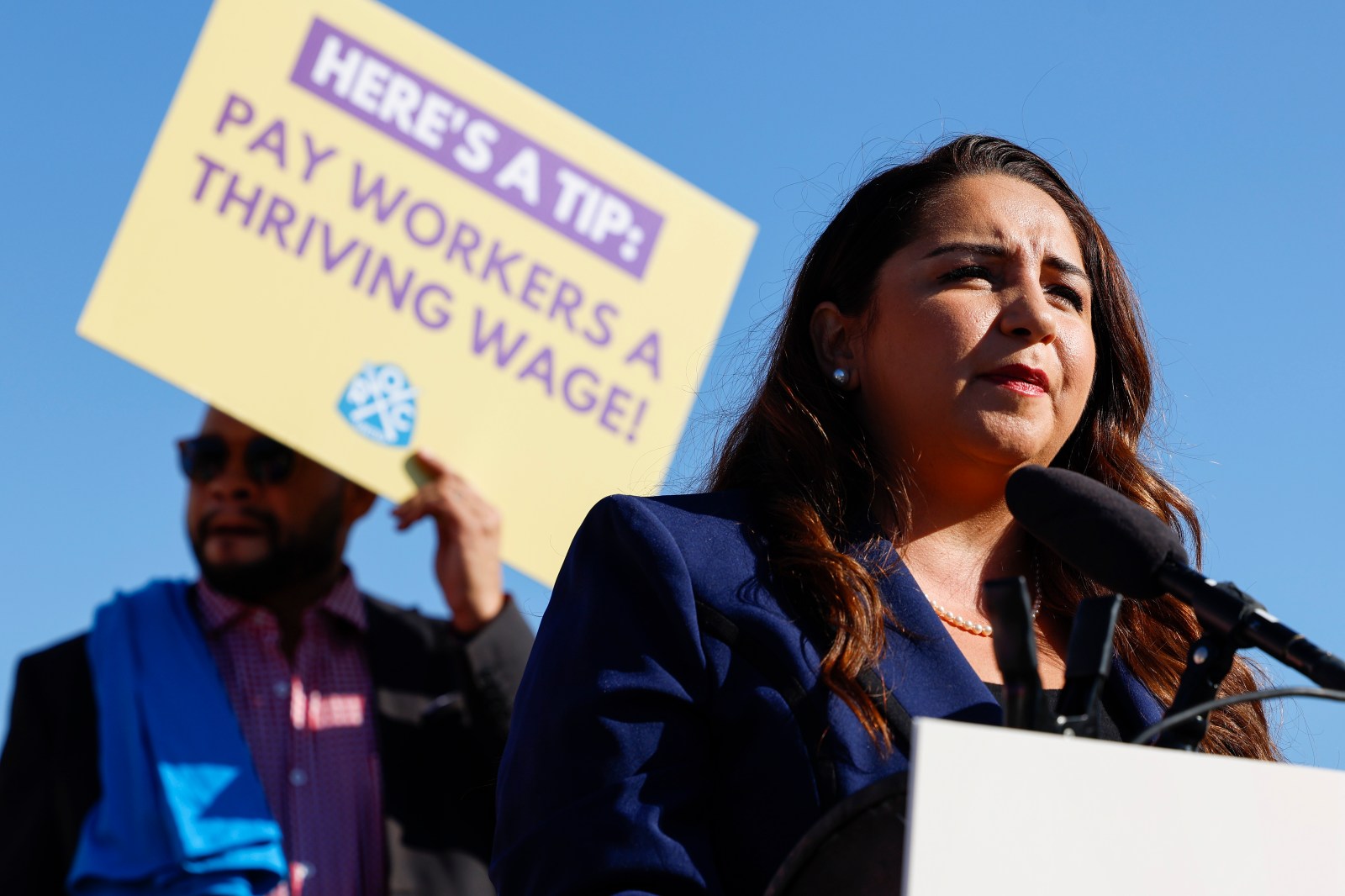
A bill aiming to increase the federal minimum wage to $25 an hour has been under consideration in Congress for nearly six months. The current legislative session presents a narrowing window to advance the proposal.
Representative Delia Ramirez, a Democrat from Illinois, introduced the Living Wage for All Act (H.R. 8555) on April 28. The bill proposes a gradual increase in the minimum wage over the next few years, with different timelines for large and smaller employers. In June, Senator Chris Murphy, a Democrat from Connecticut, expressed his intention to introduce a corresponding Senate version of the bill.
The bill’s proponents, including its Democratic introducers, view it as a landmark legislation reflecting today’s real cost of living. The federal minimum wage has been $7.25 an hour since 2009. The bill has been sent to the House Committee on Education and the Workforce but has not yet received a hearing.
Newsweek reached out to Ramirez’s office via email and contacted the House Committee on Education and the Workforce through their website for comments.
Details of the $25 Minimum Wage Proposal
The legislation aims to raise the minimum wage to $25 an hour by 2031 for large employers and by 2038 for other employers. Large employers, defined as those with at least $1 billion in annual revenue or 500 or more employees, would need to meet specific annual wage increase targets. Other employers would follow a more gradual schedule.
The bill proposes tying the minimum wage to two-thirds of the national median hourly wage, automatically adjusting it annually to maintain this ratio as the median wage changes. Additionally, the bill seeks to eliminate lower minimum wages for tipped workers, younger workers, and certain workers with disabilities, aligning their wages with the standard minimum wage over time.
For tipped workers, this includes gradually increasing the minimum wage direct payments from employers, eventually phasing out the ability for employers to count tips toward wage obligations.
Legislative Progress and Support
The House legislation currently has 32 Democratic cosponsors, including Representatives Rashida Tlaib of Michigan, Ro Khanna of California, and Pramila Jayapal of Washington. Representative Ramirez emphasized the urgent need to address the wage crisis, alongside the affordability crisis, noting that unlike current wages, the minimum wage does not reflect a living wage.
Several labor unions and advocacy groups back the bill, arguing that the increase would help workers adjust to the cost of living. April Verrett, president of the Service Employees International Union, praised the bill as a critical step for workers to gain economic stability.
Criticism and Economic Concerns
Critics of the proposal point to potential economic consequences from rising labor costs. A study by the Employment Policies Institute suggests a $25 minimum wage might lead to approximately five million fewer jobs, with notable impacts in the hospitality sector and among younger workers aged 16 to 24.
The federal minimum wage has not seen an increase since 2009, although many states and localities have set higher rates. By July 2026, 30 states and the District of Columbia have minimum wages exceeding the federal rate.
The future of the Living Wage for All Act is uncertain as it has yet to be heard by a committee. If Congress does not pass the bill before January 2027, lawmakers would need to reintroduce it in the next session.