Trump’s Proposal for $5,000 Checks Faces Challenges and Controversy
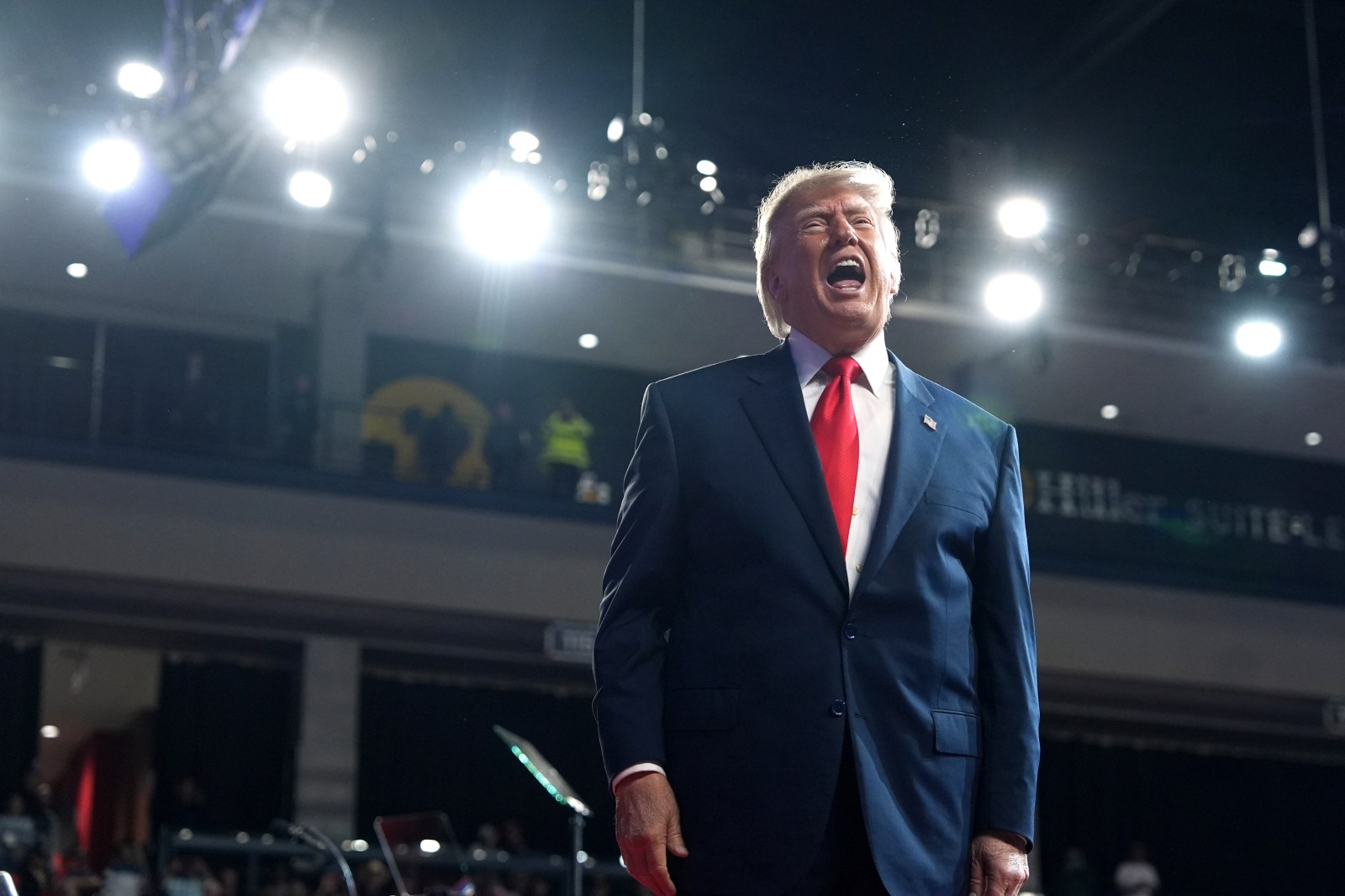
President Donald Trump has reiterated his commitment to distributing $5,000 checks to adult U.S. citizens while criticizing Democratic economic strategies. He argues that Republican dominance in Congress would bring direct financial benefits to Americans.
In a latest social media video posted on his X account, Trump declared, “I’m going to give all adult citizens in the United States of America $5,000.” He accused Democratic policies of preventing this and warned of raised taxes under their regime. Trump also forecasted an “economic depression” if Democrats win, while suggesting that Republican victory would ensure economic prosperity.
“If the Democrats win, you will have an economic depression. If the Republicans win, you will each have $5,000 in your pocket,” Trump stated.
This statement builds on an earlier proposal tied to the upcoming midterm elections. On October 3, Trump promised the $5,000 checks contingent on Republican control of both the House and Senate.
No legislative actions have authorized these payments yet. The administration hasn’t detailed eligibility criteria or established a payment schedule. Newsweek reached out to the White House and the Democratic National Committee for comments.
Understanding Trump’s $5,000 Check Proposal
The proposal was first introduced at the Republican Party’s midterm convention in Dallas on September 9. Trump promised $5,000 to each adult citizen if Republicans preserve control of Congress, framing it as a “Trump Dividend”.
While Trump claims the money would go to all adult citizens, Vice President JD Vance hinted that high-income individuals might be excluded. No official eligibility rules or income limits have been shared.
Congress hasn’t approved the proposal. A CNBC report noted that payments on this scale would require congressional consent, a point Trump disputes.
Timeline of the $5,000 Check Proposal
- September 9: Trump presented the proposal at the Republican midterm convention, guaranteeing the payment if Republicans control Congress.
- September 10: Representative Thomas Massie criticized the initiative, citing concerns over inflation.
- October 3: Trump reiterated his promise in a social media video, linking the payments to Republican electoral success.
- October 12: Trump released another video accusing Democrats of tax increases and economic depression risks.
Bipartisan Opposition to Trump’s Proposal
The initiative faces resistance from both Republicans and Democrats. Massie expressed disdain for the promise, fearing its economic impact. Representative David Schweikert also objected, warning against potential interest rate hikes.
Democrats have called the proposal a “political bribe”. Representative Robert Garcia asserted, “The dividend is not happening,” while Jamie Raskin highlighted Congress’ fiscal authority.
Not all Republicans oppose it. Ohio Senator Bernie Moreno committed to drafting legislation for the payments.
Economists Weigh In
Economists question the proposal’s cost and inflationary impact. Kent Smetters from the Penn Wharton Budget Model estimated the cost at $1.35 trillion without income limits, and $1.15 trillion with a hypothetical cutoff.
Michael Strain, economic policy studies director at the American Enterprise Institute, cautioned that it might exacerbate inflation. Marc Goldwein from the Committee for a Responsible Federal Budget noted, “We don’t have surpluses to give away.”
Legal Debate Over Vote-Buying
The link between the payments and electoral outcomes has sparked legal discussions on potential vote-buying violations. Glenn Kirschner suggested it might contravene federal law prohibiting certain expenditures to influence votes. Mohamed Arafa argued that it falls within protected political speech.
A crucial distinction is that Trump has not tied individual eligibility to voting Republican, but rather to Republicans’ congressional control.
The Political Context
Trump’s proposal is part of his broader narrative on economic management, lacking detailed economic analysis. Some Republicans worry it complicates their messaging on fiscal discipline.
The Road Ahead
Currently, Trump’s $5,000 promise is a political proposal awaiting congressional action and detailed policy formation. It remains uncertain whether it will garner legislative approval, how it will be funded, and its potential fiscal impact.
Contact Newsweek editors on this story: Samantha Beech and Dave Siminoff.