Exploring Mavecure: Colombia’s Hidden Natural Marvels
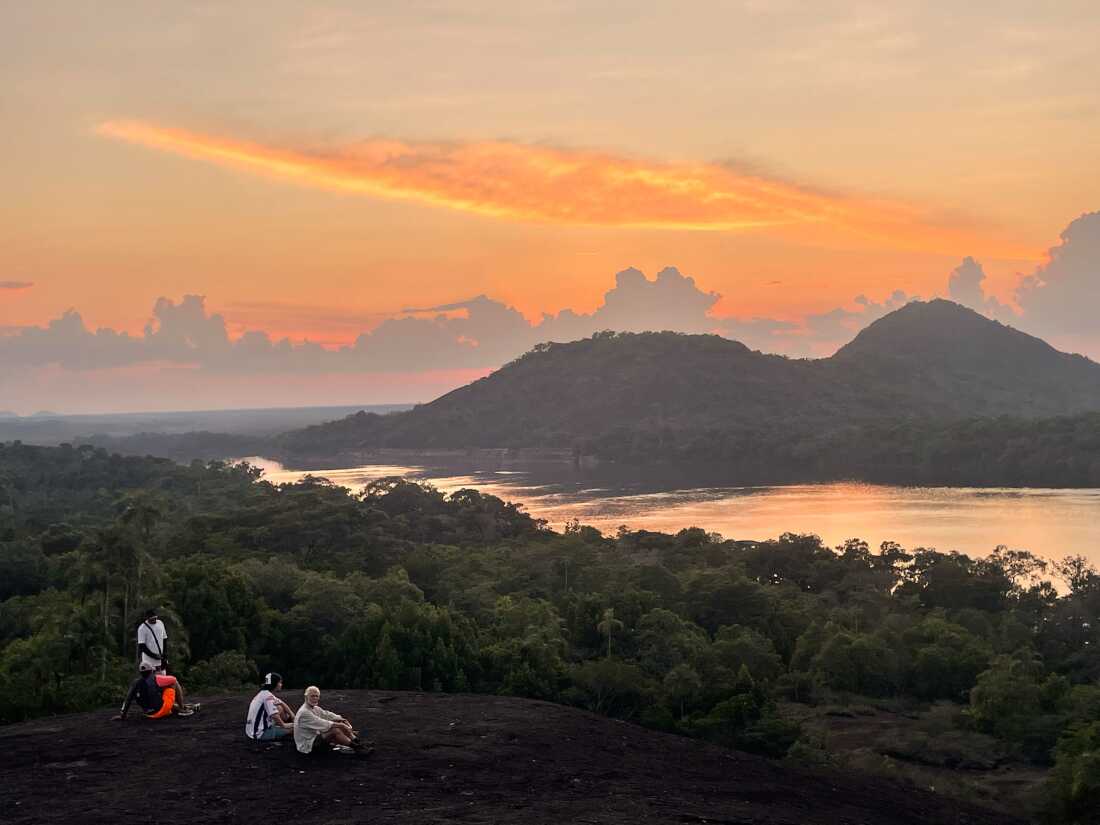
Sunset envelopes Colombia’s remote Mavecure Mountains, where towering rock formations emerge above the Amazon jungle. In the early hours, the sounds of howler monkeys, parrots, and frogs serve as a natural alarm. Alongside friends from the U.S., I find myself in eastern Colombia, near Venezuela. The landscape, mostly flat and green, hides a remarkable secret.
As we begin our hike, we discover three massive rock formations, the Cerros de Mavecure, rising 2,000 feet from the jungle. These buttes of sandstone, shale, and quartz are significant for the local Puinave and Curipaco Indians, who climb them for spiritual offerings. ‘It’s divine,’ remarks Marcela Sánchez, an industrial engineer from Cali, Colombia.
Climbing the smallest peak, with temperatures soaring to 90 degrees, demands effort and perspiration. The ascent is aided by guide ropes and ladders, and the views reward every pause. To me, Mavecure’s grandeur rivals that of Machu Picchu. Colombia’s potential for tourism shines here, thanks to its diverse attractions like the Amazon, Caribbean beaches, and the Andes, making it a birdwatcher’s dream with 1,900 avian species.
Decades of internal conflict deterred international tourists, but a 2016 peace treaty with rebels started changing the landscape. During the first eight months of 2025, Colombia welcomed a record 3.1 million international visitors. ‘Tourism is now the main economic driver,’ states Delio Agapito, mayor of Remanso, a village near Mavecure.
Local people have shifted from polluting gold mining to tourism-related jobs. Among them is Fabio Pérez, who now operates a hostel and honey business. ‘My family is with me,’ he shares, highlighting the benefits of tourism. Yet, Mavecure remains relatively secluded compared to places like Cartagena or Medellín, due to the absence of roads and limited transport options.
‘Tourism here is still very small-scale,’ says Fernando Carrillo, head of Aroma Verde, a foundation that supports sustainable tourism. As we ascend the mountain, our guide, Ignacio Rodriguez, advises caution to avoid thorns and potential reptile encounters, though the dry season keeps snakes away.
Nearing the summit, we meet other climbers tasting edible rainforest ants with a citrus note. Sebastian Rivera, a Colombian anesthesiologist, tries one and finds it akin to lemon. The climb concludes with a breathtaking view of the jungle and Inírida River, framed by Mavecure’s taller peaks.
‘This is a dream come true,’ expresses Catalina Laverde, a Colombian lab technician, upon reaching the top. Rivera appreciates the solitude, acknowledging that ‘it’s not a five-star resort, but you do get these natural wonders.’