Impact of Deepwater Horizon Spill on Gulf Marine Life
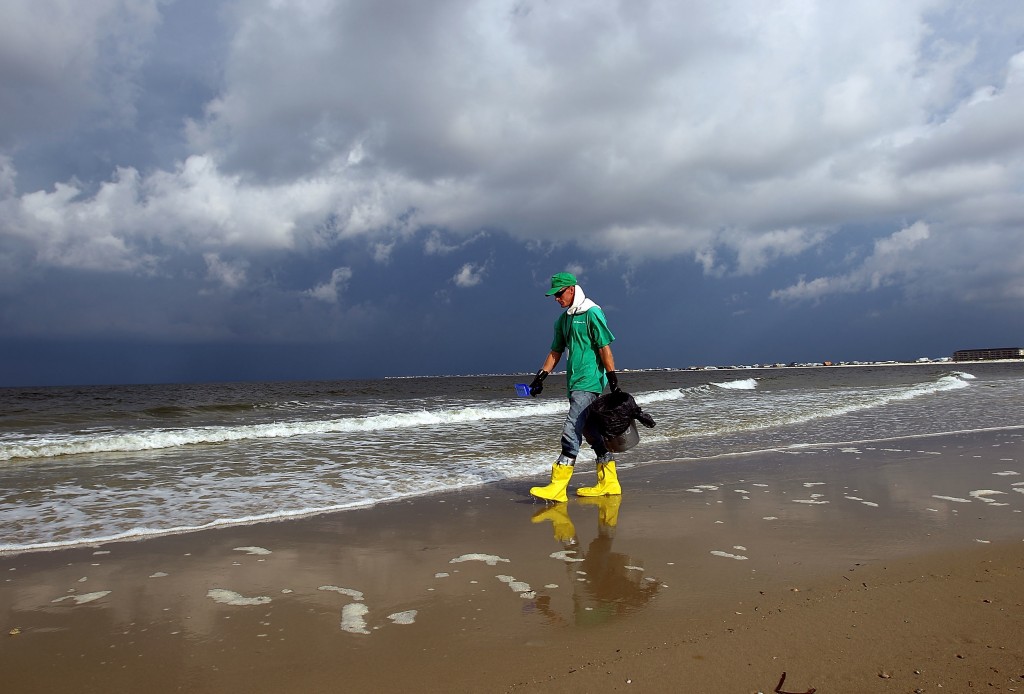
In a rarely explored part of the Gulf of Mexico, the population of marine animals dropped significantly after the 2010 Deepwater Horizon incident. A study shows a 60% decline in sea life in the years following the oil spill. In an area between the ocean’s surface and its depths, where BP’s well released 134 million gallons of oil, fish numbers decreased by 63.5% from 2011 to 2015. Crustaceans, such as shrimp and krill, crucial for whale diets, declined by 62%, while larger creatures like squid and octopuses saw a drop of 59.7%, as revealed in the Proceedings of the National Academy of Sciences (PNAS).
This vital area, known as the “twilight zone,” provides food for surface marine life, including dolphins and whales. Little research had been conducted here before 2010. Lead author Tracey Sutton, a biological oceanographer from Nova Southeastern University, noted the lack of prior studies. In a post-spill exploration in 2011, researchers employed nets at various depths and acoustic sonar to estimate sea life from the surface down to 5,000 feet. When they returned with similar tools three-and-a-half years later, sea life had reduced to just one-third or one-quarter of 2011 levels.
Sutton’s investigation attributes the decline to the oil spill, despite examining other natural factors like temperature, oxygen, and food availability. None correlated with the decrease, indicating the spill as the primary cause.
Since 2015, surveys have shown that marine populations remain low, with minor increases in 2022 and 2023 that were not statistically significant. Sutton’s team documented this decline using multiple methods: net catches, acoustic sonar readings, and genetic studies highlighting reduced species diversity due to inbreeding.
The initial explosion and subsequent months of oil leakage, which also resulted in 11 worker fatalities, caused immediate loss of marine life. Surviving organisms stored pollutants in their eggs, weakening future generations. Despite BP’s efforts to improve safety, the consequences of the event remain. According to BP spokesperson Paul Takahashi, the company has made changes to prevent a recurrence. However, oil and chemical dispersants used for cleanup affected fish differently. Study co-author Isabel Romero from the University of South Carolina explained that while oil poses a general threat, dispersants increase exposure to deeper water animals by breaking oil into smaller droplets.
Rita Colwell, a former National Science Foundation Director and environmental microbiologist, advocated for different response strategies in future spills. She recommends avoiding dispersants and instead enhancing oil-consuming microbes.
Sutton acknowledged the difficulty in proving a direct causal link to BP’s spill. Yet, given the timing and elimination of other factors, the spill is most logically the cause. Specifically, krill populations fell by 72%, and lanternfish numbers, known for their luminescent features, significantly diminished. Notably, dragonfish, recognized by their teeth, light-producing organs, and head appendages, also suffered losses.
The study revealed the interconnectedness of the Gulf’s marine ecosystem. Sutton emphasized its unity, noting how surface predators occasionally dive deep, and deep-sea creatures surface at night. Kaitlin Frasier of the Scripps Institution of Oceanography, not involved in the study, remarked on the limited knowledge of these oceanic regions compared to space and pointed out the severe consequences that can result from such environmental disturbances.
Boris Worm, a marine scientist at Dalhousie University, highlighted the far-reaching impact of a singular drilling rig failure, noting the minimal recovery over 13 years across vast ocean areas.
The observations from this study hold significant implications as discussions around deep-sea mining and expanded oil drilling continue. Worm and Colwell stress the importance of understanding these environmental effects. A free press contributes significantly to informing the public and promoting civil dialogue.