Caleb Wilson’s Growth as an NBA Shooter
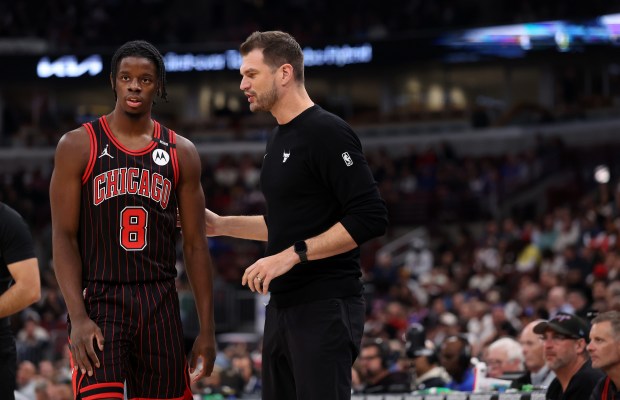
Caleb Wilson, the Chicago Bulls rookie, took a step around a screen early in the game against the New York Knicks. Despite needing only minimal space, his shot was a bit short, hitting the front rim. Before this game, Wilson struggled with his long-range shots, making only eight of his 36 attempts from beyond the arc. This performance brings his 3-point shooting percentage to 22.2%.
Even with low accuracy, Wilson is a prominent shooter for the Bulls. Averaging 7.2 shots per game from 3-point range, he ranks just under Norman Powell, who averages 8.2. Among the 2026 rookie class, Wilson has attempted more 3-point shots than anyone else. However, Sacramento Kings’ Darius Acuff Jr. edges him out in average attempts per game with 8.5.
Bulls’ coach Tiago Splitter remains positive about Wilson’s shooting. Splitter encourages his young player not to hesitate, viewing this as essential to development. He emphasizes that continuous shooting practice is vital, regardless of current statistics. Splitter’s support has been crucial for Wilson.
Splitter sees potential in Wilson as both a shooter and a passer. He allows players like Wilson the freedom to find their style while learning how to evaluate shot quality. Wilson acknowledges the challenge of adapting to the NBA’s fast-paced environment, recognizing how quickly opportunities appear and vanish.
Entering his rookie season, Wilson focused on improving his 3-point shooting. His draft process repeatedly questioned this aspect. At North Carolina, Wilson attempted just 27 shots from beyond the arc, hitting seven for a 25.9% success rate. Nonetheless, Wilson made a statement in his summer league debut by scoring seven 3-pointers, although his consistency has varied since then.
In a recent match against the Knicks, Wilson’s confidence showed. Despite missing his first three attempts, he hit his final three shots, including a smooth 3-pointer during a transition play. This resilience supports Splitter’s belief in Wilson’s ability at the arc.
Wilson remains undeterred by missed shots. He trusts in his accuracy and sees missed opportunities as part of his growth. Relating his experience to starting a new job, he understands that initial challenges are common.