Oil Prices Surge Amid Concerns Over Strait of Hormuz Crisis
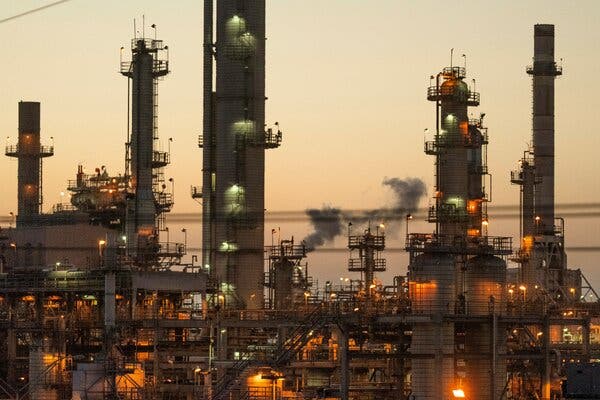
On Monday, oil prices rose significantly following signs that peace talks between Iran and the United States might be failing. Brent, a key international oil price benchmark, increased by over 5 percent to approximately $93 a barrel, marking its most significant rise in nearly a month. The West Texas Intermediate crude, the U.S. benchmark, climbed over 6 percent to around $93 a barrel, experiencing its largest jump since late April. Despite these increases, prices have not reached the heights seen during conflict periods.
Negotiators from Iran and the United States have been discussing the extension of a cease-fire and the reopening of the Strait of Hormuz, a critical oil and commodity shipping route bordering Iran’s south. However, these talks might be collapsing due to recent attacks involving Iran, the United States, and Israel, with threats of further hostilities complicating negotiations.
The United States confirmed carrying out strikes in Iran over the weekend as part of ongoing attacks. In response, Iran’s Revolutionary Guards reported an attack on an American air base, retaliating against a U.S. strike on a communication facility.
The possibility of continued conflict is raising fears about the longevity of global oil and fuel supplies if the strait remains closed. Helima Croft, from RBC Capital Markets, noted a growing sense of panic over the situation.
The conflict with Iran has pushed Persian Gulf countries to reduce their oil production by more than 14 million barrels daily, cutting nearly 14 percent of the global supply before the war. The International Energy Agency reported these reductions.
Certain measures have lessened the impact of these losses. China decreased its oil imports. Many countries released oil and fuels from their emergency reserves. Oil production from the United States, Canada, Brazil, and others has also increased, providing some relief, according to the IEA. Additionally, elevated prices have led to decreased oil demand.
However, experts express concerns about dwindling inventories of oil and fuels like gasoline and diesel. Neil Chapman, an Exxon Mobil senior vice president, remarked at a recent conference about the worryingly low inventory levels. He indicated that if these levels fall much further, prices could rise sharply.
The United States has been extracting roughly nine million barrels of oil weekly from its federal reserves. At that rate, the country’s strategic reserves might hit their lowest point since 1983 by next week, based on an analysis of data from the Energy Information Administration by The New York Times.
Amos Hochstein, who previously served as an energy and foreign policy adviser in the Biden administration, emphasized that withdrawing from reserves is a debt that will eventually need repayment.