Tensions Rise at U.S. World Cup: Immigration Policies Under Scrutiny
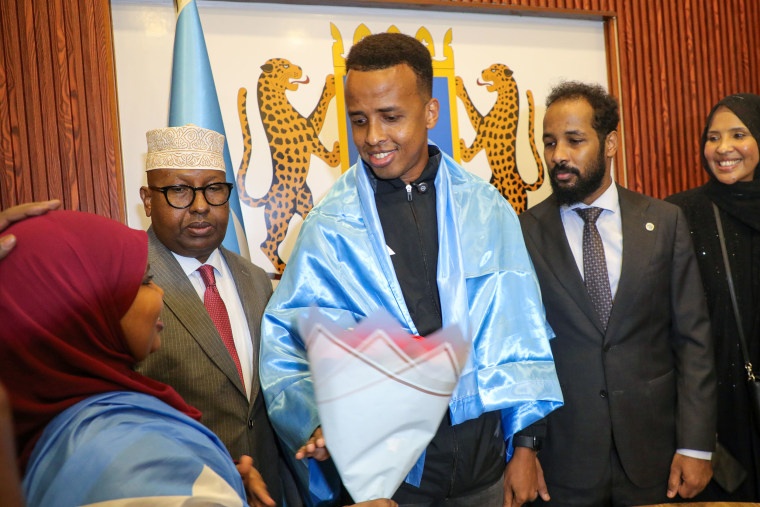
While Somalia is not participating in the World Cup, the atmosphere at Mogadishu’s airport suggested otherwise. On Wednesday, a crowd, including supporters, blue-bereted police, and journalists, flocked to greet an arriving plane. It wasn’t a soccer team disembarking, but Omar Artan, who had become entangled in a controversy due to the U.S. immigration policies that some argue are restrictive.
Omar Artan, 34, was set to be the first Somali referee at a World Cup, choosing to participate in the event in the U.S., Canada, and Mexico. However, upon his arrival in Miami for training, he faced an 11-hour detention before being sent back to Somalia. He is not alone in this experience. Reports indicate that 15 Iranian officials and an official Iraqi team photographer faced similar denials. Additionally, Iraqi player Aymen Hussein reported intensive border inspections.
Assurances from the U.S. government had promised FIFA that accredited participants would face no entry issues. However, travel bans and restrictions since President Donald Trump’s term have sparked uncertainties. Past World Cup events like those in Russia (2018) and Qatar (2022) saw various challenges, yet denying entry to a referee is unprecedented and drew widespread criticism.
Former Secretary of State Hillary Clinton criticized the U.S. for barring officials, calling it “terribly backward.” Retired soccer player Ian Wright described the event as the “World Cup of chaos.” However, Andrew Giuliani from the White House World Cup task force argued that Artan’s entry denial was justified, though details remain undisclosed. The U.S. Customs and Border Protection cited “vetting concerns.” A Trump administration official suggested Artan’s alleged connections to terrorism without providing evidence.
Somali support for Artan has been strong. The Somali Sports Ministry regrets his treatment, with the Somali Football Federation voicing support while urging factual clarity. Simultaneously, CBP stated Iraqi delegation members faced standard inspections to ascertain admissibility. Although one person wasn’t named Hussein, they were allowed entry while another faced denial.
White House spokesman Davis Ingle defended the strict measures, associating them with Trump’s focus on security. Despite this, criticism grows amid allegations of unreasonable searches and high costs dissuading many fans from attending.
The World Cup should offer people a chance to connect globally, but the current scenario reflects exclusion.
Ronan Evain, from Football Supporters Europe, stated.
Most matches are in the U.S., presenting additional challenges with Mexico and Canada hosting the remaining events. During previous tournaments, like those in Qatar and Russia, visa restrictions were minimal for fans. This event, hosted in the U.S., imposes stringent visa processes even for non-blacklisted fans, with the controversial “FIFA Pass” offering limited help.
Experts like Sarah Pierce from Third Way say the current U.S. immigration policies could set a negative precedent for future international events. The hope remains for a recalibration towards a more inclusive welcome for future hosts.