Nvidia CEO Jensen Huang Discusses AI’s Impact on Society and Economy
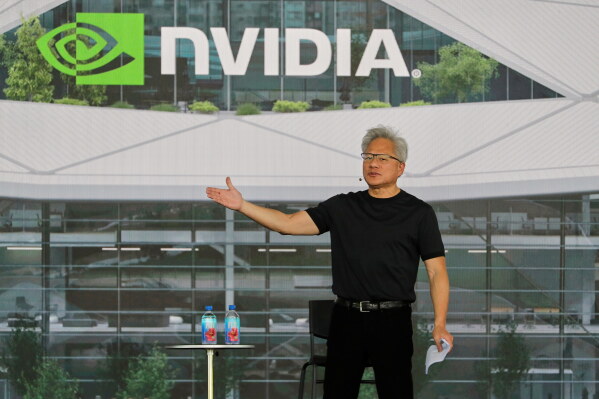
Nvidia CEO Jensen Huang, whose innovations have advanced artificial intelligence (AI), highlighted the need for society to adapt to AI’s growth. Speaking to the Associated Press, Huang expressed his optimism about AI’s ability to transform society by accelerating economic growth and scientific progress.
Adapting to AI
Huang advocates for embracing AI to create new social norms. He encouraged everyone to engage with AI, viewing it as essential. As AI becomes a political issue, concerns about job losses and societal impacts have emerged.
Some critics have opposed AI’s rapid adoption and the development of more data centers, fearing potential layoffs without a safety net. These concerns threaten public support for AI technology. Despite criticism of Huang’s close ties with President Trump, he believes AI’s computing power can fulfill longstanding promises of job creation.
The Technological Divide
Huang noted that AI can facilitate tasks like website creation, document analysis, and research planning. This accessibility helps people engage in complex projects without extensive programming knowledge.
Regulation and safety standards are necessary for AI, according to Huang, who stressed national security’s importance in regulating technology that drives stock market gains and economic growth.
Parallels with the Automobile
Huang compared society’s adaptation to AI to how it adjusted to automobiles, which were once seen as dangers. He explained that societal norms changed by creating sidewalks and crosswalks to protect pedestrians.
Economic Inequality and Government Ownership
Nvidia’s value has surged to approximately $5 trillion, raising concerns about economic inequality. Discussions about the U.S. government owning shares in AI companies have emerged. Proponents believe this could share profits more broadly.
Huang is skeptical, arguing that AI’s advancement already benefits Americans through investments, taxes, and job creation. He emphasized AI’s potential for profitability in sectors like energy and construction.
National Security and Regulation
The Trump administration shifted to regulate AI more robustly, exemplified by export controls on AI models to address security concerns. Huang acknowledged the focus on national security but warned of unintended consequences from restrictive policies.
During the Biden administration, Nvidia opposed export controls that limited chip sales to China. Huang warned that such restrictions could hinder the U.S.’s role in developing the global AI ecosystem.
Challenges in Energy Infrastructure
Huang identified the energy infrastructure as a key vulnerability for U.S. AI development. Data centers require significant electricity, potentially straining power grids. Some centers plan to use their own energy sources, but he expressed concern about existing energy limitations.
Huang praised Trump’s approach to increasing energy production, though the Nvidia CEO did not comment on Trump’s stance against renewable energy sources like solar and wind power.
Speaking in Sherman, Texas, Huang highlighted a factory expansion aimed at developing lasers to reduce AI systems’ power use by up to 50%.