Aging Infrastructure: Los Angeles’ Water System Under Pressure
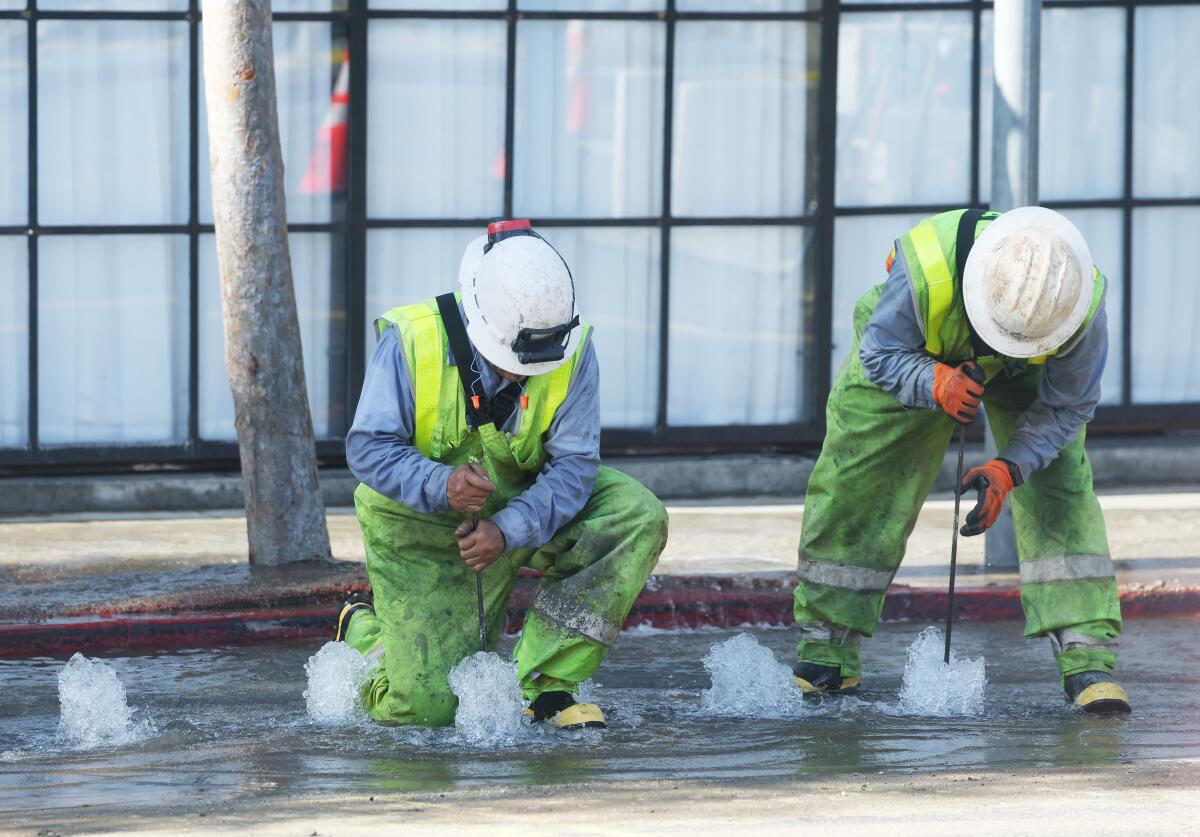
The underground network of pipes that supplies over 400 million gallons of water daily to the customers of the Los Angeles Department of Water and Power faces many challenges. These pipes, akin to aging arteries, sometimes suffer from wear and tear, leading to leaks and breaks. The reality hit hard when a major water line burst occurred on the morning of July 17 under Sunset Boulevard, West Hollywood. A 36-inch pipeline broke, creating a sinkhole and releasing 17 million gallons of water into the streets.
Repairs on this massive break were nearly complete when another leak surfaced on July 23 at Santa Monica Boulevard and Laurel Avenue. According to the DWP’s initial findings, the affected pipe had been in service for 110 years.
Despite Los Angeles being considered a relatively young city, its underground infrastructure has been operating through countless changes and challenges. The city’s water pipes have been steadfast, enduring droughts and earthquakes while supporting a population growth from roughly 500,000 to 4 million.
During a recent visit to West Hollywood, Tadeh Ghazalian, owner of the restaurant Dialog, assessed the damage to his business. Water had damaged the steps and tiles, causing significant destruction.
The Los Angeles Department of Water and Power (LADWP) maintains roughly 6,800 miles of pipes measuring between 4 inches to 20 inches in diameter, plus an additional 570 miles of larger trunk pipes. Many pipes remain functional until they fail. The agency reports that about 30% of its mainlines are 80 years old or older, in contrast with only 3.7% of L.A. County’s human population that is 80 or older.
In 2014, another old pipe burst near UCLA, creating a 30-foot geyser and causing millions in damages.
Importantly, the age of a pipe is not the sole determinant of its condition. LADWP’s water systems chief, Anselmo Collins, and USC engineering professor Lucio Soibelman emphasize other factors such as soil compaction and water table variables.
The agency is replacing about 45 miles of deteriorating water lines annually with modern pipes expected to last up to 150 years. According to Loyola Marymount University engineering professor Joseph Reichenberger, these efforts should have commenced decades earlier.
Philadelphia and Boston, owing to their older infrastructure, experience more frequent water main failures, as noted by Soibelman. Despite past controversies, LADWP performs relatively well compared to the national average for water system maintenance.
Collins notes that increasing the rate of pipe replacement could further impact costs for ratepayers due to required investments in workforce and infrastructure enhancements. As it stands, the utility is installing approximately three times the amount of new piping annually compared to 20 years ago.
Addressing aging infrastructure is costly. Examples from European cities, which were designed for pedestrian movement, show contrasted maintenance challenges compared to car-oriented Los Angeles.
The area around Sunset Boulevard, where the original pipeline installation occurred in 1916, saw few automobile interactions then and more traditional modes of transport like trolleys and wagons.
As infrastructure ages, such challenges persist, yet amidst the adversity, the statue of cartoon characters Rocky and Bullwinkle in West Hollywood survived the July 17 deluge. Standing firmly at Sunset and Holloway, they symbolize resilience amidst aging surroundings.