AI’s Growing Impact on China’s Job Market
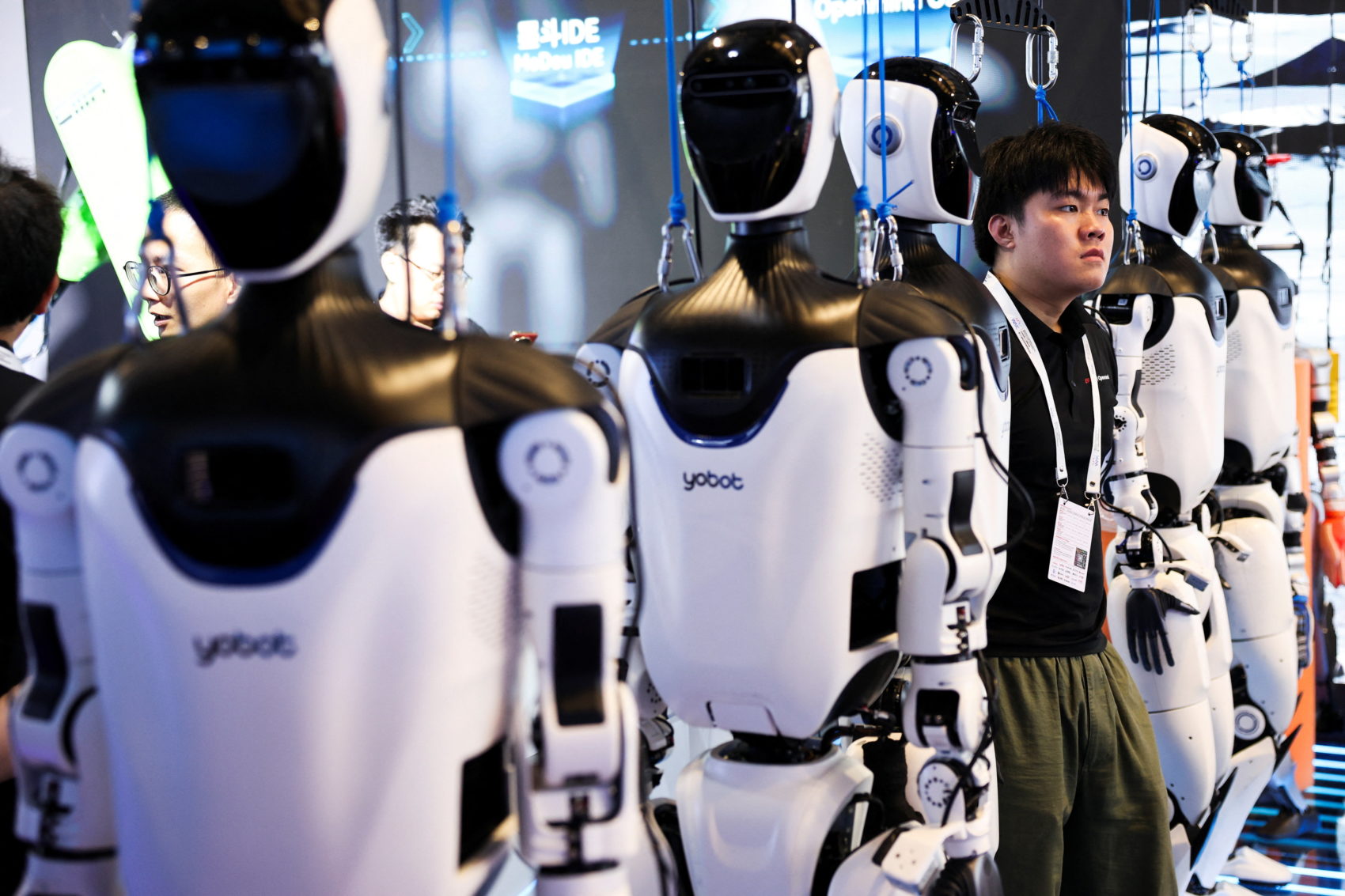
Artificial intelligence is reshaping China’s job market. Many workers are facing job displacement as companies begin to rely more on AI. This shift is backed by government policies encouraging AI adoption. Fei Zhaojun, a programmer from Beijing, experienced this firsthand when he and 160 colleagues were laid off.
Economists are concerned about the long-term effect of AI on China’s economy. Rapid AI adoption is happening in various fields, raising fears about job security. Despite this, China pushes AI applications and robotics across industries.
AI Interest and Adaption
In China, the attitude towards AI is mostly positive or neutral. Shujing He, an analyst in Beijing, notes that those affected by AI are eager to explore AI-enabled ventures. The interest is noteworthy, even if it replaces human jobs.
“Mid-level coders’ jobs are essentially replaceable,” said Fei Zhaojun.
Fei now creates short vlog-style videos, hoping these help others. AI adoption is encouraging some to find new pathways, like making videos or training AI models.
AI’s Influence on Industries
AI’s role in industries is expanding. Du Qinchun, a translator in Chengdu, trains AI models for translations, bringing temporary work despite reduced pay. Popular foreign language programs are declining as AI translation grows.
According to IDC, AI usage in Chinese industrial enterprises increased from 9.6% to 47.5%. Yanze Du, an IDC research manager, stresses that China’s open-source model ecosystem supports AI innovation in industrial settings.
AI impacts tasks once requiring specialized training, such as software development and multimedia creation. Women might face more risks due to automation in specific fields, per the International Labor Organization.
Economic and Employment Impacts
China’s government aims to integrate AI into various industries, enhancing its tech rivalry with the U.S. This “AI Plus” initiative is part of a broader plan through 2030. Economic growth is slowing, and consumer spending has weakened. Concerns about job security are affecting the economy.
AI could boost productivity yet disrupt employment, affecting social stability. Similar trends occur among Chinese and U.S. tech giants, restructuring roles partly due to AI.
Employment uncertainty remains in China. While the overall urban unemployment rate is about 5%, the rate for ages 16 to 24 is triple. However, automation might offset workforce challenges due to an aging population.
Adapting to AI
Some find new opportunities through AI. Wang Zhicheng left his scriptwriting job to create illustrated children’s books. Despite AI’s time-saving potential, its output can be formulaic.
High school teacher Yang Zheng sees AI as helpful, not a threat. It assists students with real-time questions, though often learners need intervention due to AI’s inaccuracies.
The evolving AI landscape presents both challenges and opportunities. Workers are adapting, exploring creative niches or leveraging AI as a tool for innovative solutions.