Campaign Dynamics Shift as Illinois Fall Election Approaches
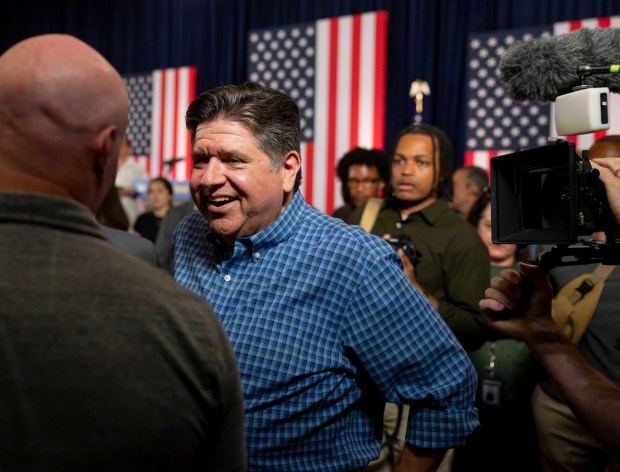
Labor Day signals the traditional start of the fall election campaign. Major candidates now shift their focus from state fairs and tours to the vote-rich Chicago area, crucial in deciding statewide races. This year, campaigns for governor and U.S. Senate are influenced by national politics, internal disputes, financial issues, and future political aspirations.
Among Chicago voters, a significant distraction is the upcoming mayoral race, which has garnered more attention than the state election on November 3rd. Campaigns often become referendums on candidates, and this general election is no different. For Democrat JB Pritzker, his tenure as he seeks a rare third term as Illinois’ governor while eyeing a potential White House bid in two years is under scrutiny. Former state lawmaker and Republican challenger Darren Bailey aims to distance his campaign from the legacy of an unpopular-in-Illinois Donald Trump and his past defeat to Pritzker by nearly 13 percentage points.
An independent run by former GOP political operative Collin Corbett also looms on the horizon.
Pritzker’s bus tour kickoff took place on August 26, 2026, at the Painters District Council #14 in Chicago’s West Loop. This launch sets the stage for his re-election campaign.
U.S. Senate Race
In the U.S. Senate race, with retiring Sen. Dick Durbin, the contest involves Lt. Gov. Juliana Stratton and former state Republican Chair Don Tracy. Stratton, Pritzker’s former running mate, has largely ignored Tracy, who casts Stratton as part of the Democrat’s progressive wing. Tracy faces challenges with limited resources to extend his message.
The GOP is increasingly regionalized, with candidates like Springfield’s Tracy and Xenia’s Bailey representing downstate Republicans. Both face financial constraints compared to Pritzker, who has invested nearly $440 million of his own wealth in his campaign since 2018.
Challenges and Strategies
Bailey runs a low-budget, social-media-driven campaign centered on affordability. He pledges, without clear plans, to cap local schools’ dependence on property taxes by increasing state education funding. Illinois currently spends about $45 billion on public schools, primarily funded by property taxes. Increasing state funding significantly would require major tax hikes, which Bailey opposes.
Bailey proposes ending tolls on Illinois Tollway, a move necessitating $8.2 billion to pay off bonds and potentially disrupting a $26.5 billion capital plan. This presents another complex challenge. Meanwhile, Bailey addresses property taxes and toll hikes, but his social issue stance may hinder his campaign more than his opponent does.
While Bailey tries to dodge questions about Trump’s influence, he occasionally aligns with Trump, supporting tariffs despite their impact on Illinois agriculture. Bailey expressed willingness to accept a Trump endorsement.
Republican Party Dynamics
Bailey navigates a GOP grappling with internal disputes. His running mate Aaron Del Mar, expressed concerns about GOP leadership in a Facebook video with former attorney general candidate Thomas DeVore. Despite seeking GOP unity, challenges persist, affecting campaign funding efforts.
Despite spending significant time downstate, Bailey plans to campaign vigorously in Chicagoland, including renting an apartment in the South Loop. He aims for higher voter turnout in counties where he previously performed well.
Pritzker’s Campaign Focus
Pritzker recycles elements from his earlier campaign, labeling Bailey’s views as extreme. His financial independence permits exploration of a potential 2028 presidential run. Pritzker emphasizes opposition to Trump in his messaging more than to Bailey directly.
Pritzker’s speeches increasingly resemble presidential campaign rhetoric, criticizing Trump and calling for leaders to address voter concerns beyond mere subsistence. He openly challenges both hesitant Democrats and Republicans for focusing on reality.
Stratton vs. Tracy
Stratton’s Senate campaign, backed by Pritzker, has been less visible beyond obligatory events. She skipped the Illinois Farm Bureau roundtable, raising critiques from Tracy about misplaced priorities. Despite this, Stratton plans to connect with agricultural officials soon.
Overall, the Illinois races reflect a blend of local and national dynamics as candidates navigate complex political landscapes.