Chicago Expands Non-Police Mental Health Response Efforts Amid Challenges
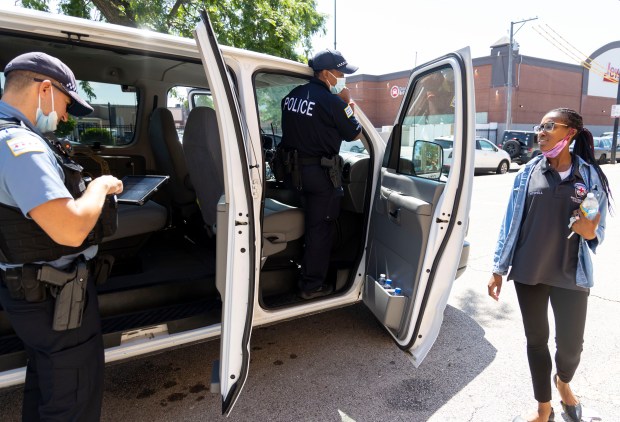
Mayor Brandon Johnson has intensified efforts to promote a non-police mental health response team. This initiative, aimed at enhancing the city’s approach to mental health emergencies, has become a focal point of his administration’s agenda. Recent videos depict Johnson riding in the city’s Crisis Assistance Response and Engagement (CARE) vans. He highlighted a significant increase in the number of responses since May as a positive development.
Starting soon, a second shift will be added for CARE teams, extending their availability into the evening. The aim is to make these teams of behavioral health workers and EMTs more accessible to those in need. Alderman Rossana Rodriguez-Sanchez, appointed by Johnson to lead the City Council Health Committee, acknowledged the unexpected challenges faced during the implementation process.
“They told us there was no demand,” Johnson stated at the City Club of Chicago. “But calls increased by 51%.” This statement points to skepticism regarding the demand for CARE services. From May to August, 115 emergency calls were fielded, along with 72 non-urgent requests.
The transition hasn’t been smooth. The program has faced bureaucratic and interagency hurdles. Former health commissioner Dr. Olusimbo Ige resisted for months before leaving her position. Dr. Garth Walker has since taken over as the head of the Chicago Department of Public Health.
One concern voiced by policymakers is that CARE was not fully utilized. Jim Poole from the National Alliance on Mental Illness Chicago remarked on the program’s underuse, emphasizing the necessity of these specialized teams in easing the burden on police and providing appropriate support to the public.
Despite Johnson’s commitment to moving away from the previous model that included police officers, some involvement from law enforcement remains. Lt. Rhonda Anderson, the Chicago police’s Crisis Intervention Team coordinator, reported that officers continue to support CARE teams during some responses.
Johnson remains committed to learning from the ongoing interactions between police and health workers. He underscored that the current administration is working to provide care in a humane manner, steering away from past approaches that he described as traumatic.
Efforts to integrate a unified Computer-Aided Dispatch (CAD) system are ongoing. This system aims to integrate police, fire, and EMS channels, although it is unclear when it will be fully operational. In the interim, CARE teams primarily rely on the existing dispatch channels and non-urgent email request systems.
Policymakers agree on the increasing need for mental health support. The CARE initiative has seen fluctuating numbers over the years, highlighting both successes and challenges. Recent public presentations showed varying response rates and call volumes, illustrating the complexity of fully implementing a non-police approach to mental health crises.
The program’s setbacks have been a point of contention among Johnson’s political opponents, who have criticized it as a failed promise. Still, the initiative, part of the “Treatment Not Trauma” campaign, remains a critical step in reimagining public safety, gaining support even before Johnson’s election. Alderman Rodriguez-Sanchez highlighted the ongoing challenges but encouraged continued efforts to achieve a systemic cultural shift.