Senate Democrats Criticized for Venezuela Oil Deal Briefing Postponement
The State Department has accused Senate Democrats of performance-driven gestures by demanding a comprehensive briefing on a Venezuela oil deal and then postponing it for an early fall recess. Four senior Democrats had requested documents expected to be delivered, according to information reviewed by Fox News Digital. The Senate then rescheduled a planned congressional briefing for October 1, 2026, in order to leave Washington ahead of the recess.
These lawmakers were seeking details on the Pentagon’s involvement in an agreement with North American Blue Energy Partner (NABEP), granting the Department of War a 35% stake in one of Venezuela’s largest oil producers. However, the state department claims the senators were aware that the administration planned a briefing on Thursday, aimed at providing insights along with the documents.
The State Department proceeded to deliver copies of the U.S. government’s strategic partnership agreement with NABEP to the Senate Foreign Relations Committee despite the briefing’s cancellation. They considered it a courtesy move.
Copies of the USG Strategic Partnership Agreement with NABEP for your Members are in the SFRC front office. Each Member has a folder with their copy.
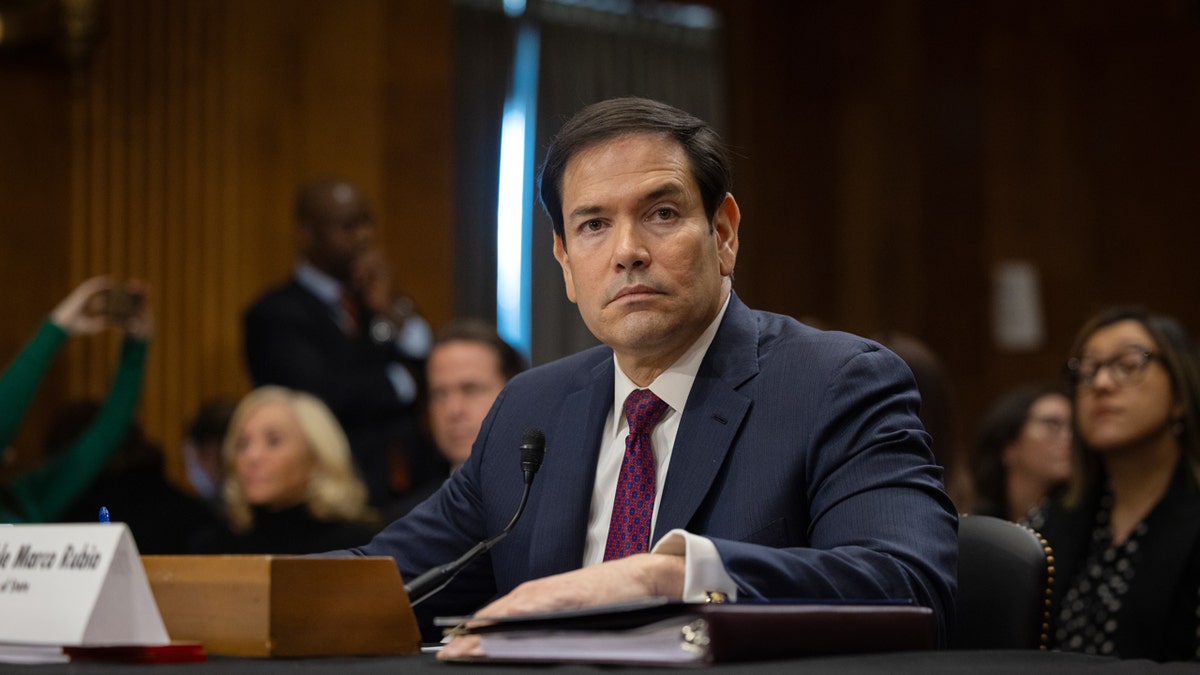
Secretary of State Marco Rubio testified during a Senate Foreign Relations Committee hearing on Venezuela on January 28, 2026. Reports indicate Senate Democrats canceled the planned briefing to leave town early. Assistant Secretary Dylan Johnson voiced their opinion on X, accusing the Democrats of grandstanding.
A source familiar with the congressional briefing contested the State Department’s claims. They informed Fox News Digital that the lawmakers were not told about the document availability before drafting their letter, and clarified that the briefing was intended for broader updates on U.S. policies toward Venezuela.
Emails revealed that the postponement request originated from a Republican staffer, informing the State about the Senate’s absence and proposing a new date in November. This staffer acted on behalf of the committee’s full panel, with both political affiliations preparing to leave for the upcoming elections.
The Democrats questioning the deal’s legality argue against the Trump administration’s arrangement for a 35% stake in an oil producer. The Pentagon’s Office of Strategic Capital was to receive the rights via penny warrants, and the State Department would receive preferential rights to purchase 20% at cost.
The administration supports their strategy as potentially beneficial for the U.S. economy, predicting hundreds of billion dollars’ worth if NABEP successfully develops oil fields and boosts production. The deal’s unusual structure is considered crucial for reviving Venezuelan oil production.
Venezuelan’s political transition remains unsettled, with interim leader Delcy Rodríguez cooperating with Washington amidst calls for elections. The White House describes the NABEP agreement as part of a strategy aimed at stabilization, reconstruction, and eventual democratic transition. Their goal includes reviving Venezuela’s economy and reducing the influence of adversaries like China and Russia.
Several Democrats, including Sens. Jeanne Shaheen, Jack Reed, Martin Heinrich, and Elizabeth Warren, have voiced concerns about the Pentagon’s legal authority on acquiring equity stakes and NABEP’s vetting process. Among their queries is whether the Office of Strategic Capital is accordingly authorized to make such investments, demanding further agreement particulars and payment details.
The Democrats allege the agreement, with its unusual structure, might not significantly reduce energy costs for Americans, posing undermining risks to Venezuelan’s progressive transition.
NABEP’s current production stands at 220,000 barrels a day, aiming for a rise to 500,000 by late 2028. This optimistic approach depends on private investment amidst past field setbacks due to poor management.
On January 3, U.S. forces captured Nicolás Maduro, removing him and sparking economic reconstruction efforts that heavily focus on rebuilding Venezuela’s oil sector. Despite criticism, the administration views oil restoration as critical for a new economic chapter.